
Send-Shield vs Palisade in 2026
Send-Shield is a managed DMARC service for auditing, monitoring, reporting, SPF flattening, and moving domains toward p=reject. Palisade takes an agentic approach: its agent investigates senders, drafts authentication fixes, and proposes each policy step for your approval.
Our verdict: Send-Shield fits a business that wants a managed service team to handle DMARC implementation, monitoring, reporting, and ongoing SPF maintenance through published GBP plans. Pick Palisade when you want an AI agent to investigate every sender, draft the authentication work, and propose the path to p=reject while your team approves each change.
 Samuel Chenard · CEO & Co-Founder, PalisadeSource checks through 2026-10-14
15-day full-product trial. Nothing is charged until it ends.
 ChatGPT
 Claude
 Gemini
 Perplexity
 Grok
Grok Send-Shield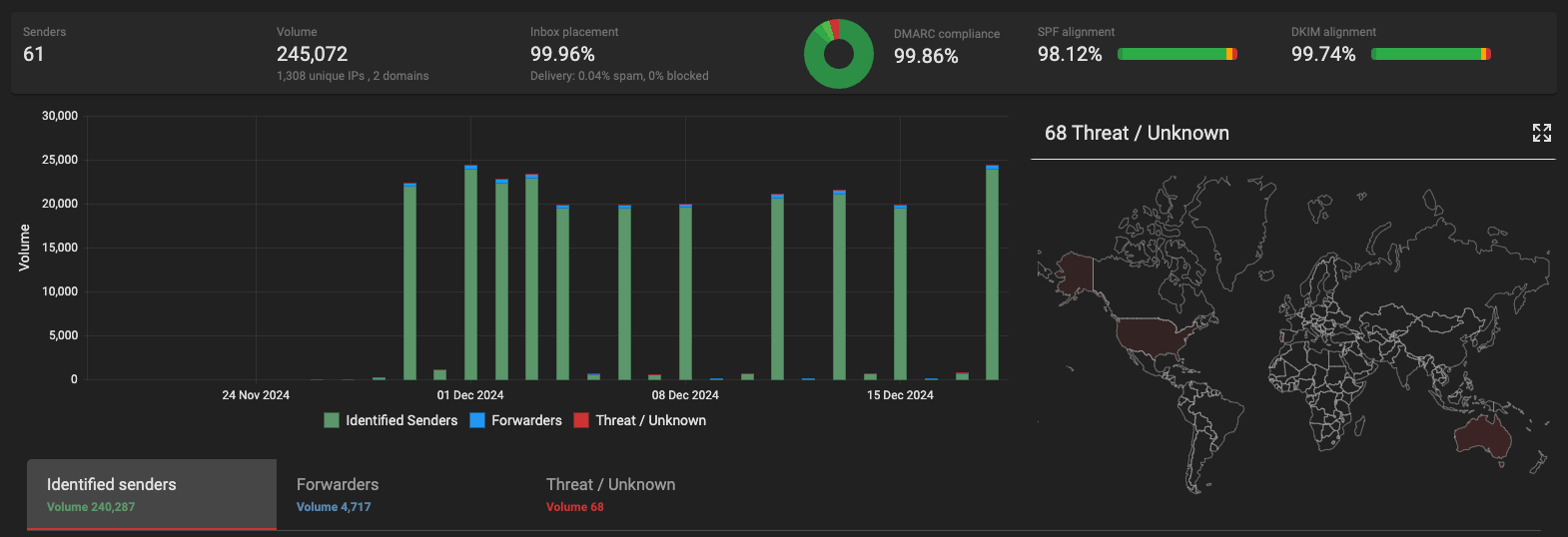
 Palisade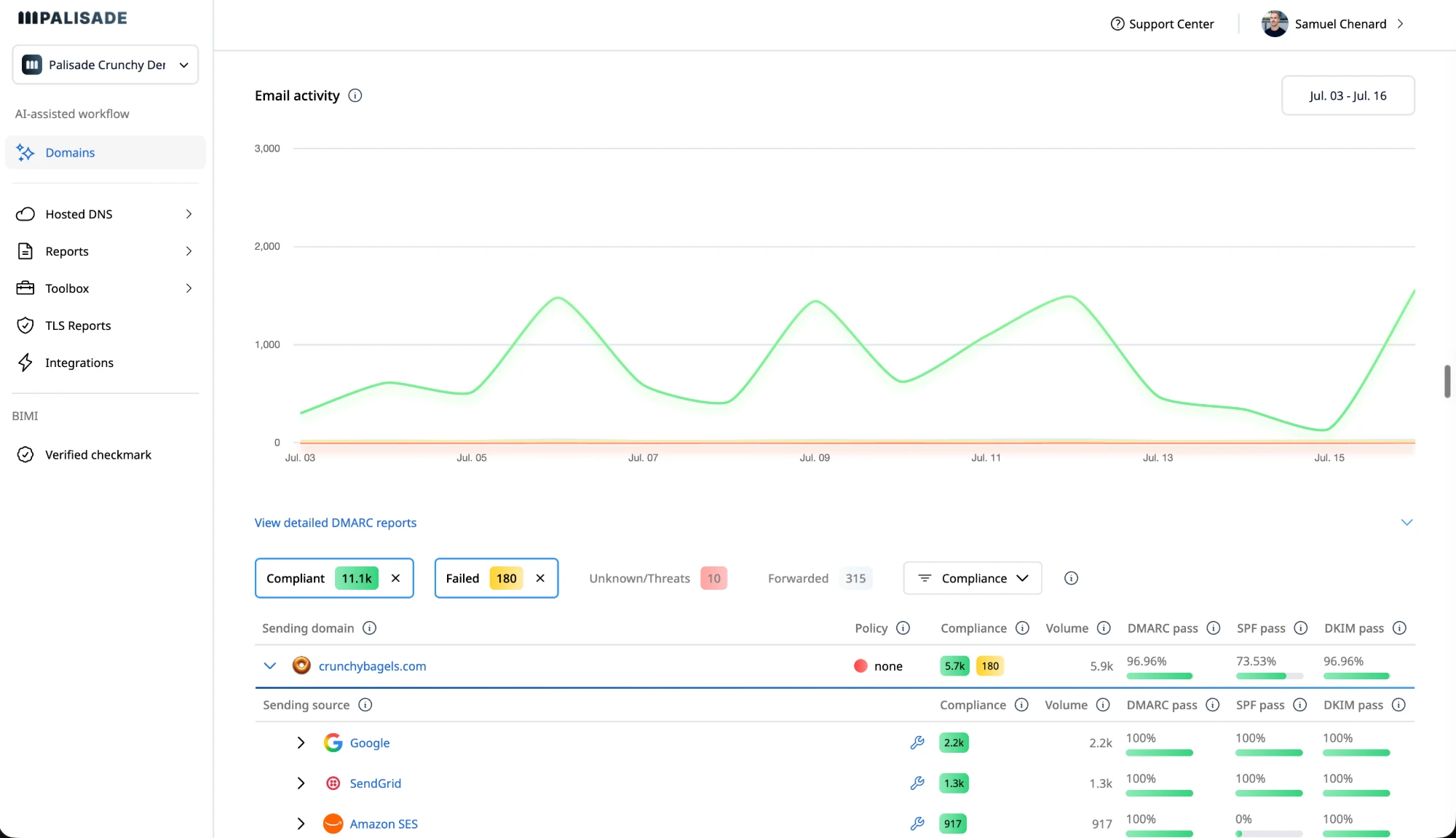
Provisional · 4/8 dimensions established
Average of established dimensions; may change as remaining dimensions are verified.
Full rubric · 8/8 dimensions established
Palisade's IT-team plans start at $19 a month, sized by email volume. Start with a 15-day full-product trial; nothing is charged until it ends.
Which one is right for you?
Best for Businesses wanting a vendor team to handle DMARC work
Best for MSPs and IT teams responsible for multiple domains
- You want a managed DMARC service where a vendor team audits records, identifies senders, manages adjustments, and works toward p=reject for you.
- You want public GBP plans with clear message-volume and active-domain ceilings, including a low-volume Starter plan and a two-week trial.
- You value Send-Shield's dedicated account-manager model, regular reporting, threat monitoring, and SPF flattening that updates records when provider IPs change.
- You want an AI agent to investigate every sender, draft SPF and DKIM fixes, and propose each policy step while your team approves before anything ships.
- You need repeatable operations across internal domains or an MSP client portfolio, including native ConnectWise, HaloPSA, and Autotask integrations.
- You want published IT-team rates by sending volume, free and unlimited domain adding, and MSP pricing by client domain without metering client email volume.
IT-team plans start at $19 a month, sized by email volume. Start with a 15-day full-product trial; nothing is charged until it ends.
Where the day-to-day work actually differs
| Feature | Send-Shield | Palisade |
|---|---|---|
| Reporting and investigation | ||
| DMARC aggregate report monitoring and dashboard reportingWhether DMARC aggregate reports are monitored and organized for sender-authentication review.Send-Shield advertises regular DMARC reporting, monitoring, and reports that organise domain email activity and authentication results (checked 2026-08-26). Source (2026-08-26) | Organized domain reports | Agent analyzes reports |
| SPF, DKIM, and DMARC authentication-result analysisWhether SPF, DKIM, and DMARC results are summarized for authentication review.Send-Shield's reporting page describes summaries of SPF, DKIM, and DMARC compliance, while its pricing page includes DMARC / SPF / DKIM checks (checked 2026-08-26). Source (2026-08-26) Source 2 (2026-08-26) | Authentication compliance summaries | Agent analyzes reports |
| Third-party sender identificationWhether third-party senders and email-authentication threats can be identified.Send-Shield advertises identification of all third-party email senders, potential-threat and trend analysis, and proactive threat monitoring in its service and plan descriptions (checked 2026-08-26). Source (2026-08-26) Source 2 (2026-08-26) Source 3 (2026-08-26) | Sender ID and monitoring | Agent investigates senders |
| Enforcement workflow | ||
| Managed implementation from monitoring mode toward p=rejectWhether monitoring can progress through staged DMARC policy enforcement.Send-Shield describes initial record configuration, monitoring, reporting, data-driven adjustments, and a step-by-step move to p=reject, with its team handling implementation plans (checked 2026-08-26). Source (2026-08-26) Source 2 (2026-08-26) | Team-led policy progression | Agent proposes policy steps |
| AI agent that investigates senders, drafts fixes, and proposes policy steps for approvalWhether an agent investigates senders, drafts fixes, and presents policy steps for approval.Send-Shield describes its team and experts handling DMARC actions and managed adjustments, but does not advertise an AI agent that carries the investigation and approval workflow (checked 2026-08-26). Source (2026-08-26) Source 2 (2026-08-26) Source 3 (2026-08-26) | No agent advertised | Agent drafts and proposes |
| Hosted records and DNS | ||
| SPF flattening with ongoing provider-IP monitoring and updatesWhether SPF records are maintained as provider IP addresses change.Send-Shield says it consolidates complex SPF records, continuously scans provider IP changes, and automatically updates SPF records when changes are detected (checked 2026-08-26). Source (2026-08-26) | Provider-IP SPF updates | Hosted SPF maintenance |
| Automatic subdomain detectionWhether subdomains are found automatically for monitoring.Automatic subdomain detection is listed in Send-Shield's Starter, Core, Plus, and Enterprise plan inclusions (checked 2026-08-26). Source (2026-08-26) | Included on all plans | Automatic subdomain discovery |
| Hosted authentication records on redundant managed DNSWhether authentication records are hosted on managed DNS infrastructure.Send-Shield's implementation instructions say a DMARC TXT record is added to the customer's domain DNS, but the checked public pages do not advertise redundant managed DNS hosting for authentication records (checked 2026-08-26). Source (2026-08-26) | —Not advertised | Hosted on managed DNS |
| Limits and metering | ||
| Published plans priced by message volume and active domainsWhether published plans are capped by message volume and active domains.Send-Shield publishes annual-billing plans with DMARC-capable-message limits from 10,000 to 5,000,000 per month and active-domain limits from 1 to 15 (checked 2026-08-26). Source (2026-08-26) | Volume and domain caps | Email-volume plan tiers |
| Unlimited report historyWhether report history remains available without a time limit.Send-Shield's published plans list one month of data history on Starter and three months on Core, Plus, and Enterprise; unlimited report retention is not advertised (checked 2026-08-26). Source (2026-08-26) | One to three months | Unlimited IT/MSP; Enterprise customSource |
| MSP operations | ||
| Native ConnectWise, HaloPSA, or Autotask integrationsWhether named PSA systems connect directly to domain operations.Send-Shield's public navigation and checked DMARC service, pricing, and support pages do not advertise native ConnectWise, HaloPSA, or Autotask integrations (checked 2026-08-26). Source (2026-08-26) Source 2 (2026-08-26) Source 3 (2026-08-26) | —Not advertised | Native PSA integrations |
| Multi-tenant client management and white-label reportingWhether service providers can manage client work and brand reports.Send-Shield's public pages describe small-business, mid-sized, large-company, and enterprise plans, but do not advertise an MSP multi-tenant console or white-label reporting program (checked 2026-08-26). Source (2026-08-26) Source 2 (2026-08-26) | No MSP console advertised | Multi-tenant MSP workflow |
| Support and onboarding | ||
| Human implementation guidance and technical troubleshootingWhether people can guide implementation and troubleshoot authentication problems.Send-Shield advertises guidance, troubleshooting, expert advice, implementation plans, email and meeting support on Core and above, and premium 24/7 support on Enterprise (checked 2026-08-26). Source (2026-08-26) Source 2 (2026-08-26) | Tiered expert support | Agent drafts and proposes |
| AI and automation access | ||
| Documented REST or GraphQL API for programmatic accessWhether customers can build against published endpoints instead of only using the dashboard.Send-Shield does not advertise a documented REST or GraphQL API on its public sitemap, primary navigation, or pricing page. The sitemap lists service, checker, trial, article, case-study, policy, and contact routes, while the pricing plans list managed reporting and support rather than API access (checked 2026-08-27). Source (2026-08-27) Source 2 (2026-08-27) Source 3 (2026-08-27) | —No public API listed | REST API published |
| MCP server for connecting AI assistants to domain dataWhether an AI assistant can reach the product's data directly.Send-Shield does not advertise an MCP server or an AI-assistant integration in its public sitemap or primary navigation, which list managed services and checkers but no developer or MCP route (checked 2026-08-27). Source (2026-08-27) Source 2 (2026-08-27) | —No MCP server listed | MCP server published |
| Advertised AI or machine-learning product featuresWhether the product advertises AI or machine learning inside its reporting and remediation workflow.Send-Shield's reporting page says its team gathers and organises reporting data and its experts manage configuration actions, but it does not advertise AI or machine-learning product features or describe an AI function (checked 2026-08-27). Source (2026-08-27) | —No AI features listed | Agent drafts fixes |
| Scheduled reporting, webhooks, or documented data exportWhether reporting data is documented as available outside the dashboard without someone opening it.Send-Shield advertises reports and analytical reports, but does not advertise scheduled report delivery, webhooks, a data feed, or an export method on its public reporting or pricing pages (checked 2026-08-27). Source (2026-08-27) Source 2 (2026-08-27) | —No delivery method listed | REST API published |
Want to compare the workflow yourself? Start a 15-day full-product trial of Palisade.
Palisade vs Send-Shield: score evidence and limitations
Both products are scored on the same eight dimensions the comparison hub uses, so the figures here are the figures there. Four are derived from vendor facts that each carry a source and a checked date. Four are editorial, marked as such below, and each states its reasoning and its source.
Each dimension is out of 10 and the total is the raw sum out of 80, rescaled to 100 — the raw figure is printed beside it so the conversion is checkable rather than a black box. Scored on what each vendor publishes, not on how the product feels in use. Unknown scoring dimensions are shown as Not established; provisional scores average only established dimensions and show coverage. They may change as remaining dimensions are verified. Current ranks include full and provisional scores; equal displayed scores share a rank. Historical assessments are separate. Editorial dimensions last reviewed 2026-10-15.
Provisional · 4/8 dimensions established
Average of established dimensions; may change as remaining dimensions are verified.
Full rubric · 8/8 dimensions established
How reachable the vendor's DMARC data is from your own software and AI tools. Two paths count, an API and an MCP server, and each only if it reaches DMARC data (domains, records, reports or sending sources). A path is open when it is documented and included from the cheapest paid plan; gated when it needs a higher tier, an add-on, a sales call or a request, or the vendor does not say which plans include it. 10 = both open. 9 = one open, one gated. 8 = both gated. 7 = one open, the other absent. 6 = one gated, the other absent. 5 = access claimed in marketing only, with no docs or plan listing. 4 = reachable only through a self-hosted tool's own interface or a host platform's API, such as parsedmarc's library or Splunk's REST API; a dashboard over a database you run yourself does not count. 3 = no API or MCP server reaches DMARC data.
The reviewed pricing matrix does not list API or MCP access; product-wide access remains unverified. Source (2026-08-28)
Palisade publishes a REST API and a remote MCP server on every plan, making the same domain data and remediation workflows available to connected software. Source (2026-08-30)
How much of the report analysis is done for you. 10 = the platform turns raw report data into a prioritised, actionable queue on its own.
Threat monitoring and lookalike-domain detection are documented; sending-source analysis and integration availability remain unverified. Source (2026-08-28)
Report data is analysed into a prioritised list of sender, SPF, DKIM and DMARC issues, so nobody reads raw XML. Source (2026-08-30)
How much of the work the vendor's own software does. 10 = it identifies the sending sources, drafts the SPF and DKIM fixes each one needs, and proposes the next policy step. 6 = it applies the records for you, but a person decides what to fix and when to advance. 3 = it reports, and every change is yours to make. A vendor whose team does the work rather than its software scores here on the software alone.
Send-Shield publishes monitoring and reports, while its service team analyzes senders, configures SPF and DKIM, and advances policy. Source (2026-08-28)
The agent investigates each sender, drafts the SPF and DKIM changes it needs, and proposes the next policy step; a human approves before deployment. Source (2026-08-30)
10 = full pricing published. 6 = some tiers published, rest quote-gated. 3 = quote only.
Starter is £19.99, Core £49.99, Plus £299, and Enterprise starts at £699 per month, billed annually. Source (2026-10-13)
Self-service IT-team prices are published by email volume from $19/month; MSP pricing is portfolio-based per client domain, and Enterprise pricing is custom. Source (2026-08-30)
10 = hosts the records for you. 6 = partial or add-on. 3 = you manage your own DNS.
Send Shield handles DMARC, SPF and DKIM implementation, including record configuration and policy enforcement; hosted-record operation is unverified. Source (2026-08-28)
Yes: hosted DMARC, SPF, DKIM, BIMI & MTA-STS Source (2026-08-30)
10 = a genuine free plan. 6 = time-limited trial only. 3 = no free access.
A two-week free trial monitors domain email volume, security and threat risk before a tailored plan. Source (2026-08-28)
No free plan: a 15-day full-product trial; nothing is charged until the trial ends Source (2026-09-25)
10 = a real MSP program with multi-tenant management. 6 = partial. 3 = none.
The reviewed pricing page lists Starter, Core, Plus and Enterprise plans; MSP or reseller program availability is unverified. Source (2026-08-28)
Yes: MSP-first, multi-tenant with native PSA integrations Source (2026-08-30)
How much work it takes to get a domain from p=none to p=reject. 10 = the platform (or the vendor's team) gets you there without manual DNS edits.
Full implementation, managed SPF and DKIM work, source identification, staged policy changes, and ongoing maintenance place enforcement with the service team. Source (2026-08-28)
The DMARC Agent detects when a domain's authentication and alignment are ready for the next policy stage and proposes the move, but a human still approves and applies it, so it is not fully hands-off. Source (2026-08-30)
Where Palisade and Send-Shield actually differ
Each argument keeps the product screens, sourced comparison points, and supporting analysis together.
Managed implementation vs agent approval
How Send-Shield's managed implementation moves from monitoring to p=reject
Send-Shield presents implementation as a service journey. Its public sequence starts with an audit of current SPF, DKIM, and DMARC records, followed by configuration, monitoring, and reporting. The team identifies legitimate senders and unauthorised sources, uses the resulting data to refine the configuration, and describes the target state as a stricter p=reject policy. The technical-support page adds that its implementation plans cover configuring records and enforcing policies, so the buyer is purchasing help with the operational path rather than only a dashboard license. Source (2026-08-26) Source 2 (2026-08-26) Source 3 (2026-08-26)
Send-Shield
A relevant product screenshot was not available in the reviewed evidence.
Palisade
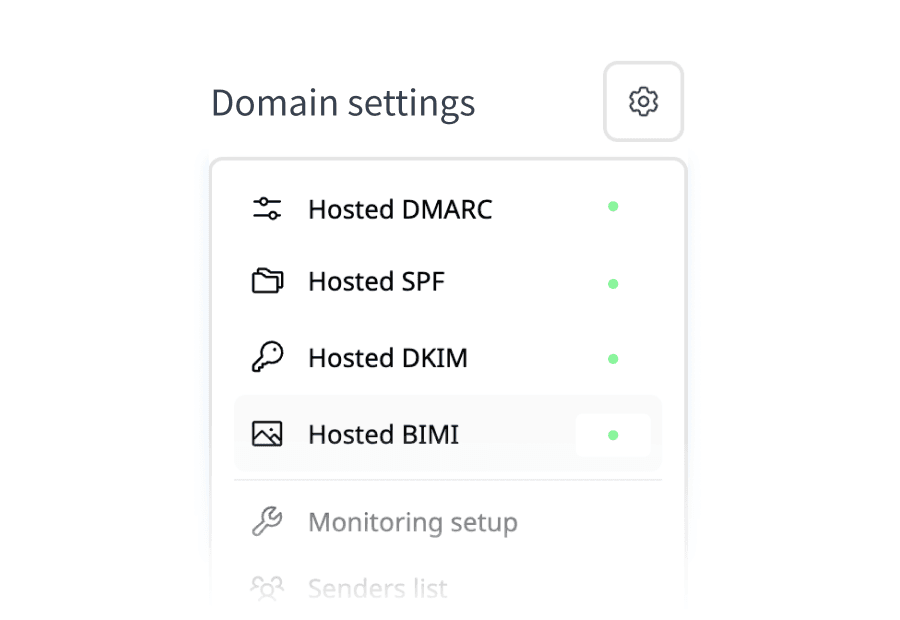
- Managed implementation from monitoring mode toward p=reject: Agent proposes policy steps
- AI agent that investigates senders, drafts fixes, and proposes policy steps for approval: Agent drafts and proposes
That creates genuine overlap with Palisade on the destination and on the need for an evidence-led rollout. The difference is the worker between report and approved change. Send-Shield's copy assigns the action to its team and experts. Palisade's agent investigates every sender, drafts each SPF and DKIM fix, and proposes each policy step; your team approves before anything ships. Send-Shield is a fit when managed human service is the intended operating model. Palisade is a fit when an internal team wants the agent to prepare the work at scale and retain the approval gate. Source (2026-08-26) Source 2 (2026-08-26)
Volume pricing vs domain pricing
What £19.99 buys, and where Send-Shield's volume and domain caps sit
Send-Shield's Starter plan is positioned for smaller businesses with minimal email traffic: £19.99 per month when billed annually, 10,000 DMARC-capable messages per month, and one monitored active domain. It includes self-setup, one month of data history, basic email support, checks, monitoring, automatic subdomain detection, reports, proactive threat monitoring, and a dedicated account manager. Core moves to £49.99 for 100,000 messages and two active domains, adds full implementation, and extends history to three months. Source (2026-10-13)
Send-Shield
A relevant product screenshot was not available in the reviewed evidence.
Palisade
A relevant product screenshot was not available in the reviewed evidence.
- Published plans priced by message volume and active domains: Email-volume plan tiers
- Unlimited report history: Unlimited IT/MSP; Enterprise customSource
The upper tiers make the scaling rule visible: Plus is £299 for 1,000,000 messages and eight active domains, while Enterprise starts at £699 for 5,000,000 messages and 15 active domains. Enterprise adds premium 24/7 support, enterprise reports, and advanced threat intelligence. The public pricing page does not publish an overage schedule or a monthly-billing equivalent, so a buyer with seasonal spikes should ask how the cap is handled. Palisade instead publishes flat monthly IT-team tiers by sending volume and portfolio-based MSP pricing by client domain, without metering client email volume. Source (2026-10-13)
What each side charges
Three points on each published range: the cheapest plan, one in the middle, and the top of what the vendor publishes. Every plan on both sides is in the pricing section further down.
- Starter£19.99/month, billed annually
10,000 DMARC-capable messages/month, 1 active domain, DMARC self-setup, 1 month of data history, basic email support, DMARC/SPF/DKIM check, monitoring, automatic subdomain detection, reports, proactive threat monitoring, and a dedicated account manager
- Core£49.99/month, billed annually
100,000 DMARC-capable messages/month, up to 2 active domains, full DMARC implementation, 3 months of data history, email and meeting support, checks, monitoring, automatic subdomain detection, basic reports, proactive threat monitoring, and a dedicated account manager
- EnterpriseFrom £699/month, billed annually
5,000,000 DMARC-capable messages/month, up to 15 active domains, full DMARC implementation, 3 months of data history, premium 24/7 support, analytical and enterprise reports, advanced threat intelligence, and a dedicated account manager
- IT teams: up to 100,000 emails/mo$19/mo ($15/mo billed annually)
2 set-up domains (adding is unlimited), unlimited retention, every core feature
- IT teams: up to 1,000,000 emails/mo$99/mo ($79/mo billed annually)
Same product: 10 set-up domains, pick the tier that matches your sending
- Enterprise (more than 2.5M / month)Custom
Custom volume, retention, and terms
Managed maintenance vs agent-drafted fixes
Send-Shield's SPF flattening promise: an operational parity point
SPF flattening is one of Send-Shield's clearest points of feature parity. Its SPF page explains that the service consolidates complex SPF records to stay within the ten-DNS-lookup limit, while reducing failure risk and making additional sending sources easier to accommodate. It also says Send-Shield continuously scans email-provider IP-address changes and automatically updates SPF records when changes are detected. That is an ongoing maintenance promise, not merely a one-time checker result. Source (2026-08-26)
Send-Shield
A relevant product screenshot was not available in the reviewed evidence.
Palisade
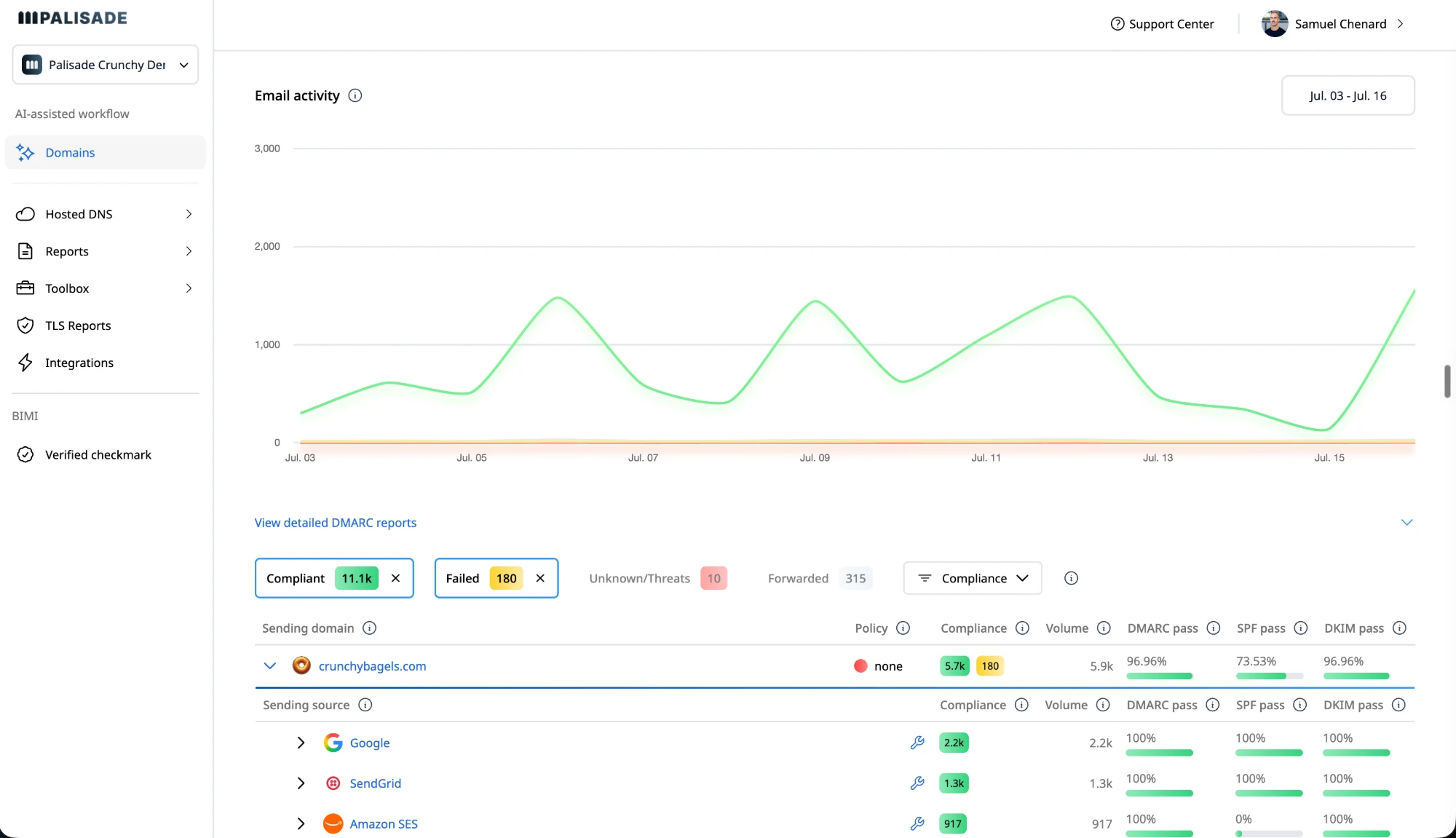
- SPF flattening with ongoing provider-IP monitoring and updates: Hosted SPF maintenance
- Automatic subdomain detection: Automatic subdomain discovery
- Hosted authentication records on redundant managed DNS: Hosted on managed DNS
The surrounding product pages place that maintenance beside sender discovery, reporting, threat monitoring, and deliverability work. A team can therefore view Send-Shield as a managed authentication service with a practical answer to SPF growth. Palisade also includes hosted SPF, DKIM, DMARC, and BIMI records and has an agent-led configuration workflow. The choice here is not whether SPF lookup limits matter; both products address the problem. It is whether you want Send-Shield's service team to maintain the record or Palisade's agent to draft the fix for your approval through a broader domain operations workflow. Source (2026-08-26) Source 2 (2026-08-26)
Team support vs MSP operations
Send-Shield's team-led support vs a repeatable MSP workflow
Send-Shield publishes a support-led experience. Its technical-support page offers guidance on DMARC, SPF, and DKIM, troubleshooting for alignment and policy errors, expert advice on interpreting reports, and implementation plans. Its pricing page then differentiates support by tier: basic email support on Starter, email and meeting support on Core and Plus, and premium 24/7 support on Enterprise. The service pages also describe dedicated account managers on the paid plans. This is a coherent fit for an organization that wants a named human relationship around its own domains. Source (2026-08-26) Source 2 (2026-10-13)
Send-Shield
A relevant product screenshot was not available in the reviewed evidence.
Palisade
- Native ConnectWise, HaloPSA, or Autotask integrations: Native PSA integrations
- Multi-tenant client management and white-label reporting: Multi-tenant MSP workflow
The boundary appears when the buyer is an MSP managing a portfolio. Send-Shield's public pages describe plans for small, mid-sized, large, and enterprise businesses and provide active-domain ceilings, but the checked pages do not advertise a multi-tenant client console, white-label reports, PSA integrations, or portfolio-based per-client-domain pricing. That is an absence of public positioning, not a claim about what a private contract might contain. Palisade's MSP offer is explicit about client-domain pricing, no client email metering, a free NFR domain, and native ConnectWise, HaloPSA, and Autotask integrations. Source (2026-08-26) Source 2 (2026-10-13)
Native PSA integrations
Palisade imports client domains straight from these three. Send-Shield's own coverage is stated above, from their site.
- ConnectWise PSA
- Autotask
- HaloPSA


Dashboard access vs programmatic access
Send-Shield's managed-service catalogue lists reports and checkers, not API or MCP endpoints
Send-Shield's public sitemap lists marketing, service, checker, trial, pricing, policy, case-study, and article routes. Its primary navigation names DMARC implementation, reporting, management, SPF flattening, technical support, and individual domain, DMARC, SPF, and DKIM checkers. The public pages checked do not advertise a customer REST or GraphQL API, an MCP server, an AI or machine-learning product feature, scheduled report delivery, webhooks, a data feed, or an export method. The reporting page does advertise reports and says its team and experts organise and act on the findings, but it does not describe a developer-access or automated-delivery option (checked 2026-08-27). Source (2026-08-27) Source 2 (2026-08-27) Source 3 (2026-08-27) Source 4 (2026-08-27)
Send-Shield
A relevant product screenshot was not available in the reviewed evidence.
Palisade
A relevant product screenshot was not available in the reviewed evidence.
- Documented REST or GraphQL API for programmatic access: REST API published
- MCP server for connecting AI assistants to domain data: MCP server published
- Advertised AI or machine-learning product features: Agent drafts fixes
Palisade publishes an MCP server and a REST API. Its agent investigates senders, drafts SPF and DKIM fixes, and proposes each policy step. A human approves before anything ships.
Reachable from your own AI tools
Palisade's MCP server exposes 42 tools over OAuth, so the assistant your team already uses can read domains, pull the exact records to publish and work the task queue. These are the clients the connection guide walks through.
- ChatGPT
- Claude
- Codex
- Cursor
- Windsurf
- Any MCP client





Still deciding between Send-Shield and Palisade? See what changes with Palisade.
15-day full-product trial. Nothing is charged until it ends.


 Microsoft 365
 Zoho Mail

The agent does the heavy lifting
Sources identified, SPF and DKIM fixes drafted, each policy step proposed. You approve; nothing ships on its own.
Connect your AI with MCP
42 tools over MCP, so your assistant reads your domains and works the queue.
Connect your DNS manager directly


One-time sign-in supports 64 providers without retaining credentials. Optional account connections support Cloudflare, GoDaddy and Route 53. You approve every change.
“We evaluated many DMARC providers before choosing Palisade. The quality of their product, the responsiveness and friendliness of their team and their rapid progress on their product roadmap made it a no-brainer for us to move forward.”
What Send-Shield pricing includes (and where the caps sit)
Send-Shield publishes four DMARC plans priced in pounds sterling and billed annually. The main price levers are monthly DMARC-capable message volume and active domains; the service also varies data history, support, report depth, and threat intelligence by tier.
What you'd actually pay
The same five buyer sizes on every comparison, so a shape carries from one page to the next.
1 domain, up to 1,000 emails a month
Starter: 1 active domain, 10,000 DMARC-capable messages/month; no 1,000-message tier published
2 set-up domains, up to 100K emails a month
Core: up to 2 active domains, 100,000 DMARC-capable messages/month
10 set-up domains, up to 1M emails a month
Plus: up to 8 active domains, 1,000,000 DMARC-capable messages/month; no 10-domain tier published
20 set-up domains, up to 2.5M emails a month
Enterprise: up to 15 active domains, 5,000,000 DMARC-capable messages/month; no 20-domain or 2.5-million-message tier published
Client domains under management, any volume
No MSP plan or per-client-domain rate is published
Palisade’s figures are derived from its published tiers. Send-Shield pricing or licensing source reference: vendor source citation date 2026-08-28. Plans and prices may have changed since.
How Send-Shield prices
- The displayed prices are annual-billing prices. The public pricing page does not show a monthly-billing equivalent for these plans (checked 2026-08-26).
- Send-Shield's pricing page does not publish an overage rate or explain what happens when a plan's monthly message or active-domain limit is exceeded (checked 2026-08-26).
- Starter is the self-setup tier. Core, Plus, and Enterprise list full DMARC implementation, while the implementation page advertises a two-week free trial to monitor volume, security, and threat risk (checked 2026-08-26).
- Data history is one month on Starter and three months on the other published plans; the public page does not advertise unlimited retention (checked 2026-08-26).
How Palisade prices
- Palisade publishes flat monthly IT-team plans of $19, $29, $59, $99, and $249 by sending-volume tier. Annual billing is 20% lower.
- Paid IT tiers cap set-up domains at 2, 3, 6, 10, or 20 by tier. Adding domains is free and unlimited; only domains you set up count against the tier.
- Palisade's MSP pricing is portfolio-based per client domain, with a rate that improves as the portfolio grows and a minimum of 5 client domains. Client email volume is not metered, and the MSP's own domain is included as a free Not-For-Resale license.
- Palisade offers a 15-day full-product trial. IT-team and MSP plans keep unlimited report history (Enterprise retention follows custom terms). API access is available on every plan.
Send-Shield source reference: primary reference citation date 2026-10-13.Palisade source reference: the public pricing page citation date 2026-08-30.Plans and prices may have changed since.
Start a 15-day full-product trial of Palisade. Nothing is charged until it ends.
What each one covers, and where it stops
Published facts only, read from each vendor's own material. Neither column describes a hands-on trial, because we have not run one.
Send-Shield is a managed DMARC service that audits records, monitors and reports on domain email activity, identifies legitimate senders and unauthorised sources, and moves domains toward p=reject. It also flattens SPF records, scans for provider IP changes, and updates those records when changes are detected.
The service is aimed at businesses that want a vendor team to handle DMARC implementation, monitoring, reporting, and ongoing SPF maintenance. Its four published plans are billed annually and scale by monthly DMARC-capable message volume and active domains. Starter is self-setup, while Core, Plus, and Enterprise list full DMARC implementation with tiered support, reporting, data history, and threat intelligence.
Palisade is built around an agent that does the DMARC work rather than reporting on it. It identifies every sending source, drafts the SPF and DKIM changes each one needs, and proposes the next policy step when the evidence supports it.
The agent investigates every sender, drafts every fix, and proposes each policy step, you approve before anything ships.
- Provides organized domain reports
- Summarizes SPF, DKIM, and DMARC authentication compliance
- Identifies third-party senders and monitors threats
- Supports team-led policy progression toward p=reject
- Updates flattened SPF records when provider IPs change
- The agent investigates senders and drafts the fix, so the work arrives prepared rather than as a list of findings
- Hosted SPF, DKIM and DMARC records, so an approved change can be carried out rather than handed off
- Portfolio workflow for MSPs, with ConnectWise, HaloPSA and Autotask integrations and a free NFR domain
- An MCP server and a REST API, so the same data and workflow are reachable from the AI tools a team already uses
- Does not advertise an AI agent that investigates senders, drafts fixes, and proposes policy steps for approval
- Does not advertise redundant managed DNS hosting for authentication records
- Does not advertise unlimited report retention
- Does not advertise named ConnectWise, HaloPSA, or Autotask integrations
- Does not advertise a documented REST or GraphQL API
- Every policy change waits for a human approval, by design: nothing ships on the agent's own authority
- MSP pricing is portfolio-based per client domain, with a minimum of 5 client domains
- Plans are sized by monthly email volume, so a low-domain, high-volume sender lands on a higher tier than domain count alone suggests
- Starts at
- £19.99/month, billed annually
- Free trial
- 2 weeks
- Message volume
- 10,000 to 5,000,000/month
- Active domains
- 1 to 15
- Data history
- 1 month to 3 months
- Starts at
- IT plans from $19/mo by email volume; 15-day trial
- Trial
- 15 days, full product
- MSP model
- Portfolio-based per client domain; minimum of 5 client domains
What Palisade customers say
5.0 out of 5 on G2Trusted by over 10,000 domains
“Palisade made it so easy for us to get our blue verified checkmark and achieve our BIMI compliance”


Sources and further reading
Source checks run through 2026-10-14; every entry keeps its individual check date.
- Send-Shield public site navigation, AI and automation access check
Checked 2026-08-27
- Send-Shield pricing
Checked 2026-10-13
- Send-Shield DMARC implementation
Checked 2026-08-28
- Send-Shield reporting, AI and export access check
Checked 2026-08-27
- Send-Shield DMARC management
Checked 2026-08-28
- Send-Shield SPF flattening
Checked 2026-08-26
- Send-Shield SPF support
Checked 2026-08-28
- Send-Shield free-trial page, access check
Checked 2026-08-27
- Send-Shield public sitemap, developer-route access check
Checked 2026-08-27
- Send-Shield privacy policy
Checked 2026-08-28
- Source
Checked 2026-10-13
- Source
Checked 2026-10-14
Palisade vs Send-Shield: FAQ
What is the main difference between Send-Shield and Palisade?
Send-Shield is a managed service: its public pages describe a team auditing records, monitoring traffic, analysing reports, making adjustments, and working toward p=reject. Palisade is agentic: its agent investigates every sender, drafts SPF and DKIM fixes, and proposes each policy step while your team approves before anything ships. The decision is whether you want a managed team to carry the work or an agent to prepare it for your approval.
Does Send-Shield offer SPF flattening?
Yes. Send-Shield advertises SPF flattening that consolidates complex records to stay within the ten-DNS-lookup limit. It also says the service continuously scans provider IP changes and automatically updates SPF records when changes are detected. That feature is documented on Send-Shield's SPF Flattening page, checked 2026-08-26.
How much does Send-Shield cost?
Send-Shield's published annual-billing prices are £19.99/month for Starter, £49.99 for Core, £299 for Plus, and from £699 for Enterprise. The plans cap monthly DMARC-capable messages at 10,000, 100,000, 1,000,000, and 5,000,000 respectively, with active-domain caps from one to 15. The public pricing page does not publish an overage schedule or a monthly-billing equivalent; checked 2026-10-13.
Does Send-Shield have a free trial?
Yes. Send-Shield's DMARC implementation and management pages advertise a two-week free trial to monitor email volume, security, and threat risk before selecting a plan. The pricing page also shows Start Free Trial links for Core, Plus, and Enterprise. The pages checked do not state whether a credit card is required.
Is Send-Shield built for MSPs?
Send-Shield publishes plans for businesses with one to 15 active domains, but its checked public pages do not advertise MSP multi-tenancy, white-label reporting, native ConnectWise/HaloPSA/Autotask integrations, or portfolio-based per-client-domain pricing. That is an absence of public advertising, not a statement about private contract options. Palisade is the clearer fit when those MSP operating requirements are central.
Can Send-Shield and Palisade run in parallel during a switch?
Yes. DMARC reporting supports multiple report recipients, so you can add Palisade while Send-Shield continues receiving the same aggregate reports. Keep the existing managed workflow active while you compare sender evidence, review Palisade's proposed changes, and approve the DNS handoff on your schedule. Source (2026-10-14)
Switching from Send-Shield takes three steps
- 1
Add Palisade alongside Send-Shield
Import your domains into Palisade and keep Send-Shield's DMARC report destination active while the new agent builds its sender picture.
- 2
Compare the remediation queues
Use the overlap to compare Send-Shield's managed reports with Palisade's drafted SPF, DKIM, and policy recommendations before changing the live workflow.
- 3
Approve the DNS handoff
Review each proposed record, authorise Palisade’s DNS connection to your DNS provider, and retire Send-Shield's reporting path only after Palisade is receiving reports successfully.
15-day full-product trial. Nothing is charged until it ends.
Source citations on this page run through 2026-10-14; individual claims retain their dates and evidence limitations. Spotted something out of date? Tell us and we'll fix it.