
Red Sift vs Palisade in 2026
How Red Sift and Palisade compare on operating model, pricing, and fit for IT teams and MSPs.
Our verdict: Pick Palisade if you want an AI agent to carry the work through enforcement, whether you manage one domain or thousands. Pick Red Sift if your team prefers a traditional, operator-led workflow.
 Samuel Chenard · CEO & Co-Founder, PalisadeSource checks through 2026-07-19
1 domain free up to 1,000 emails/month
 ChatGPT
 Claude
 Gemini
 Perplexity
 Grok
Grok Red Sift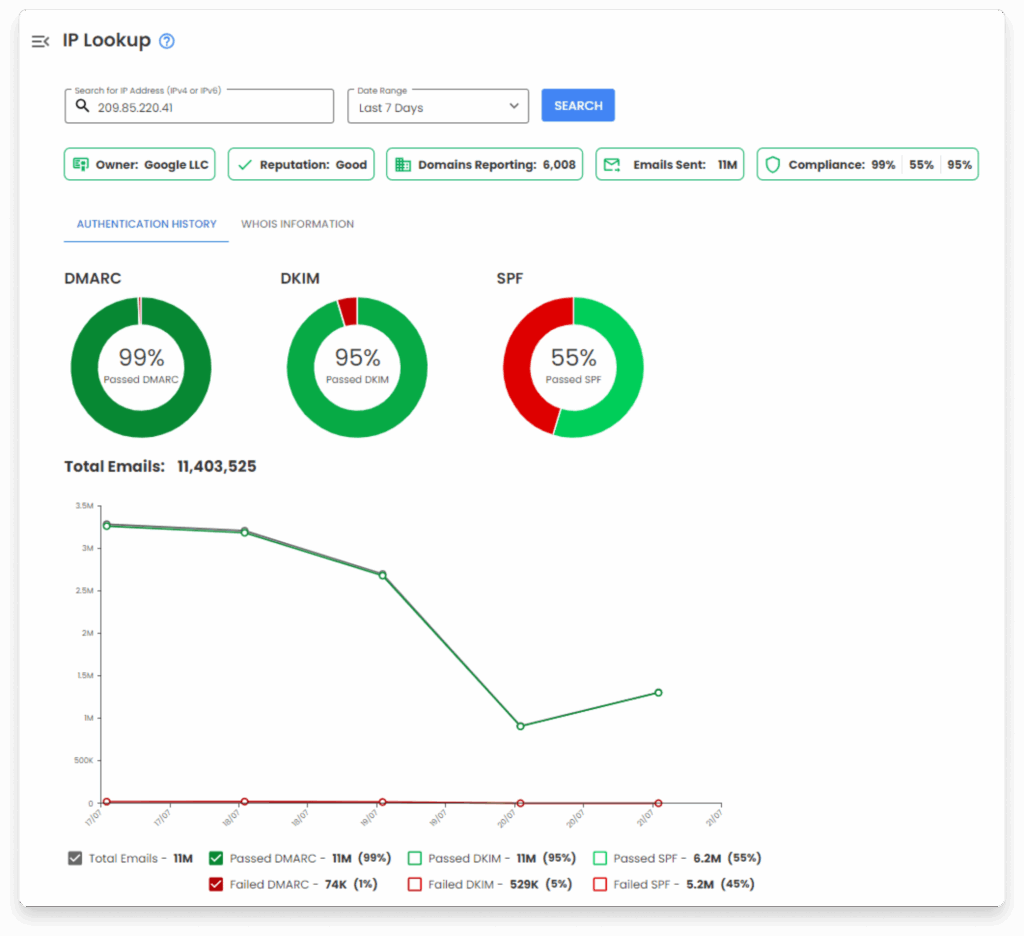
 Palisade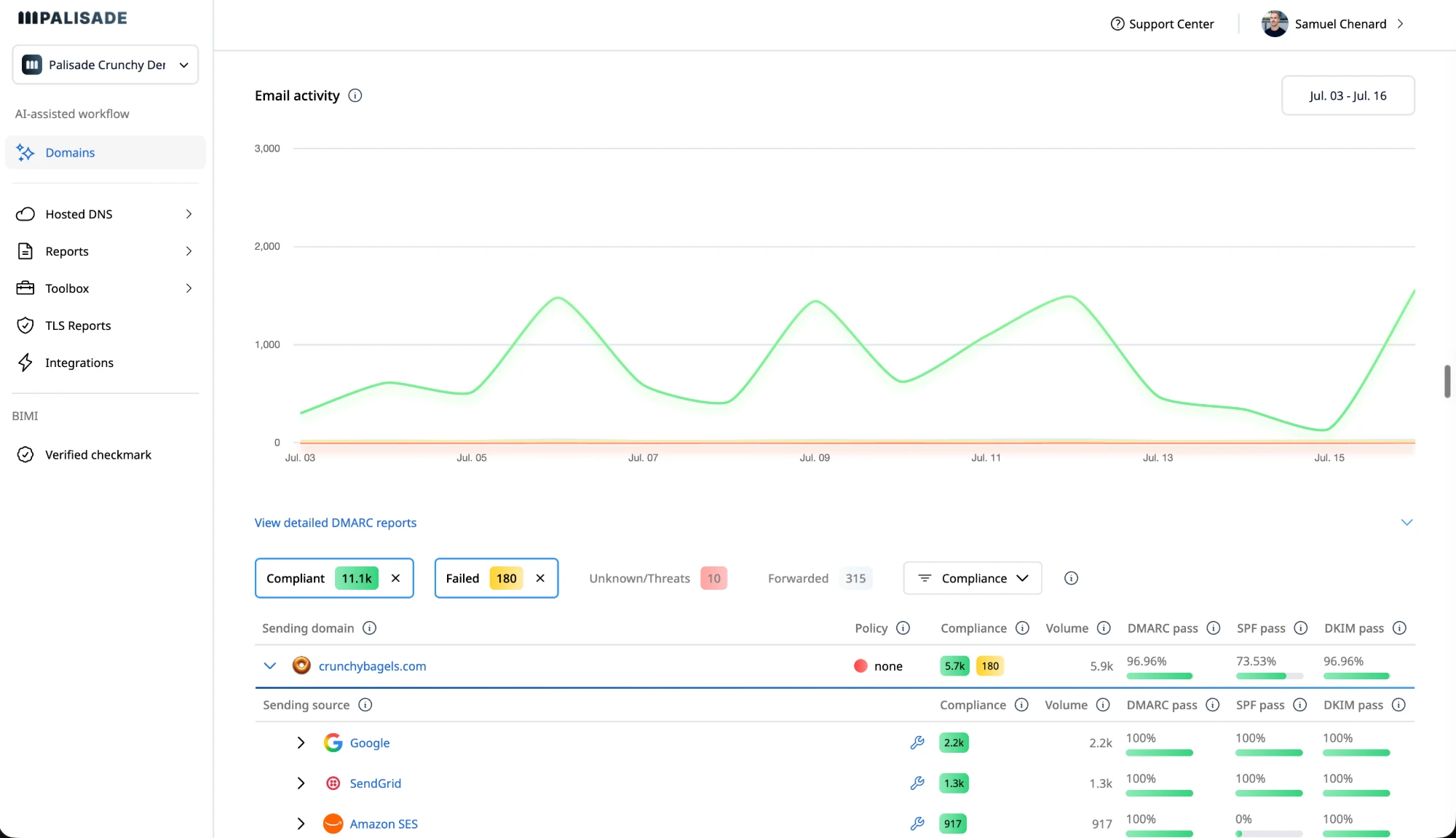
Palisade is free for one domain, up to 1,000 emails a month. Paid IT-team plans are sized by email volume. Start a 15-day full-product trial with no credit card.
Which one is right for you?
Best for Single-organization security teams
Best for MSPs and IT teams responsible for multiple domains
- You prefer a more traditional Red Sift workflow with people involved in each enforcement step.
- Your buying criteria center on vendor-specific enterprise requirements.
- Pick Red Sift OnDMARC if you run security for a single organization that wants a guided enforcement project with SIEM event streaming and a dedicated account manager, and quote-based pricing works for your procurement.
- Pick Express if you protect up to 4 of your own domains sending under 1M emails a month and a plan starting at $9/month covers the need.
- You run an MSP, or an internal IT or security team, responsible for multiple domains.
- You want an AI agent to investigate issues, configure authentication, and move domains toward p=reject.
- Teams already using Claude, OpenAI, or other AI tools can bring the same agent-led operating model to DMARC.
Free for one domain, up to 1,000 emails a month. Paid IT-team plans are sized by email volume. Start a 15-day full-product trial with no credit card.
Where the day-to-day work actually differs
| Feature | Red Sift | Palisade |
|---|---|---|
| Enforcement | ||
| Agent does the enforcement work and evaluates policy readiness; you approve each stepWhether a product investigates senders, drafts fixes, and proposes policy steps for approval.OnDMARC advertises a guided path to enforcement, typically 6-8 weeks, with Radar LLM assistance; it does not advertise autonomous policy execution (checked 2026-07-19). | Not advertised | Agent drafts and proposes |
| DMARC report monitoringWhether DMARC reports are collected and available for review.Core OnDMARC function; forensic reporting is listed across plans. | Core report monitoring | Report monitoring |
| Limits & metering | ||
| Unlimited report retention on every paid planHow long paid plans retain DMARC report history.The current pricing page lists 30 days of data history on Express and 1 year on Essentials, Enterprise, and Premier (checked 2026-08-29). Source (2026-08-29) | Limited to 1 year | Unlimited paid-plan retention |
| API access on every planWhether every plan includes programmatic access to DMARC data.Red Sift's pricing page lists API access across all four tiers. | All four tiers | API on every plan |
| MSP operations | ||
| Native ConnectWise, HaloPSA & Autotask integrationsWhether a product connects directly to the named PSA systems.Red Sift's MSP page advertises a generic PSA integration without naming ConnectWise, HaloPSA, or Autotask (checked 2026-07-19). | No named PSA tools | Native PSA integrations |
| Portfolio-based MSP pricingWhether MSP pricing scales with a provider's client-domain portfolio.Only Express has a published price (starting at $9/mo, up to 4 domains); MSP terms are arranged by contacting Red Sift's MSP team (checked 2026-07-19). | No published MSP pricing | Portfolio-based client pricing |
| Multi-tenant client managementWhether one account can manage separate client domains.Red Sift's MSP program advertises native multi-tenancy with a single console for client domains. | One client console | Multi-tenant management |
| Hosted records & DNS | ||
| Hosted DMARC, SPF & MTA-STSWhether a product can host and manage authentication records.OnDMARC configures SPF, DKIM, DMARC, BIMI, and MTA-STS from one place. | One configuration point | Hosted on managed DNS |
| SPF flatteningWhether SPF lookup chains can be reduced before publication.Offered as Dynamic SPF on Essentials and above, consolidating records to stay under the lookup limit; Express itself is capped at 10 SPF lookups and does not list Dynamic SPF (checked 2026-07-19). | Essentials and above | Hosted SPF flattening |
| Hosted records on redundant managed DNSWhether hosted records are served through redundant managed DNS.Red Sift does not publish a DNS uptime guarantee (checked 2026-07-19). | No uptime guarantee | Redundant managed DNS |
| AI and automation access | ||
| REST API for domain and reporting dataWhether software can manage domain settings and obtain reporting data through a published API.Red Sift's current pricing page lists API access and a RESTful API on Express, Essentials, Enterprise, and Premier (checked 2026-08-27). Source (2026-08-27) | REST API all tiers | REST API published |
| MCP server for connecting AI assistants to domain dataWhether an AI assistant can reach the product's data directly.Red Sift publishes an MCP server with OnDMARC tools for managing domains, viewing compliance reports and email sources, and configuring Dynamic Services and tags (checked 2026-08-27). Source (2026-08-27) | MCP server published | MCP server published |
| Advertised LLM assistance in OnDMARCWhether the product advertises AI that helps investigate or prepare authentication work.Red Sift advertises Radar, an LLM embedded in OnDMARC, for email questions, DMARC and SPF misconfiguration diagnosis, failure-report interpretation, and unknown-sender analysis. Its pricing page lists limited Radar access on Essentials and Radar Pro seats on Enterprise and Premier; Express does not list Radar (checked 2026-08-27). Source (2026-08-27) Source 2 (2026-08-27) | Radar LLM on paid tiers | Approval-gated agent drafts |
| Security events available outside the dashboardWhether a documented integration can send product events to another system without using the UI.Red Sift's current pricing page lists Event Hub on every OnDMARC tier and says it streams security and audit events through native SIEM integrations, webhooks, Slack, and more (checked 2026-08-27). Source (2026-08-27) | Webhooks on all tiers | REST API published |
Want to compare the workflow yourself? Try Palisade free with one domain and up to 1,000 emails a month.
Palisade 96 vs Red Sift 79, and why
Both products are scored on the same eight dimensions the comparison hub uses, so the figures here are the figures there. Four are derived from vendor facts that each carry a source and a checked date. Four are editorial, marked as such below, and each states its reasoning and its source.
Each dimension is out of 10 and the total is the raw sum out of 80, rescaled to 100 — the raw figure is printed beside it so the conversion is checkable rather than a black box. Scored on what each vendor publishes, not on how the product feels in use. Editorial dimensions last reviewed 2026-09-02.
How reachable the product is from your own software and AI tools. 10 = a documented API on every plan plus a published MCP server. 6 = an API, gated to a tier or to a sales conversation. 3 = no programmatic access advertised.
Red Sift documents a REST API on every OnDMARC plan and publishes an MCP server with read and write tools for domains, source classifications, tags, and Dynamic Services. Source (2026-08-28)
Palisade publishes a REST API and a remote MCP server on every plan, making the same domain data and remediation workflows available to connected software. Source (2026-08-30)
How much of the report analysis is done for you. 10 = the platform turns raw report data into a prioritised, actionable queue on its own.
Investigative tooling for identifying and approving sending sources, with end-to-end BIMI/VMC provisioning. Source (2026-08-28)
Report data is analysed into a prioritised list of sender, SPF, DKIM and DMARC issues, so nobody reads raw XML. Source (2026-08-30)
How much of the work the vendor's own software does. 10 = it identifies the sending sources, drafts the SPF and DKIM fixes each one needs, and proposes the next policy step. 6 = it applies the records for you, but a person decides what to fix and when to advance. 3 = it reports, and every change is yours to make. A vendor whose team does the work rather than its software scores here on the software alone.
Dynamic Services applies record changes from the OnDMARC interface, but a person chooses each change and decides when to move to the next policy stage. Source (2026-08-28)
The agent investigates each sender, drafts the SPF and DKIM changes it needs, and proposes the next policy step; a human approves before deployment. Source (2026-08-30)
10 = full pricing published. 6 = some tiers published, rest quote-gated. 3 = quote only.
Published: free plan, then flat monthly plans by email volume from $19/mo Source (2026-08-30)
10 = hosts the records for you. 6 = partial or add-on. 3 = you manage your own DNS.
10 = a genuine free plan. 6 = time-limited trial only. 3 = no free access.
Free plan: one domain, up to 1,000 emails/mo, 14-day report history, no credit card, plus a 15-day full-product trial Source (2026-08-30)
10 = a real MSP program with multi-tenant management. 6 = partial. 3 = none.
How much work it takes to get a domain from p=none to p=reject. 10 = the platform (or the vendor's team) gets you there without manual DNS edits.
Dynamic Services manage SPF/DKIM/DMARC/MTA-STS/BIMI records and guided setup walks the policy stages; the stage decision stays with you. Source (2026-08-28)
The DMARC Agent detects when a domain's authentication and alignment are ready for the next policy stage and proposes the move, but a human still approves and applies it, so it is not fully hands-off. Source (2026-08-30)
Where Palisade and Red Sift actually differ
Each argument keeps the product screens, sourced comparison points, and supporting analysis together.
Guided workflow vs execution
Guided enforcement workflow vs executed enforcement
OnDMARC's workflow starts with visibility into DMARC reports, then walks the operator along a path to enforcement: identify senders, fix SPF and DKIM, and tighten policy in stages. Red Sift states organizations typically reach full enforcement in 6 to 8 weeks. Hosted records let approved changes apply without new DNS tickets, and the Radar LLM assistant pinpoints root causes of failures, but a person still reviews and advances each policy stage.
Red Sift
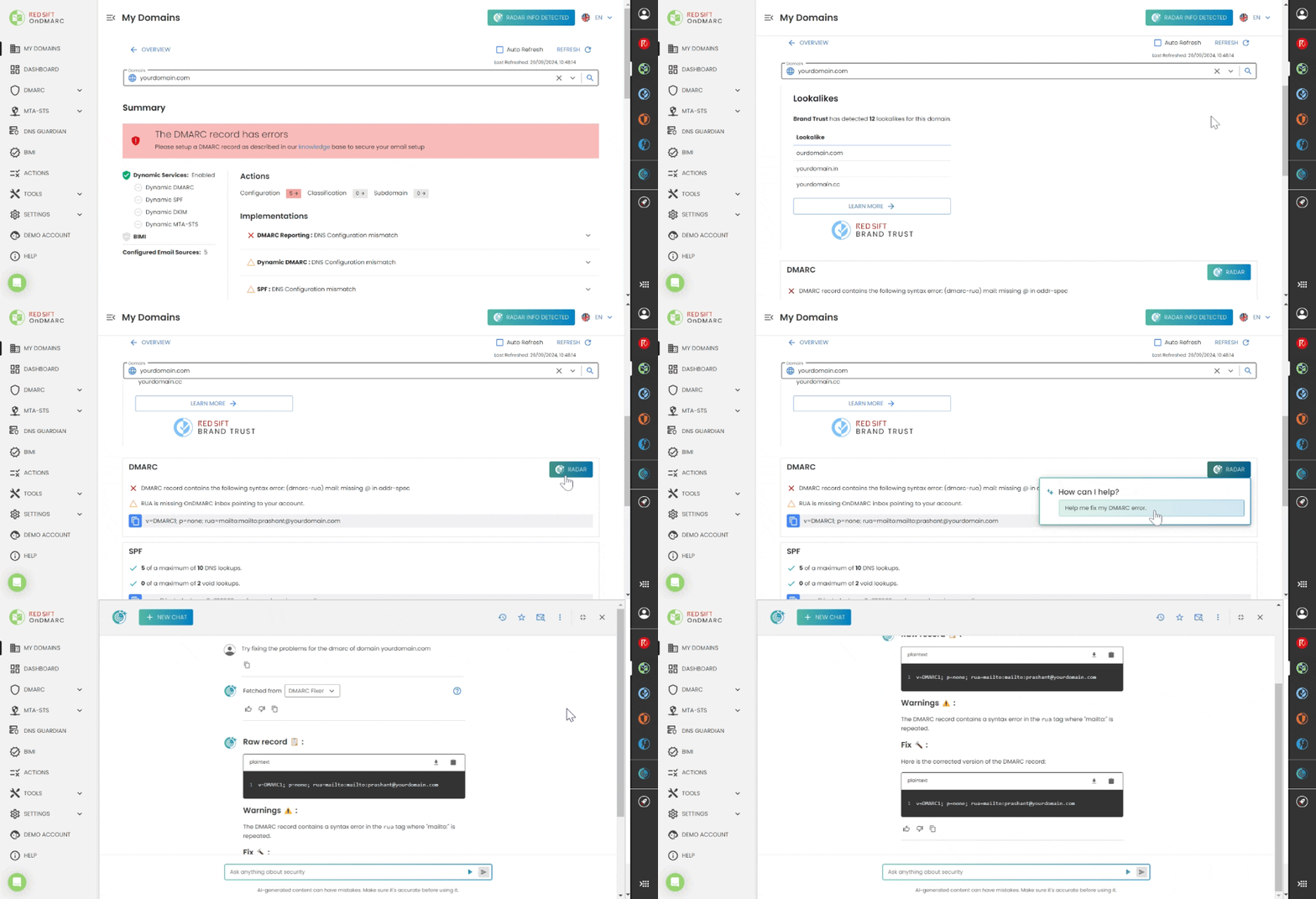
- Agent does the enforcement work and evaluates policy readiness; you approve each step: Not advertised
- DMARC report monitoring: Core report monitoring
Palisade
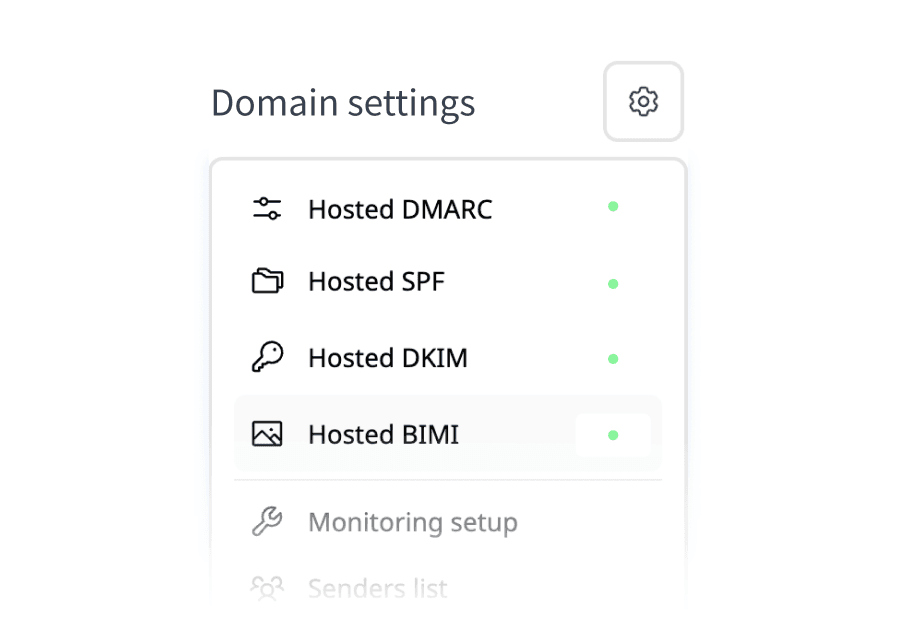
- Agent does the enforcement work and evaluates policy readiness; you approve each step: Agent drafts and proposes
- DMARC report monitoring: Report monitoring
Palisade takes the operator out of the legwork. Its AI agent identifies legitimate senders, configures SPF and DKIM, and progressively tightens policy to p=reject, with your team approving each step. For an MSP holding dozens or hundreds of client domains, the difference is workload: OnDMARC gives each domain a guided project for someone to run, while Palisade does the enforcement work and hands your team the approvals.
Usage limits vs portfolio pricing
What OnDMARC meters (and how Palisade prices)
OnDMARC publishes one numeric price. Express starts at $9 per month billed annually and meters four things: up to 4 domains, up to 1 million emails per month, 30 days of data history, and up to 10 SPF lookups. Essentials, Enterprise, and Premier lift the volume and lookup caps but keep data history at 1 year, start at 25 to 50 active sender domains, and carry no published price.Source
Red Sift
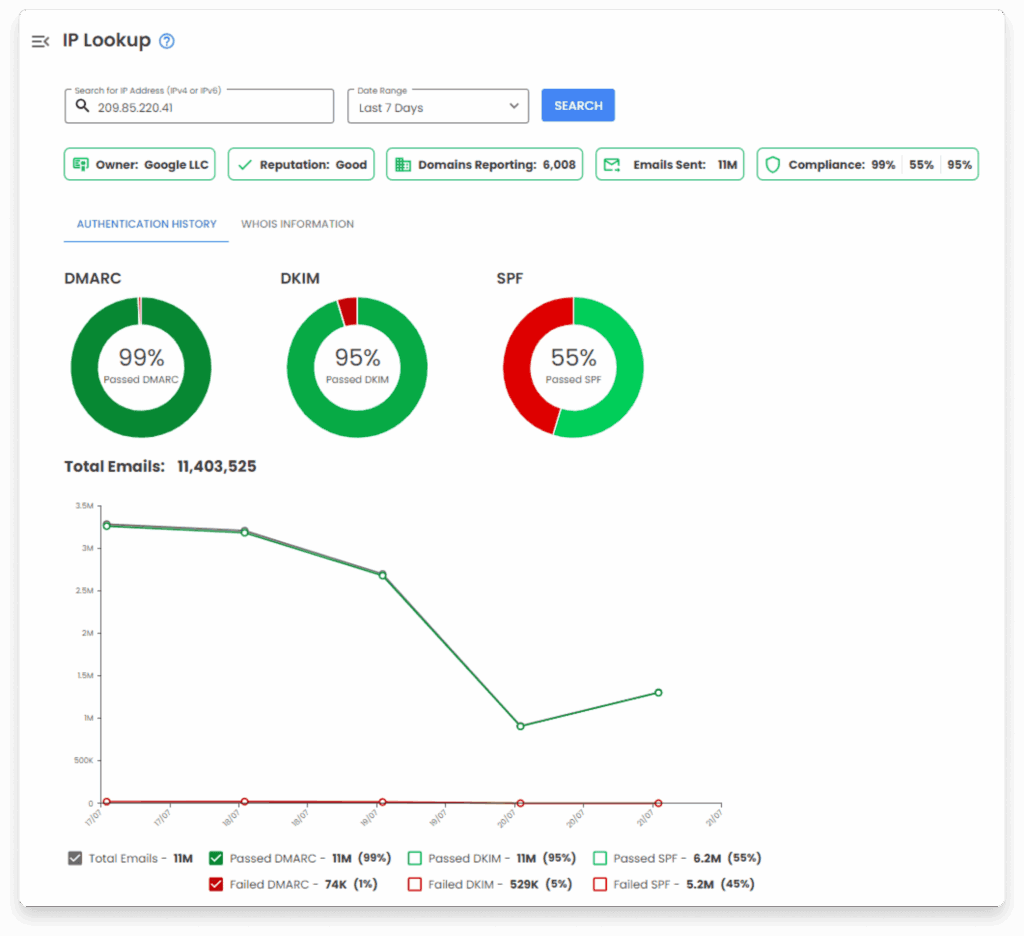
- Unlimited report retention on every paid plan: Limited to 1 yearSource
- API access on every plan: All four tiers
Palisade
A relevant product screenshot was not available in the reviewed evidence.
- Unlimited report retention on every paid plan: Unlimited paid-plan retention
- API access on every plan: API on every plan
Palisade publishes its self-serve IT-team pricing: a Free plan for one domain and up to 1,000 emails/month, flat monthly plans sized by email volume from $19/month (20% off on annual billing) with 2 to 20 set-up domains by tier (adding domains is free and unlimited), unlimited report retention on paid plans and API access on every plan, and a 15-day full-product trial. MSPs receive a free NFR domain and quoted, portfolio-based per-client-domain pricing with no client email metering.
What each side charges
Three points on each published range: the cheapest plan, one in the middle, and the top of what the vendor publishes. Every plan on both sides is in the pricing section further down.
- ExpressStarting at $9/mo billed annually
Up to 4 domains, up to 1M emails/month, 30-day data history, up to 10 SPF lookups, unlimited users
- EssentialsCustom - contact sales
25 active sender domains (upgradable to unlimited), unlimited email volume, 1-year data history, unlimited SPF lookups
- PremierCustom - contact sales
50 active sender domains (upgradable to unlimited), unlimited email volume, 1-year data history, 8 Radar Pro seats
- Free$0
1 domain, your own, capped at 1,000 emails/mo
- IT teams: up to 500,000 emails/mo$59/mo ($47/mo billed annually)
Same product: 6 set-up domains, pick the tier that matches your sending
- Enterprise (more than 2.5M / month)Custom
Custom volume, retention, and terms
Single-team fit vs MSP scale
Who OnDMARC serves, and where the model stops scaling
Red Sift builds OnDMARC for security teams with compliance and SOC requirements: it positions DMARC as a PCI DSS 4.0.1 requirement, streams security and audit events into SIEM tools through its Event Hub, and staffs a dedicated account manager on the Enterprise and Premier tiers. The MSP program adds native multi-tenancy, role-based access control, and a single console for client domains, with commercial terms arranged through its MSP team rather than published pricing.
Red Sift
A relevant product screenshot was not available in the reviewed evidence.
- Native ConnectWise, HaloPSA & Autotask integrations: No named PSA tools
- Portfolio-based MSP pricing: No published MSP pricing
- Multi-tenant client management: One client console
Palisade
A relevant product screenshot was not available in the reviewed evidence.
- Native ConnectWise, HaloPSA & Autotask integrations: Native PSA integrations
- Portfolio-based MSP pricing: Portfolio-based client pricing
- Multi-tenant client management: Multi-tenant management
For an MSP standardizing a DMARC service line, the friction points are the quote-based tiers, the unnamed PSA integration, and enforcement that still needs an operator per domain. Margin math is hard to model when three of four plans list no price. The honest concession: Express fits a business protecting a few of its own domains under 1 million emails a month, and a single enterprise security team wanting a guided workflow with SIEM streaming is a real fit for the higher tiers.
Dashboard access vs programmatic access
OnDMARC's REST API, MCP server, Event Hub, and Radar LLM
Red Sift publishes an interactive OnDMARC API reference. Its getting-started guide says the API can manage domains, analyze authentication records, retrieve aggregate DMARC, TLS, and forensic reports, classify sources, configure alerts, and manage Dynamic Services. The current pricing page lists API access and a RESTful API on Express, Essentials, Enterprise, and Premier. Red Sift also publishes an MCP server for AI clients; its OnDMARC tools manage domains, view compliance reports and email sources, and configure Dynamic Services and tags. Radar is a separate LLM feature embedded in OnDMARC that Red Sift says can answer email questions, diagnose DMARC and SPF misconfigurations, help interpret failure reports, and evaluate unknown IP addresses. The pricing page lists limited Radar access on Essentials and Radar Pro seats on Enterprise and Premier. Event Hub, listed on each plan, streams security and audit events through SIEM integrations, webhooks, Slack, and more (checked 2026-08-27). Source (2026-08-27) Source 2 (2026-08-27) Source 3 (2026-08-27) Source 4 (2026-08-27) Source 5 (2026-08-27)
Red Sift
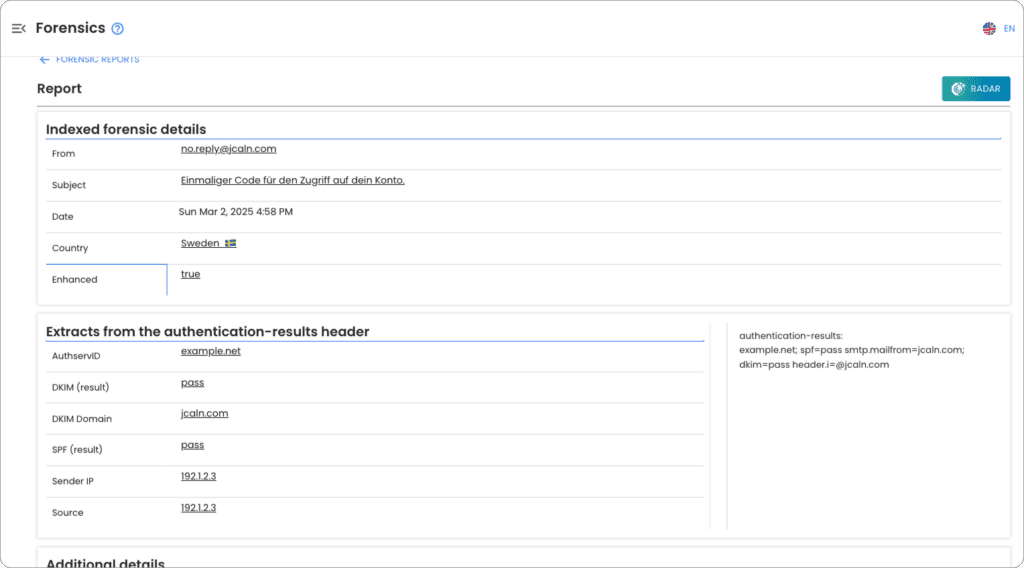
Palisade
A relevant product screenshot was not available in the reviewed evidence.
- REST API for domain and reporting data: REST API published
- MCP server for connecting AI assistants to domain data: MCP server published
- Advertised LLM assistance in OnDMARC: Approval-gated agent drafts
Palisade publishes an MCP server and a REST API. Its agent investigates senders, drafts SPF and DKIM fixes, and proposes each policy step. A human approves before anything ships.
Reachable from your own AI tools
Palisade's MCP server exposes 42 tools over OAuth, so the assistant your team already uses can read domains, pull the exact records to publish and work the task queue. These are the clients the connection guide walks through.
- ChatGPT
- Claude
- Codex
- Cursor
- Windsurf
- Any MCP client





Still deciding between Red Sift and Palisade? See what changes with Palisade.
1 domain free up to 1,000 emails/month


 Microsoft 365
 Zoho Mail

The agent does the heavy lifting
Sources identified, SPF and DKIM fixes drafted, each policy step proposed. You approve; nothing ships on its own.
Connect your AI with MCP
42 tools over MCP, so your assistant reads your domains and works the queue.
Connect your DNS manager directly


Approved records go into your own zone at your own provider, across 64. No credentials reach us.
“We evaluated many DMARC providers before choosing Palisade. The quality of their product, the responsiveness and friendliness of their team and their rapid progress on their product roadmap made it a no-brainer for us to move forward.”
Red Sift OnDMARC pricing explained (and how Palisade compares)
Red Sift OnDMARC sells four tiers. Express is the only one with a published number (starting at $9 per month billed annually, up to 4 domains); Essentials, Enterprise, and Premier are quote-based, as is the MSP program.
What you'd actually pay
The same five buyer sizes on every comparison, so a shape carries from one page to the next.
1 domain, up to 1,000 emails a month
Express: up to 4 domains, up to 1M monthly emails
2 set-up domains, up to 100K emails a month
Express: up to 4 domains, up to 1M monthly emails
10 set-up domains, up to 1M emails a month
Express stops at 4 domains; Essentials starts at 25 active sender domains and requires contact
20 set-up domains, up to 2.5M emails a month
Essentials: 25 active sender domains, unlimited email volume; Contact us
Client domains under management, any volume
No MSP tier or rate is listed on the OnDMARC pricing page
Palisade’s figures are derived from its published tiers. Red Sift figures read from their pricing page on 2026-08-28. Plans and prices may have changed since.
How Red Sift prices
- Express is the only tier with a published number: starting at $9/month billed annually, covering up to 4 domains, up to 1M emails/month, 30 days of data history, and up to 10 SPF lookups (checked 2026-07-19).
- Essentials, Enterprise, and Premier have no published prices; all three start at 25 to 50 active sender domains and keep data history at 1 year.
- MSP program pricing is not published; the MSP page directs providers to email Red Sift's MSP team (checked 2026-07-19).
- All tiers offer a free trial with no credit card required; trial length is not published (checked 2026-07-19).
- Red Sift's pricing page lists API access, 2FA, and SAML/SSO across all four tiers.
How Palisade prices
- Palisade publishes its self-serve IT-team pricing: a Free plan for one domain and up to 1,000 emails/month, flat monthly plans sized by email volume from $19/month (20% off on annual billing) with 2 to 20 set-up domains by tier (adding domains is free and unlimited), and portfolio-based per-client-domain pricing for MSPs. OnDMARC publishes one starting price and quotes the other three tiers.
- Palisade's plans are flat monthly prices with 2 to 20 set-up domains by tier and free unlimited domain adding; OnDMARC's Express plan caps both domains under management (up to 4) and volume (1M emails per month).
- Palisade keeps report retention unlimited on every paid plan; OnDMARC publishes 30 days of data history on Express and 1 year on the tiers above it.
- Palisade ships native ConnectWise, HaloPSA, and Autotask integrations with client-domain import; Red Sift's MSP page mentions PSA integration without naming a platform.
Red Sift pricing read from their public pricing page on 2026-07-19.Plans and prices may have changed since.
Try Palisade free on one domain, or start a 15-day full-product trial with no credit card.
What each one covers, and where it stops
Published facts only, read from each vendor's own material. Neither column describes a hands-on trial, because we have not run one.
Red Sift OnDMARC gives security teams DMARC report visibility and a guided path to enforcement: identify senders, fix SPF and DKIM, then tighten policy in stages. It supports hosted records, report monitoring, API access, an MCP server, Radar LLM assistance, and Event Hub integrations for security and audit events.
The product has four tiers. Express starts at $9 per month billed annually for up to 4 domains and 1 million emails per month; Essentials, Enterprise, and Premier use quote-based pricing. Its MSP program provides native multi-tenancy and a single console for client domains, but directs providers to its team for commercial terms.
Palisade is built around an agent that does the DMARC work rather than reporting on it. It identifies every sending source, drafts the SPF and DKIM changes each one needs, and proposes the next policy step when the evidence supports it.
The agent investigates every sender, drafts every fix, and proposes each policy step, you approve before anything ships.
- Provides core DMARC report monitoring
- Provides API access on all four tiers
- Provides one client console for multi-tenant client management
- Provides one configuration point for hosted DMARC, SPF, and MTA-STS
- Provides Radar LLM on paid tiers
- The agent investigates senders and drafts the fix, so the work arrives prepared rather than as a list of findings
- Hosted SPF, DKIM and DMARC on redundant managed DNS, so an approved change can be carried out rather than handed off
- Portfolio workflow for MSPs, with ConnectWise, HaloPSA and Autotask integrations and a free NFR domain
- An MCP server and a REST API, so the same data and workflow are reachable from the AI tools a team already uses
- Does not advertise an agent that does the enforcement work and evaluates policy readiness with operator approval
- Does not publish unlimited report retention on every paid plan
- Does not advertise named ConnectWise, HaloPSA, or Autotask integrations
- Does not publish MSP portfolio pricing
- Does not publish a DNS uptime guarantee
- Every policy change waits for a human approval, by design: nothing ships on the agent's own authority
- MSP pricing is quoted per client domain rather than published as a rate card
- Plans are sized by monthly email volume, so a low-domain, high-volume sender lands on a higher tier than domain count alone suggests
- Starts at
- $9/mo billed annually
- Express limits
- 4 domains, 1M emails/mo
- Data history
- 30 days Express; 1 year on higher tiers
- Trial length
- Not published
- MSP pricing
- Not published
- Starts at
- Free for 1 domain; IT plans from $19/mo by email volume
- Free tier
- 1 domain, up to 1,000 emails/month
- Trial
- 15 days, full product, no credit card
- MSP model
- Quoted per client domain, portfolio-based
What Palisade customers say
5.0 out of 5 on G2Trusted by over 10,000 domains
“Palisade made it so easy for us to get our blue verified checkmark and achieve our BIMI compliance”


Sources and further reading
Source checks run through 2026-07-19; every entry keeps its individual check date.
- Red Sift OnDMARC pricing: API, Radar, and Event Hub coverage
Checked 2026-08-27
- Red Sift Developer Hub: REST APIs and MCP tools
Checked 2026-08-27
- Red Sift OnDMARC API reference
Checked 2026-08-27
- Red Sift OnDMARC API getting started guide
Checked 2026-08-27
- Red Sift MCP Server overview
Checked 2026-08-27
- Red Sift Radar LLM capabilities
Checked 2026-08-27
- Red Sift Event Hub webhook and telemetry announcement
Checked 2026-08-27
Palisade vs Red Sift: FAQ
What is the main difference between Red Sift and Palisade?
Palisade is agentic DMARC software. Its agent investigates sending sources, works through SPF and DKIM alignment, and moves domains toward p=reject while your team stays in control. When evaluating Red Sift, compare that operating model with the workflow in its current product documentation and decide how much work you want your team to carry.
Who should choose Palisade?
Choose Palisade if you want an AI agent to carry routine DMARC work through enforcement, whether you manage one domain or thousands. It is also a natural fit for teams already using Claude, OpenAI, or other AI tools to get operational work done.
Who should choose Red Sift?
Choose Red Sift if its current integrations, procurement model, or operating workflow better match your requirements. A more operator-led platform can also fit a team that prefers to review reports and make each change itself.
Does Palisade guarantee a specific time to p=reject?
No responsible DMARC platform should promise the same enforcement timeline for every domain. Timing depends on the number of sending sources, access to DNS and third-party systems, and how quickly each legitimate stream can be aligned. Palisade's agent reduces routine investigation and configuration work while operators retain control over policy decisions.
Switching from Red Sift takes three steps
- 1
Batch-import your domains
Bring your client domains into Palisade in bulk, or let your ConnectWise, HaloPSA, or Autotask integration sync them automatically.
- 2
Run both platforms in parallel
DMARC reporting supports multiple recipients, so Palisade and Red Sift receive the same reports during the overlap window. Nothing breaks while you compare.
- 3
Cut DNS over on your schedule
Point records at Palisade's hosted infrastructure (redundant managed DNS), then retire the old setup when you're satisfied.
1 domain free up to 1,000 emails/month
Competitor information on this page was last reviewed against public sources on 2026-07-19. Spotted something out of date? Tell us and we'll fix it.