
Proofpoint vs Palisade in 2026
How Proofpoint and Palisade compare on operating model, pricing, and fit for IT teams and MSPs.
Our verdict: Pick Palisade if you want an AI agent to carry the work through enforcement, whether you manage one domain or thousands. Pick Proofpoint if your team prefers a traditional, operator-led workflow.
 Samuel Chenard · CEO & Co-Founder, PalisadeSource checks through 2026-07-18
15-day full-product trial. Nothing is charged until it ends.
 ChatGPT
 Claude
 Gemini
 Perplexity
 Grok
Grok Proofpoint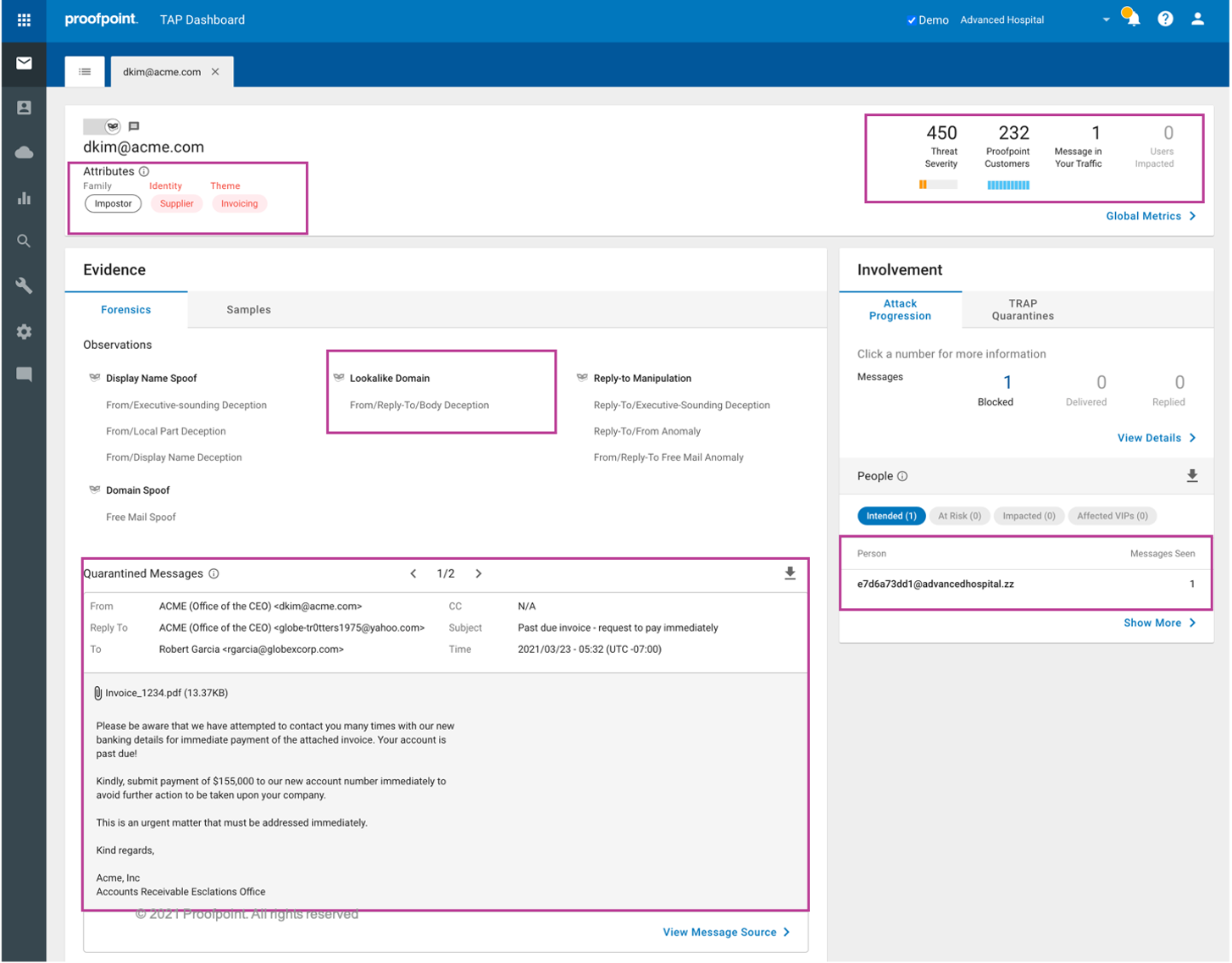
 Palisade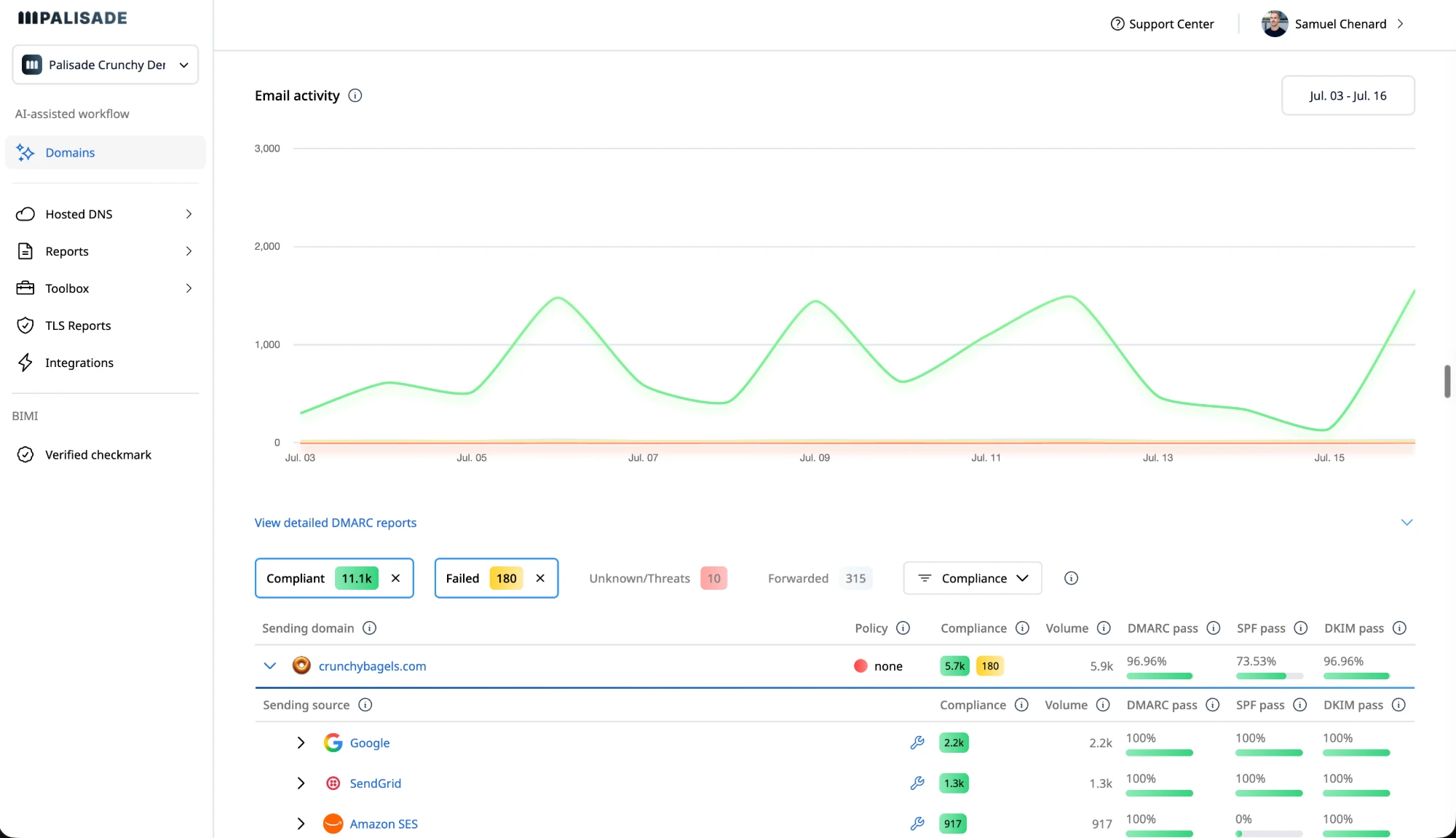
Palisade's IT-team plans start at $19 a month, sized by email volume. Start with a 15-day full-product trial; nothing is charged until it ends.
Which one is right for you?
Best for Large enterprises already on the Proofpoint email gateway
Best for MSPs and IT teams responsible for multiple domains
- You prefer a more traditional Proofpoint workflow with people involved in each enforcement step.
- Your buying criteria center on vendor-specific enterprise requirements.
- Pick Proofpoint if you are a large enterprise, ideally already on the Proofpoint email gateway, and want consultant-led DMARC deployment plus lookalike-domain and supplier-risk visibility in one contract.
- Pick Proofpoint if your security program budgets for quote-priced enterprise licensing and prefers a services team working your senders over running enforcement day to day.
- You run an MSP, or an internal IT or security team, responsible for multiple domains.
- You want an AI agent to investigate issues, configure authentication, and move domains toward p=reject.
- Teams already using Claude, OpenAI, or other AI tools can bring the same agent-led operating model to DMARC.
IT-team plans start at $19 a month, sized by email volume. Start with a 15-day full-product trial; nothing is charged until it ends.
Where the day-to-day work actually differs
| Feature | Proofpoint | Palisade |
|---|---|---|
| Enforcement | ||
| Agent does the enforcement work and evaluates policy readiness; you approve each stepWhether the product carries enforcement work to a policy step for human approval.EFD's solution brief describes guided workflows: Proofpoint "creates a project plan for you" and consultants help through each step; it does not advertise autonomous execution. | No agent-led enforcement | Agent drafts and proposes |
| DMARC report monitoringWhether the product collects and shows domain authentication report activity.EFD's dashboard shows authorized senders, abuse rates per domain, and SPF, DKIM and DMARC pass rates. | Sender and pass-rate dashboard | Agent analyzes reports |
| Limits & metering | ||
| Unlimited report retention on every paid planHow long authentication report data remains available for review.EFD's privacy sheet states DMARC forensic data is retained up to 90 days, then deleted; aggregate retention terms are not published (checked 2026-07-18). | No published unlimited retention | Unlimited paid-plan retention |
| Published self-serve pricingWhether a buyer can inspect a numeric product price before requesting a sales quote.Proofpoint's current buying page describes Collaboration Security solution tiers and directs buyers to request a quote; it does not publish a numeric Email Fraud Defense self-serve price (checked 2026-08-29). Source (2026-08-29) | Request a quote | Published pricing |
| Portfolio-based MSP pricingWhether MSP pricing can follow the size of a client-domain portfolio.Proofpoint publishes no EFD price list; pricing is quote-only via sales or resellers (checked 2026-07-18). | No portfolio pricing listed | Per client domain |
| MSP operations | ||
| Native ConnectWise, HaloPSA & Autotask integrationsWhether the product connects directly to the named PSA systems.EFD product pages do not advertise PSA integrations (checked 2026-07-18). | No PSA integrations listed | Native PSA integrations |
| Multi-tenant client-domain managementWhether one workspace can manage separate client-domain estates.EFD pages do not advertise multi-tenant MSP management (checked 2026-07-18). | No multi-tenant management listed | Multi-tenant management |
| Hosted records & DNS | ||
| Hosted DMARC & SPF recordsWhether the provider serves the named authentication records for a domain.EFD includes Hosted SPF, Hosted DKIM and Hosted DMARC with DNSSEC support and geographically distributed hosting. | Hosted SPF, DKIM, DMARC | CNAME-delegated hosted records |
| SPF flattening / lookup-limit reliefWhether SPF publishing can reduce DNS lookups within the protocol limit.EFD's Hosted SPF advertises overcoming the 10-DNS-lookup limit and real-time record updates. | Lookup-limit relief | Hosted SPF flattening |
| Hosted MTA-STSWhether the provider hosts MTA-STS policy records for a domain.Not advertised on EFD product pages or the solution brief (checked 2026-07-18). | Not advertised | Hosted MTA-STS record |
| AI and automation access | ||
| Documented API for security-data integrationsWhether documented software endpoints can exchange product data with other security systems.Proofpoint documents Threat Insight Dashboard API endpoints for integration with other security products, including Campaign, Forensics, People, Reports, SIEM, Supplier Threat Protection, Threats, and URL Decoder APIs (checked 2026-08-27). Source (2026-08-27) | Threat Insight APIs | REST API published |
| MCP server for connecting AI assistants to domain dataWhether an AI assistant can reach the product's data directly.Proofpoint advertises AI MCP Security to discover, govern, and protect enterprise MCP servers. It does not advertise a Proofpoint MCP server that connects an AI assistant to Proofpoint or Email Fraud Defense domain data (checked 2026-08-27). Source (2026-08-27) | MCP governance platform | MCP server published |
| Advertised AI threat intelligence featuresWhether the vendor advertises AI inside the product and states what it does.Proofpoint advertises Nexus as an ensemble of AI models that detects and prevents advanced threats across email, collaboration, web, and cloud. Its Nexus CV feature detects threats in visuals such as phishing sites, QR codes, malicious attachments, and spoofed emails (checked 2026-08-27). Source (2026-08-27) | Nexus AI models | Agent drafts fixes |
Want to compare the workflow yourself? Start a 15-day full-product trial of Palisade.
Palisade 91 vs Proofpoint 63, and why
Both products are scored on the same eight dimensions the comparison hub uses, so the figures here are the figures there. Four are derived from vendor facts that each carry a source and a checked date. Four are editorial, marked as such below, and each states its reasoning and its source.
Each dimension is out of 10 and the total is the raw sum out of 80, rescaled to 100 — the raw figure is printed beside it so the conversion is checkable rather than a black box. Scored on what each vendor publishes, not on how the product feels in use. Editorial dimensions last reviewed 2026-09-02.
How reachable the product is from your own software and AI tools. 10 = a documented API on every plan plus a published MCP server. 6 = an API, gated to a tier or to a sales conversation. 3 = no programmatic access advertised.
Proofpoint references customer APIs but does not publish open Email Fraud Defense endpoint documentation or an MCP server. Source (2026-08-28)
Palisade publishes a REST API and a remote MCP server on every plan, making the same domain data and remediation workflows available to connected software. Source (2026-08-30)
How much of the report analysis is done for you. 10 = the platform turns raw report data into a prioritised, actionable queue on its own.
The service analyzes authentication data, identifies suppliers and lookalikes, prioritizes work, and connects findings to Proofpoint's email gateway. Source (2026-08-28)
Report data is analysed into a prioritised list of sender, SPF, DKIM and DMARC issues, so nobody reads raw XML. Source (2026-08-30)
How much of the work the vendor's own software does. 10 = it identifies the sending sources, drafts the SPF and DKIM fixes each one needs, and proposes the next policy step. 6 = it applies the records for you, but a person decides what to fix and when to advance. 3 = it reports, and every change is yours to make. A vendor whose team does the work rather than its software scores here on the software alone.
Hosted Authentication Services apply SPF, DKIM, and DMARC record changes, while dedicated consultants prioritize remediation and guide the move to p=reject. Source (2026-08-28)
The agent investigates each sender, drafts the SPF and DKIM changes it needs, and proposes the next policy step; a human approves before deployment. Source (2026-08-30)
10 = full pricing published. 6 = some tiers published, rest quote-gated. 3 = quote only.
No public price list; Email Fraud Defense is sold through assessment, demo, and enterprise quote. Source (2026-08-28)
10 = hosts the records for you. 6 = partial or add-on. 3 = you manage your own DNS.
Yes: Hosted Authentication Services manage SPF, DKIM, and DMARC records. Source (2026-08-28)
10 = a genuine free plan. 6 = time-limited trial only. 3 = no free access.
No ongoing free product plan; Proofpoint offers a free DMARC creation wizard and sales-led assessment. Source (2026-08-28)
No free plan: a 15-day full-product trial; nothing is charged until the trial ends Source (2026-08-30)
10 = a real MSP program with multi-tenant management. 6 = partial. 3 = none.
Yes: Proofpoint operates channel and MSP programmes, although Email Fraud Defense-specific MSP packaging is quote-based. Source (2026-08-28)
How much work it takes to get a domain from p=none to p=reject. 10 = the platform (or the vendor's team) gets you there without manual DNS edits.
Dedicated consultants guide sender remediation and Proofpoint can host SPF, DKIM, and DMARC records through geographically distributed services. Source (2026-08-28)
The DMARC Agent detects when a domain's authentication and alignment are ready for the next policy stage and proposes the move, but a human still approves and applies it, so it is not fully hands-off. Source (2026-08-30)
Where Palisade and Proofpoint actually differ
Each argument keeps the product screens, sourced comparison points, and supporting analysis together.
Guided projects vs enforcement work
Consultant-guided deployment vs executed enforcement
Email Fraud Defense runs DMARC deployment as a guided project. Proofpoint's solution brief says the company "creates a project plan for you" and that consultants help you through every step, working with your team to identify legitimate senders, including third parties and shadow IT, and to prioritize tasks by email volume and top senders. Hosted SPF, DKIM and DMARC records carry the DNS changes, and enforcement on inbound mail comes from pairing EFD with the Proofpoint email gateway.
Proofpoint
A relevant product screenshot was not available in the reviewed evidence.
- Agent does the enforcement work and evaluates policy readiness; you approve each step: No agent-led enforcement
- DMARC report monitoring: Sender and pass-rate dashboard
Palisade
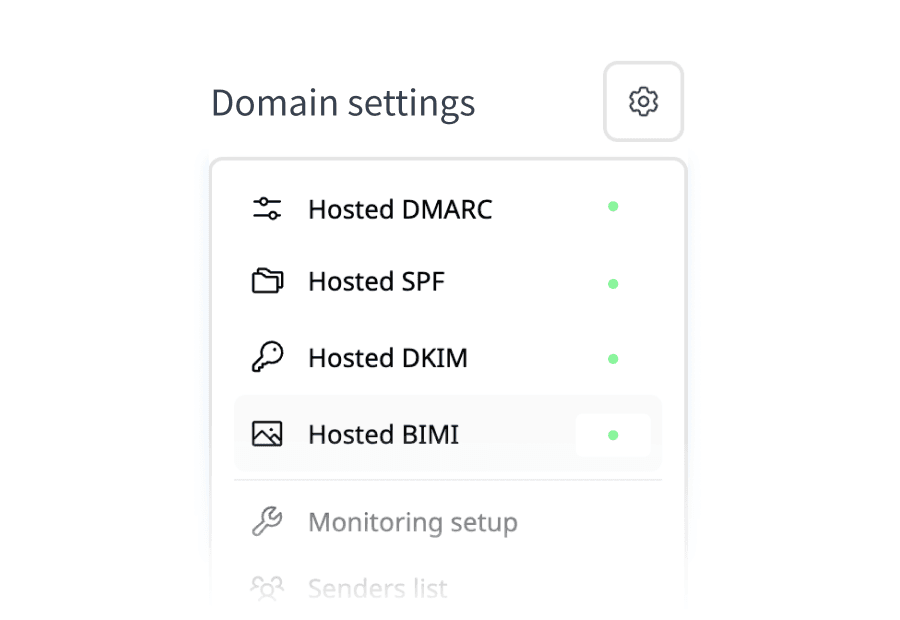
- Agent does the enforcement work and evaluates policy readiness; you approve each step: Agent drafts and proposes
- DMARC report monitoring: Agent analyzes reports
Palisade removes the project. Its AI agent reads incoming DMARC reports, identifies legitimate senders, configures SPF and DKIM, and progressively tightens policy to p=reject, with your team approving each step. For an MSP that difference compounds: fifty client domains means fifty enforcement jobs, and an agent that does each one scales differently from a consultant-led plan per estate. Hosted DMARC, SPF and MTA-STS records, plus SPF flattening, are built into Palisade.
Seat bands vs portfolio pricing
Quote-gated seat bands vs published pricing
Proofpoint publishes no price list for Email Fraud Defense. Quotes come from sales or resellers, and reseller catalogs show how the product is metered: SKUs banded by license count (1-1,000 and 1,001-2,500), editions capped at one or five sending domains, add-on SKUs sold per additional domain, and separate 360 editions bundling managed support. The EFD privacy sheet also states DMARC forensic data is retained for up to 90 days, then deleted.Source
Proofpoint
A relevant product screenshot was not available in the reviewed evidence.
- Unlimited report retention on every paid plan: No published unlimited retention
- Published self-serve pricing: Request a quoteSource
- Portfolio-based MSP pricing: No portfolio pricing listed
Palisade
A relevant product screenshot was not available in the reviewed evidence.
- Unlimited report retention on every paid plan: Unlimited paid-plan retention
- Published self-serve pricing: Published pricing
- Portfolio-based MSP pricing: Per client domain
Palisade publishes its self-serve IT-team pricing: flat monthly plans sized by email volume from $19/month (20% off on annual billing) with 2 to 20 set-up domains by tier (adding domains is free and unlimited), unlimited report retention on paid plans and API access on every plan, and a 15-day full-product trial. MSPs receive a free NFR domain and quoted, portfolio-based per-client-domain pricing with a minimum of 5 client domains and no client email metering.
What each side charges
Three points on each published range: the cheapest plan, one in the middle, and the top of what the vendor publishes. Every plan on both sides is in the pricing section further down.
- Email Fraud DefenseCustom - contact sales
DMARC reporting, guided deployment, supplier-risk visibility, lookalike monitoring, hosted authentication services, and email-gateway integration.
- IT teams: up to 100,000 emails/mo$19/mo ($15/mo billed annually)
2 set-up domains (adding is unlimited), unlimited retention, every core feature
- IT teams: up to 1,000,000 emails/mo$99/mo ($79/mo billed annually)
Same product: 10 set-up domains, pick the tier that matches your sending
- Enterprise (more than 2.5M / month)Custom
Custom volume, retention, and terms
Enterprise fit vs MSP operations
Where Email Fraud Defense fits, and where it stops
Email Fraud Defense is built for large enterprises. It pairs DMARC work with supplier-risk visibility through Nexus Supplier Risk Explorer, lookalike-domain detection through Domain Discover, and a takedown add-on, and it assumes an ongoing relationship with Proofpoint consultants and, ideally, the Proofpoint email gateway. Dashboards report abuse rates and pass rates across SPF, DKIM and DMARC, and Microsoft 365 estates get DMARC compliance visibility. That shape suits a security team protecting one large domain estate with a services budget.
Proofpoint
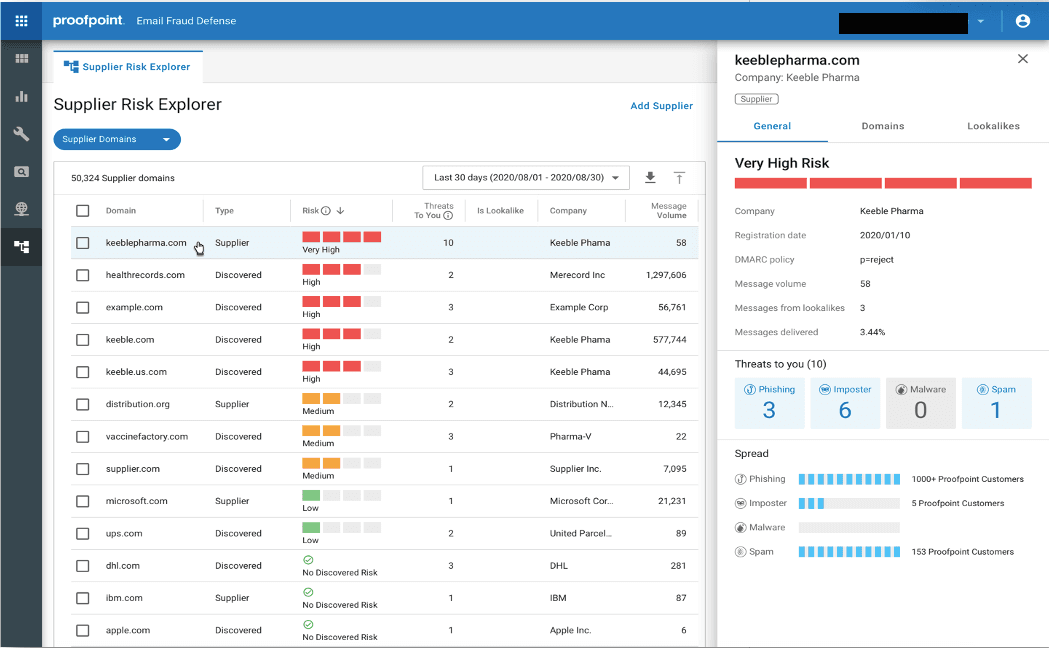
- Native ConnectWise, HaloPSA & Autotask integrations: No PSA integrations listed
- Multi-tenant client-domain management: No multi-tenant management listed
Palisade
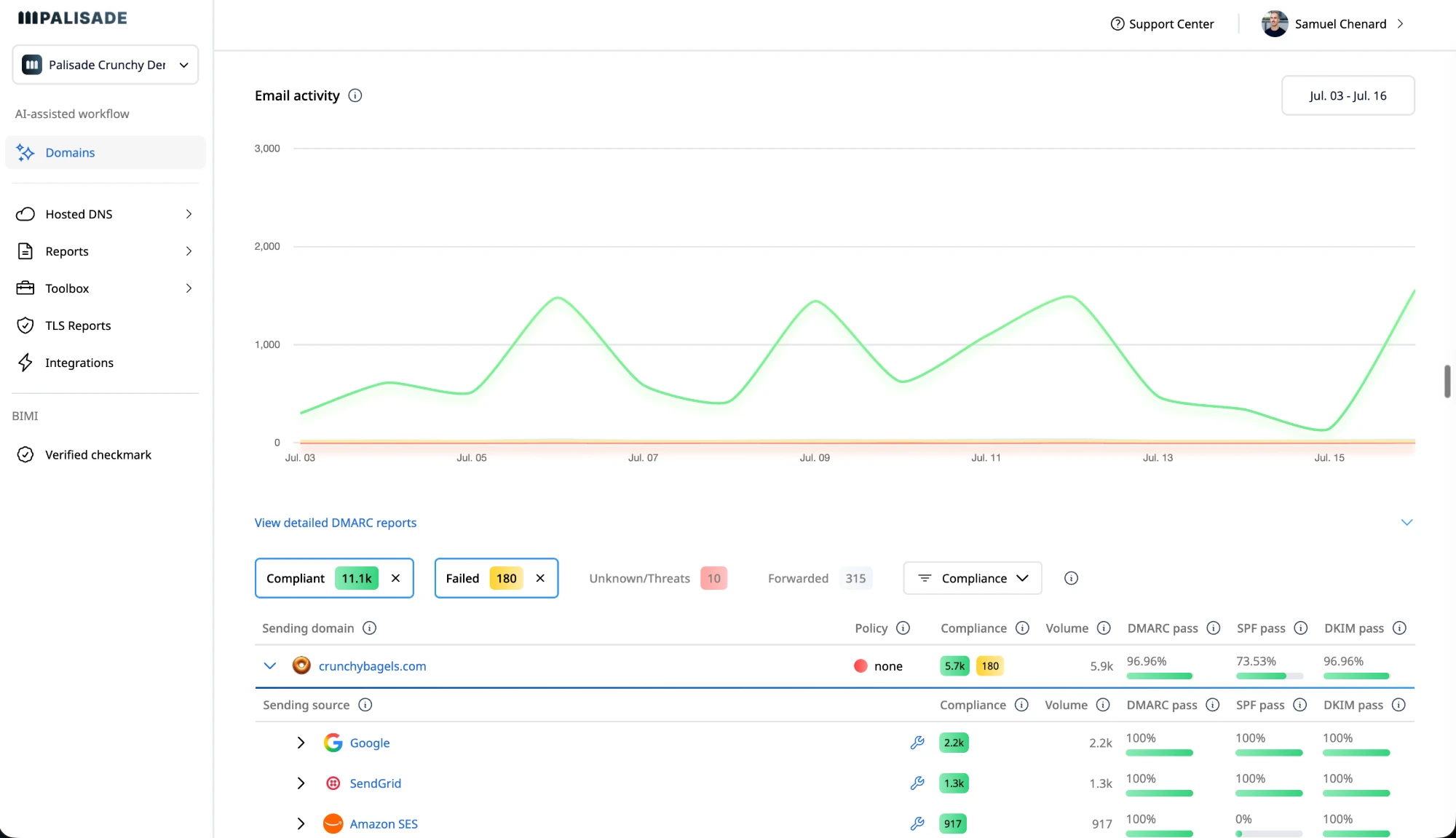
- Native ConnectWise, HaloPSA & Autotask integrations: Native PSA integrations
- Multi-tenant client-domain management: Multi-tenant management
The model stops scaling when you manage other people's domains. Proofpoint does not advertise MSP per-domain pricing, PSA integrations, or multi-tenant client management for EFD (checked 2026-07-18), and a quote cycle per client does not fit a book of fifty small businesses. The honest concession: a large enterprise standardizing on Proofpoint's stack, with consultants working its senders toward p=reject, fits EFD's design; an MSP running DMARC across many client domains is not who it was built for.
Dashboard access vs programmatic access
Proofpoint's Threat Insight APIs and MCP governance platform
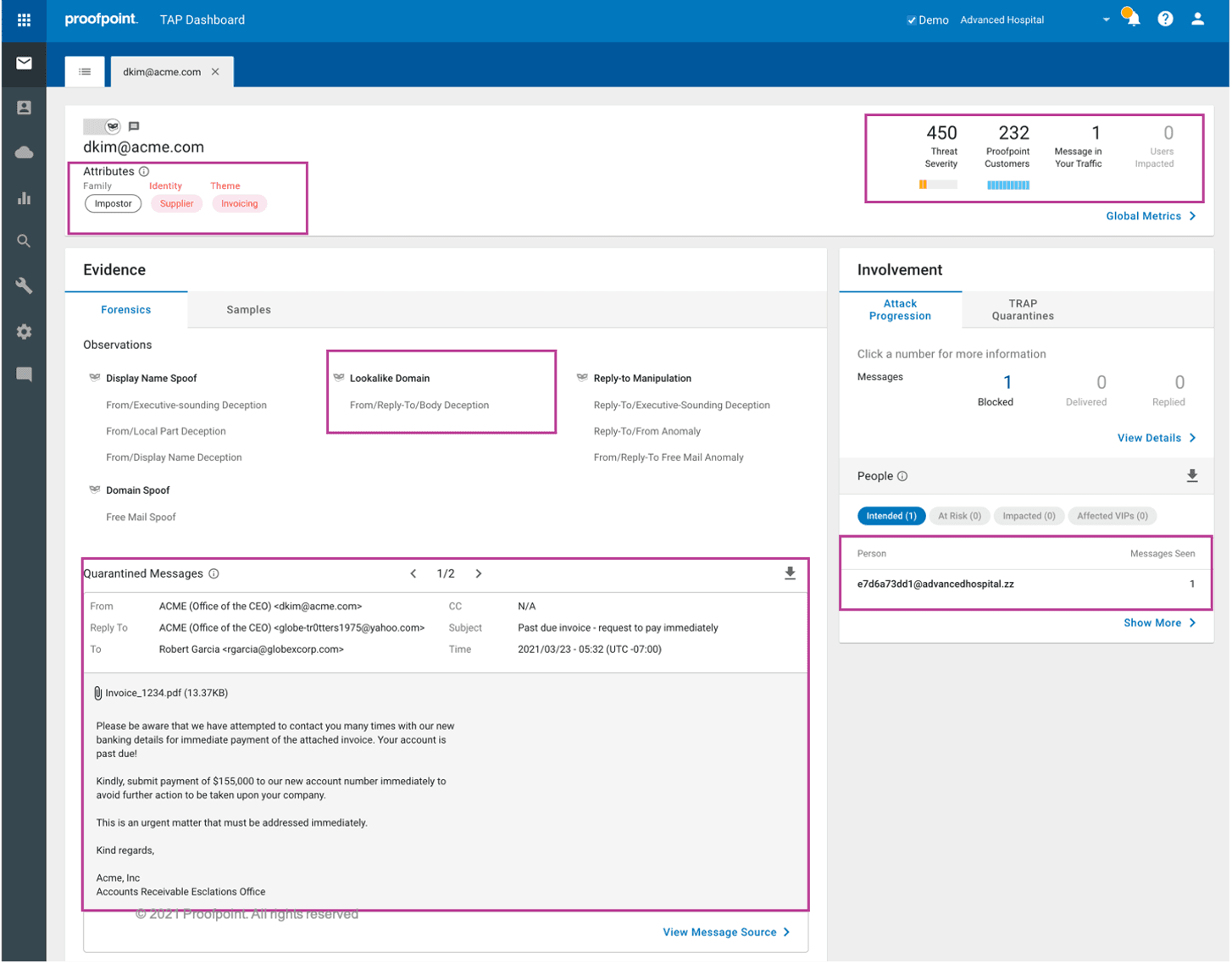
Proofpoint documents Threat Insight Dashboard APIs for integrating campaign, forensics, people, reports, SIEM, supplier-threat-protection, threat, and URL-decoder data with other security products. Its AI MCP Security product discovers, governs, and protects enterprise MCP servers. It does not advertise a Proofpoint MCP server that connects an AI assistant to Proofpoint or Email Fraud Defense domain data (checked 2026-08-27). Proofpoint also advertises Nexus AI models that detect and prevent advanced threats across email, collaboration, web, and cloud. Source (2026-08-27) Source 2 (2026-08-27) Source 3 (2026-08-27)
Proofpoint
Palisade
A relevant product screenshot was not available in the reviewed evidence.
- Documented API for security-data integrations: REST API published
- MCP server for connecting AI assistants to domain data: MCP server published
- Advertised AI threat intelligence features: Agent drafts fixes
Palisade publishes an MCP server and a REST API. Its agent investigates senders, drafts SPF and DKIM fixes, and proposes each policy step. A human approves before anything ships.
Reachable from your own AI tools
Palisade's MCP server exposes 42 tools over OAuth, so the assistant your team already uses can read domains, pull the exact records to publish and work the task queue. These are the clients the connection guide walks through.
- ChatGPT
- Claude
- Codex
- Cursor
- Windsurf
- Any MCP client





Still deciding between Proofpoint and Palisade? See what changes with Palisade.
15-day full-product trial. Nothing is charged until it ends.


 Microsoft 365
 Zoho Mail

The agent does the heavy lifting
Sources identified, SPF and DKIM fixes drafted, each policy step proposed. You approve; nothing ships on its own.
Connect your AI with MCP
42 tools over MCP, so your assistant reads your domains and works the queue.
Connect your DNS manager directly


Approved records go into your own zone at your own provider, across 64. No credentials reach us.
“We evaluated many DMARC providers before choosing Palisade. The quality of their product, the responsiveness and friendliness of their team and their rapid progress on their product roadmap made it a no-brainer for us to move forward.”
Proofpoint pricing explained (and how Palisade compares)
Proofpoint sells Email Fraud Defense as a quote-priced enterprise subscription with no published self-serve price list. The current buying flow directs buyers to an assessment, demo, and enterprise quote.
What you'd actually pay
The same five buyer sizes on every comparison, so a shape carries from one page to the next.
1 domain, up to 1,000 emails a month
2 set-up domains, up to 100K emails a month
10 set-up domains, up to 1M emails a month
20 set-up domains, up to 2.5M emails a month
Client domains under management, any volume
Palisade’s figures are derived from its published tiers. Proofpoint figures read from their pricing page on 2026-08-28. Plans and prices may have changed since.
How Proofpoint prices
- Proofpoint does not publish self-serve prices for Email Fraud Defense; the current buying flow is quote-led (checked 2026-08-29).
- The EFD privacy sheet states DMARC forensic data is retained for up to 90 days, then securely deleted; aggregate-report retention terms are not published.
- Deployment guidance comes from Proofpoint consultants; Email Fraud Defense Services is a separate premium services engagement, and DMARC enforcement on inbound mail comes from pairing EFD with the Proofpoint email gateway.
How Palisade prices
- Palisade publishes its self-serve IT-team pricing: flat monthly plans sized by email volume from $19/month (20% off on annual billing), and portfolio-based per-client-domain pricing for MSPs with a minimum of 5 client domains; Proofpoint quotes Email Fraud Defense through sales and resellers with no public price list.
- Palisade's IT-team plans include 2 to 20 set-up domains by tier with free unlimited domain adding and unlimited report retention; EFD reseller SKUs band by license count and cap sending domains at 1 or 5 on lower editions.
- Palisade's AI agent does the enforcement work: it identifies legitimate senders, configures SPF and DKIM, and tightens policy to p=reject with your approval; EFD deployments run on project plans guided by Proofpoint consultants.
- Palisade includes API access on every plan, a 15-day full-product trial, and native ConnectWise, HaloPSA and Autotask integrations; EFD pages do not advertise PSA integrations (checked 2026-07-18).
Proofpoint pricing read from their public pricing page on 2026-08-29.Plans and prices may have changed since.
Start a 15-day full-product trial of Palisade. Nothing is charged until it ends.
What each one covers, and where it stops
Published facts only, read from each vendor's own material. Neither column describes a hands-on trial, because we have not run one.
Proofpoint Email Fraud Defense runs DMARC deployment as a consultant-guided project for large enterprises, particularly organizations already using the Proofpoint email gateway. It combines DMARC work with hosted SPF, DKIM, and DMARC records, reports on abuse and authentication pass rates, and pairs inbound-mail enforcement with the gateway.
Its 360 editions add lookalike-domain detection and supplier-risk visibility, while the deployment model assumes a relationship with Proofpoint consultants and sales or reseller pricing. That approach suits security teams protecting a large domain estate that want a project plan and services team to guide sender identification and policy work.
Palisade is built around an agent that does the DMARC work rather than reporting on it. It identifies every sending source, drafts the SPF and DKIM changes each one needs, and proposes the next policy step when the evidence supports it.
The agent investigates every sender, drafts every fix, and proposes each policy step, you approve before anything ships.
- Provides a dashboard for authorized senders, abuse rates, and SPF, DKIM, and DMARC pass rates
- Hosts SPF, DKIM, and DMARC records
- Provides lookup-limit relief for SPF records
- Documents Threat Insight APIs for security-data integrations
- Advertises Nexus AI models for threat intelligence
- The agent investigates senders and drafts the fix, so the work arrives prepared rather than as a list of findings
- Hosted SPF, DKIM and DMARC on redundant managed DNS, so an approved change can be carried out rather than handed off
- Portfolio workflow for MSPs, with ConnectWise, HaloPSA and Autotask integrations and a free NFR domain
- An MCP server and a REST API, so the same data and workflow are reachable from the AI tools a team already uses
- Does not advertise agent-led enforcement
- Does not publish unlimited report retention
- Does not publish portfolio-based MSP pricing
- Does not advertise named ConnectWise, HaloPSA, or Autotask integrations
- Does not advertise multi-tenant client-domain management
- Every policy change waits for a human approval, by design: nothing ships on the agent's own authority
- MSP pricing is quoted per client domain rather than published as a rate card, with a minimum of 5 client domains
- Plans are sized by monthly email volume, so a low-domain, high-volume sender lands on a higher tier than domain count alone suggests
- Starts at
- Custom - contact sales
- Published pricing
- Not published
- Domain editions
- 1, 5, or unlimited sender domains
- Forensic retention
- Up to 90 days
- Starts at
- IT plans from $19/mo by email volume; 15-day trial
- Trial
- 15 days, full product
- MSP model
- Quoted per client domain, portfolio-based; minimum of 5 client domains
What Palisade customers say
5.0 out of 5 on G2Trusted by over 10,000 domains
“Palisade made it so easy for us to get our blue verified checkmark and achieve our BIMI compliance”


Sources and further reading
Source checks run through 2026-07-18; every entry keeps its individual check date.
- Proofpoint Email Fraud Defense product page
Checked 2026-07-18
- Proofpoint Email Fraud Defense solution brief
Checked 2026-07-18
- Proofpoint Hosted SPF technical overview
Checked 2026-07-18
- Proofpoint Collaboration Security buying page
Checked 2026-07-18
- Proofpoint Threat Insight Dashboard API documentation
Checked 2026-08-27
- Proofpoint Threat Insight Dashboard Reports API
Checked 2026-08-27
- Proofpoint Nexus AI threat intelligence platform
Checked 2026-08-27
- Proofpoint Essentials release notes
Checked 2026-08-27
- Proofpoint alliance and technology partners
Checked 2026-08-27
- Proofpoint AI MCP Security
Checked 2026-08-27
- Proofpoint agentic AI security
Checked 2026-08-27
- Proofpoint Claude Compliance API integration
Checked 2026-08-27
- Proofpoint OpenAI Daybreak Cyber Partner announcement
Checked 2026-08-27
Palisade vs Proofpoint: FAQ
What is the main difference between Proofpoint and Palisade?
Palisade is agentic DMARC software. Its agent investigates sending sources, works through SPF and DKIM alignment, and moves domains toward p=reject while your team stays in control. When evaluating Proofpoint, compare that operating model with the workflow in its current product documentation and decide how much work you want your team to carry.
Who should choose Palisade?
Choose Palisade if you want an AI agent to carry routine DMARC work through enforcement, whether you manage one domain or thousands. It is also a natural fit for teams already using Claude, OpenAI, or other AI tools to get operational work done.
Who should choose Proofpoint?
Choose Proofpoint if its current integrations, procurement model, or operating workflow better match your requirements. A more operator-led platform can also fit a team that prefers to review reports and make each change itself.
Does Palisade guarantee a specific time to p=reject?
No responsible DMARC platform should promise the same enforcement timeline for every domain. Timing depends on the number of sending sources, access to DNS and third-party systems, and how quickly each legitimate stream can be aligned. Palisade's agent reduces routine investigation and configuration work while operators retain control over policy decisions.
Switching from Proofpoint takes three steps
- 1
Batch-import your domains
Bring your client domains into Palisade in bulk, or let your ConnectWise, HaloPSA, or Autotask integration sync them automatically.
- 2
Run both platforms in parallel
DMARC reporting supports multiple recipients, so Palisade and Proofpoint receive the same reports during the overlap window. Nothing breaks while you compare.
- 3
Cut DNS over on your schedule
Point records at Palisade's hosted infrastructure (redundant managed DNS), then retire the old setup when you're satisfied.
15-day full-product trial. Nothing is charged until it ends.
Competitor information on this page was last reviewed against public sources on 2026-07-18. Spotted something out of date? Tell us and we'll fix it.