Ensuring PCI DSS v4.0 Compliance with DMARC
 ChatGPT
 Claude
 Gemini
 Perplexity
 Grok
Grok
Who Is Affected by the PCI DSS DMARC Mandate?
The PCI DSS DMARC mandate will impact any entity storing, processing, or transmitting cardholder data/payment card information/sensitive authentication data. This includes organizations, individuals, system components, and service providers.
 Affected entities include:
- Any organization, big or small, that handles or processes card payments.
- Any company or service provider that processes, acquires, issues, or accepts cardholder data.
- System components, people, and processes that store, process, or transmit cardholder data (CHD) and/or sensitive authentication data (SAD).
- System components with unrestricted connectivity to those handling CHD/SAD, even if they don’t store, process, or transmit it themselves.
- E-commerce businesses
- Financial Institutions
- Retailers
- Healthcare
- Hospitality
- Third-party service providers and vendors
- Any firm, enterprise, or company processing card payments
The Growing Importance of DMARC in PCI DSS Compliance
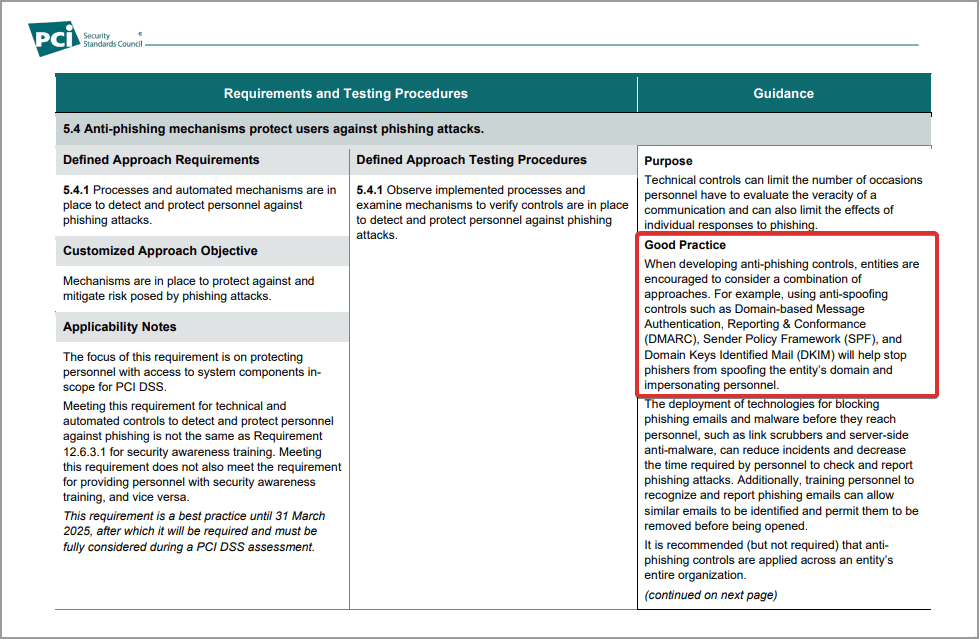
By March 31, 2025, DMARC implementation will be a mandatory component of PCI DSS compliance. As phishing and spoofing attacks continue to rise, securing email communications is more critical than ever.
Cybercriminals use these attacks to gain access to sensitive payment data, leading to severe financial and reputational damage. The average cost of a data breach in 2024 has risen to $4.88M, a 10% increase from 2023, according to IBM.
The financial cost of phishing attacks is also staggering. The FBI’s IC3 2023 annual report estimated a $2.9 billion loss alone from effective Business Email Compromise (BEC) in 2023. If you’re not already taking the necessary measures to stay secure, including implementing DMARC, it could cost you in more ways than one.
PCI DSS v4.0 highlights DMARC as an essential security measure, ensuring that only legitimate emails are sent from an organization’s domain. By enforcing DMARC policies, businesses can prevent fraudulent emails from reaching customers and employees, reducing the risk of credential theft and unauthorized access to payment systems.
How DMARC Works to Protect Your Domain
DMARC is built upon two foundational email security protocols: SPF and DKIM.
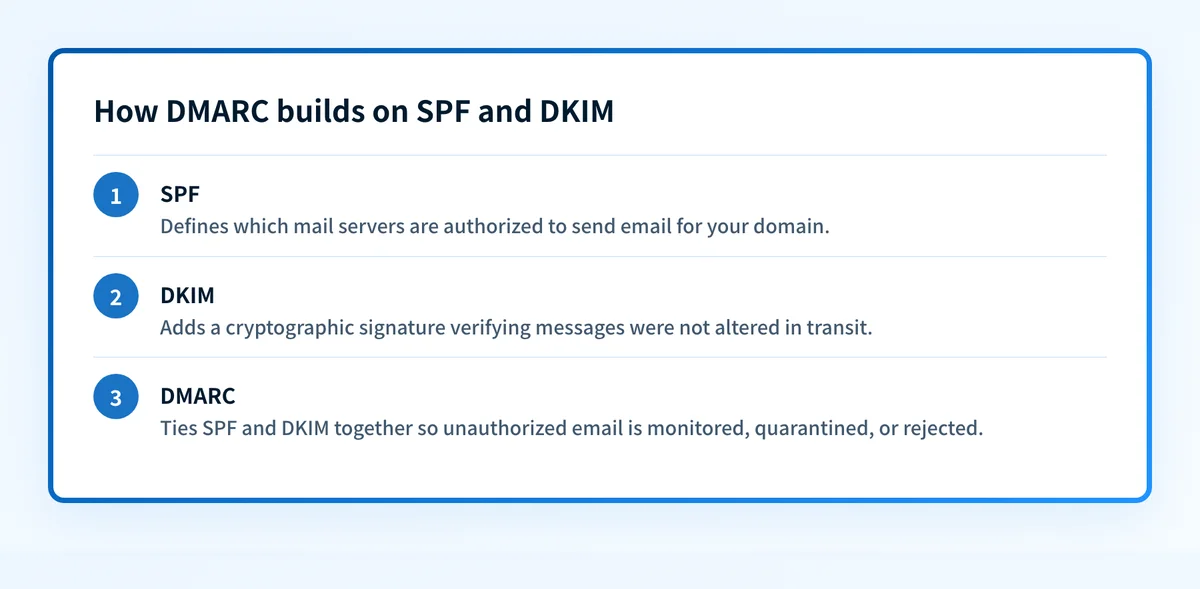 DMARC ties SPF and DKIM together to decide how unauthorized email is handled.
- SPF: Defines which mail servers are authorized to send emails on behalf of a domain.
- DKIM: Ensures email integrity by adding a cryptographic signature to verify that messages have not been altered in transit.
- DMARC: Ties SPF and DKIM together, allowing domain owners to specify how to handle unauthorized emails, whether they should be monitored, quarantined, or rejected entirely.
Steps to Implement DMARC for PCI DSS Compliance
- Run an Email Security Score Check
- Publish a DMARC Record in DNS
none to monitor email traffic without impacting delivery.- Include reporting mechanisms (rua and ruf tags) to collect aggregate and forensic reports for analysis.
- Monitor and Analyze Reports
- Ongoing Monitoring and Adjustment
reject. This will ensure malicious emails are not being delivered from your domain.- Adjust policies as needed to maintain a secure and compliant email environment.
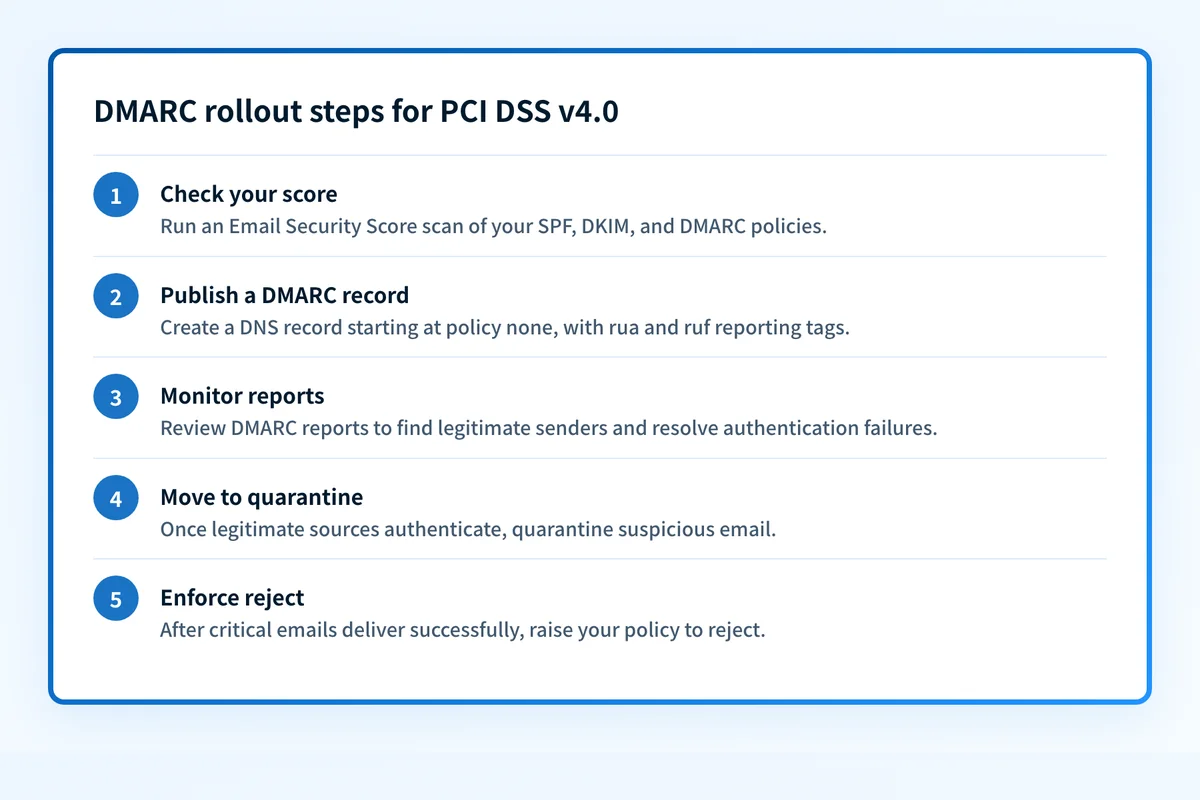 Start at p=none for monitoring, then step up enforcement to quarantine and reject.
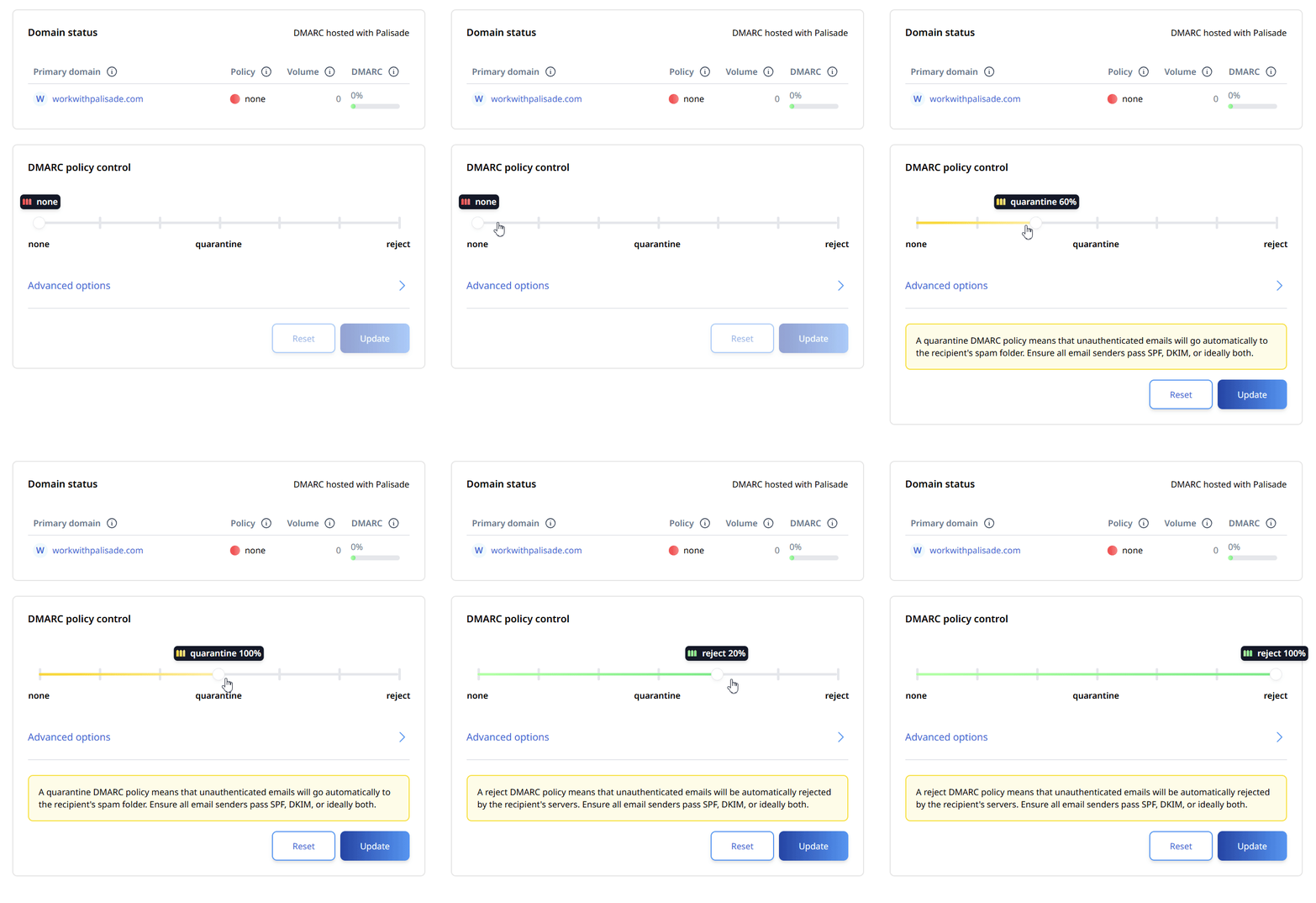 Quick example of how you can easily increase the enforcement of your DMARC policy with Palisade
##### Final Thoughts
- Gradually Enforce Stricter Policies
quarantine policy to begin quarantining malicious emails.- Ensure that business-critical emails are not inadvertently rejected.
Ensuring compliance with the PCI DSS v4.0 requirements, including DMARC implementation, is essential for safeguarding payment card data against evolving cyber threats.
Organizations should proactively adopt DMARC, strengthen their overall security posture, and continuously monitor email authentication processes. By doing so, businesses can protect their customers, maintain regulatory compliance, and enhance trust in their digital communications.
Sign up here to get PCI DSS v4.0 compliant!
Keep going with AI
Ask AI how this applies to you
Take this guide to your assistant — each question opens pre-filled, with a link back to this page so it can read the details.
- Who Is Affected by the PCI DSS DMARC Mandate?


- How does this apply to my domain?
- What should I do about it, step by step?

Written by
Samuel ChenardCEO & Co-Founder, Palisade
Samuel Chenard is the CEO and co-founder of Palisade, AI-first DMARC software for IT teams and MSPs, from one domain to thousands.
More from Samuel →