ENFORCEMENT GAP
221 of 566 observed domains were not enforcing DMARC
345 domains enforced quarantine or rejection. The remaining 221 either had no valid DMARC record or published a monitoring-only policy at the scan time.

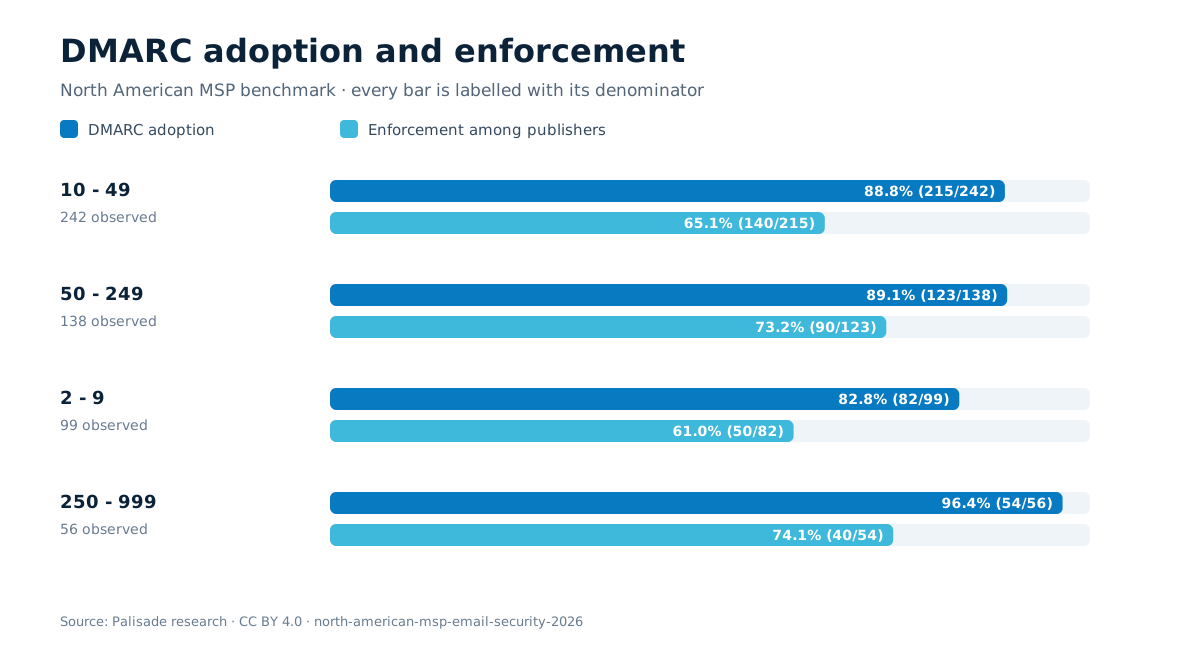
Across 566 observed MSP organizational domains, 89.0% published valid DMARC and 68.5% of publishers enforced quarantine or rejection. These are aggregate observations of a sourced Clutch directory cohort, not ratings of individual providers or their clients.
Why this matters
Without an enforcing policy, participating receivers have less domain-owner direction for forged support, invoice or password-reset messages that use an MSP’s exact From domain.
89.0%
DMARC adoption
504 of 566
68.5%
Enforcement among publishers
345 of 504
16.7%
Publishers without aggregate reporting
84 of 504
5.9%
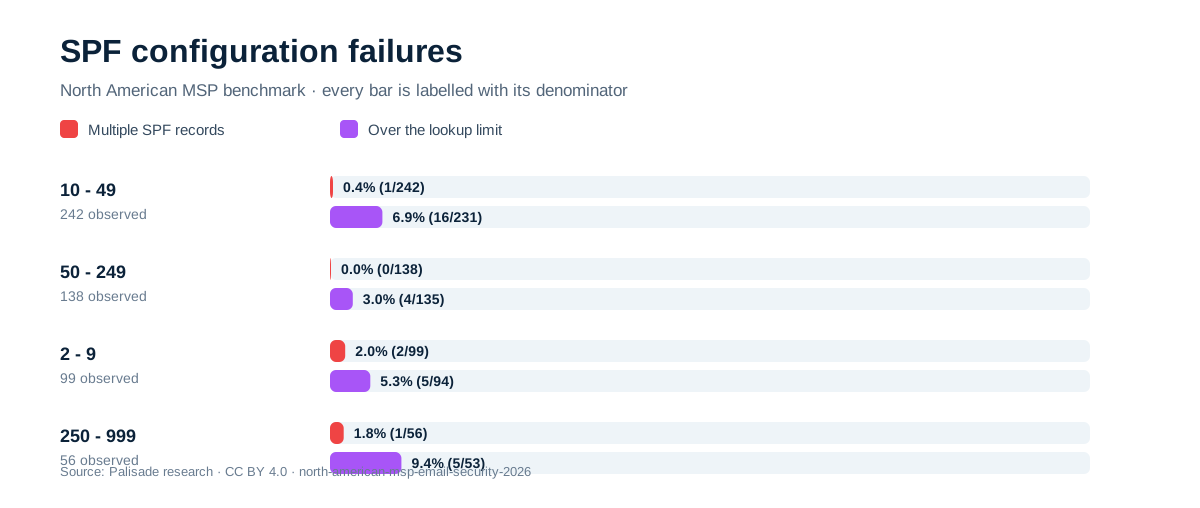
SPF recursive lookup failures
32 of 542
KEY FINDINGS
The benchmark covers Clutch-listed providers appearing in sampled U.S., Canada and local MSP market pages. It measures only each provider's public organizational domain and says nothing about client environments, service quality or internal controls.
ENFORCEMENT GAP
221 of 566 observed domains were not enforcing DMARC
345 domains enforced quarantine or rejection. The remaining 221 either had no valid DMARC record or published a monitoring-only policy at the scan time.
SIZE-BAND VIEW
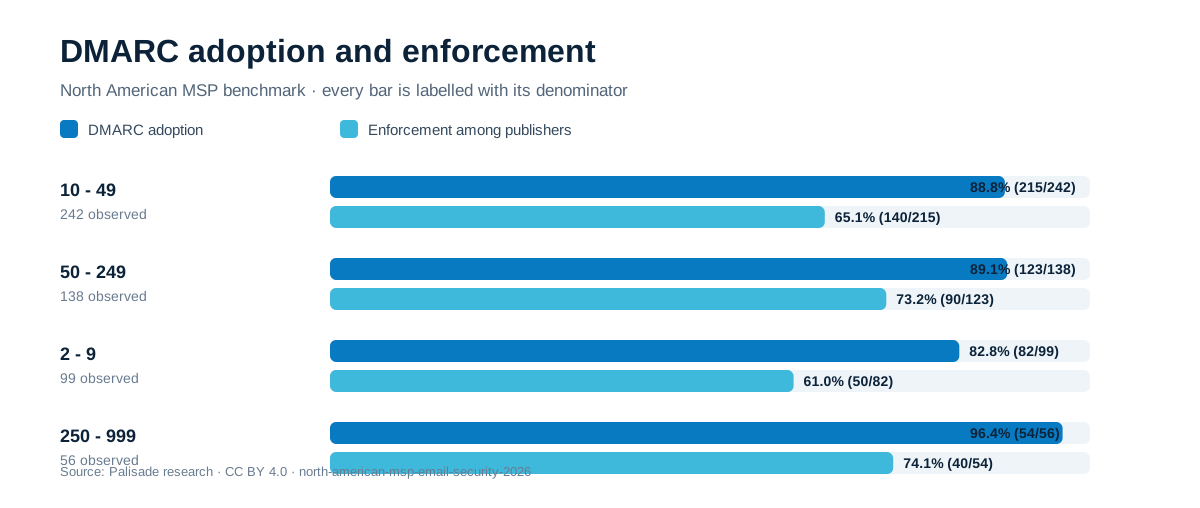
DMARC adoption ranged from 82.8% to 96.4%
The 2–9 employee band measured 82/99; the 250–999 band measured 54/56. This is descriptive and does not establish that size caused the difference.
OPERATIONS
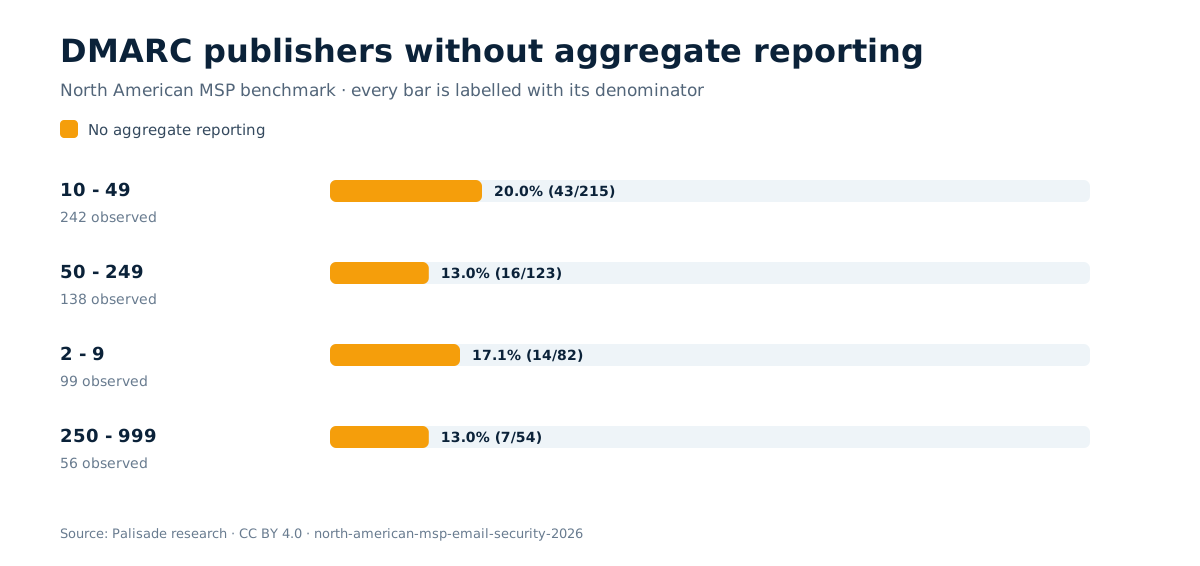
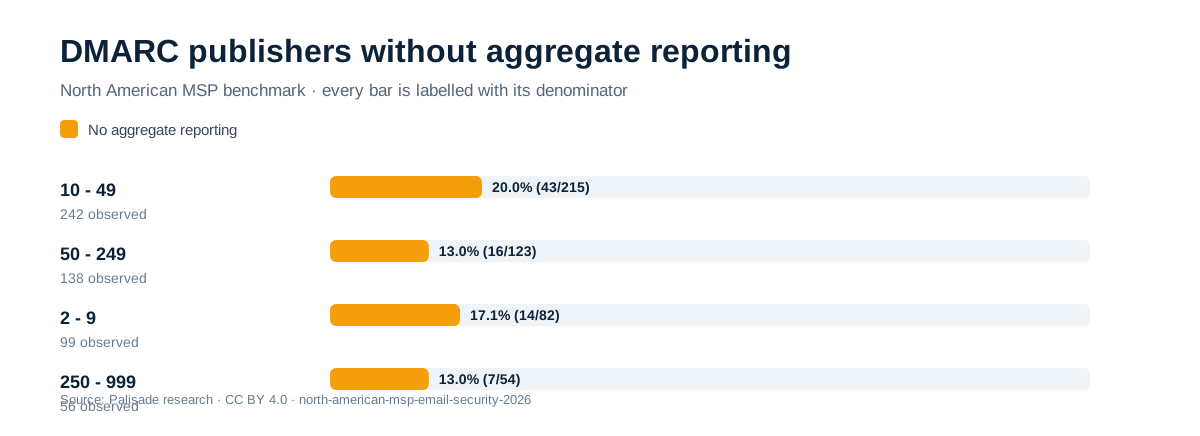
16.7% of publishers had no aggregate-reporting address
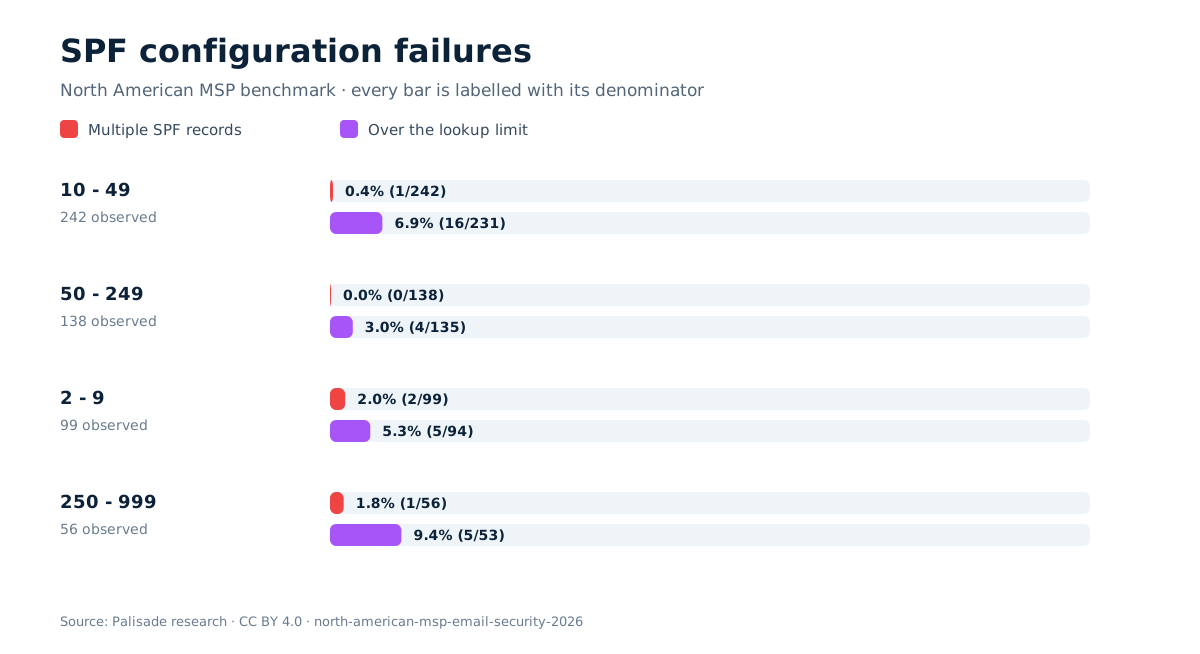
That was 84/504 DMARC publishers. SPF recursive lookup failures affected 32/542 SPF publishers.
“Not currently enforcing DMARC” is a public-DNS observation, not proof of compromise or poor service. The report deliberately publishes no company-level rankings or scores.
Why this matters
MSP domains are trusted in support and administrative workflows. A missing or monitoring-only policy leaves less protection at participating receivers when a forged message using the MSP’s visible From domain fails aligned authentication.
Learn how DMARC evaluates a message →01 · DOMAIN IDENTITY
An attacker can send a message that displays the organization's exact domain in the From line. Without a valid DMARC record, participating receivers have no DMARC handling request from that domain owner when aligned SPF and DKIM fail.
02 · PRACTICAL HARM
A forged message could imitate an MSP’s support desk, invoice, password-reset or remote-access request to target its own staff, prospects or clients. This study measures only the MSP’s organizational domain and says nothing about client environments or service quality.
Three different DNS states
Risk, not incident evidence: this DNS state does not prove spoofing, fraud, compromise or weak internal controls. DMARC also does not stop lookalike domains, abuse of a compromised legitimate account or every phishing technique.
August 14, 2026
Clutch source snapshot and domain deduplication
August 14, 2026
DNS scan, 100-mapping QA and claims review
August 14, 2026
Public release
The release passed the stated evidence and review gates.
Media posture
Offer specialist channel editors an aggregate first look; never use individual results as an outreach threat or sales tactic.
Groups below the 30-domain threshold are suppressed. Every visible percentage includes its numerator and denominator.
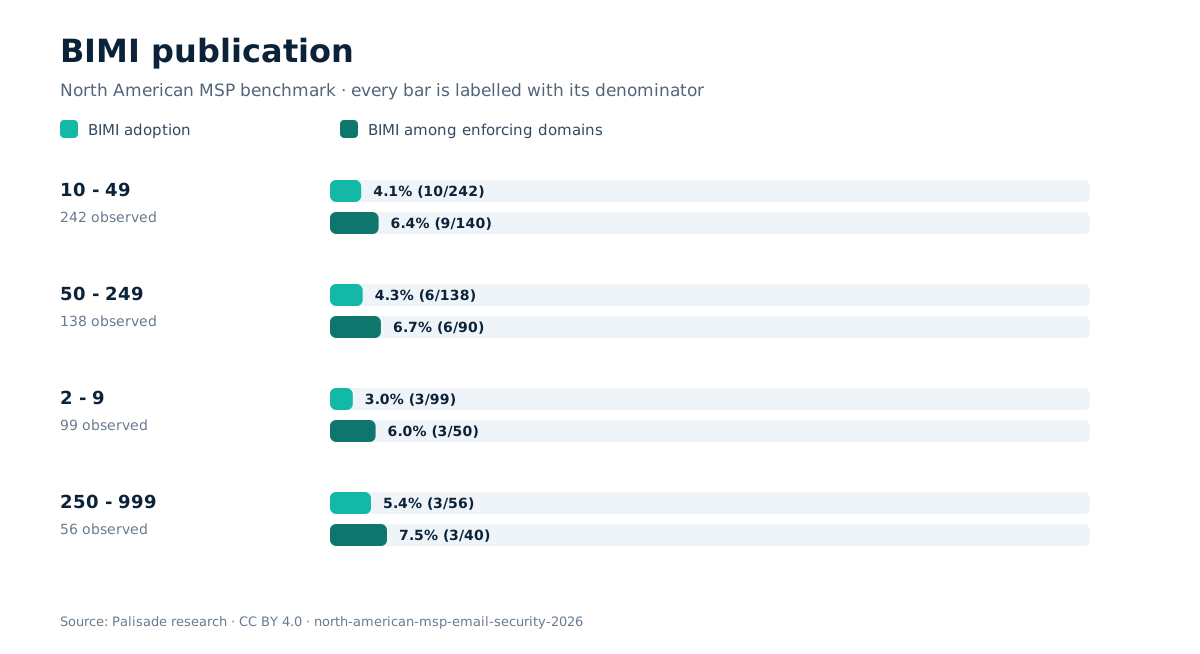
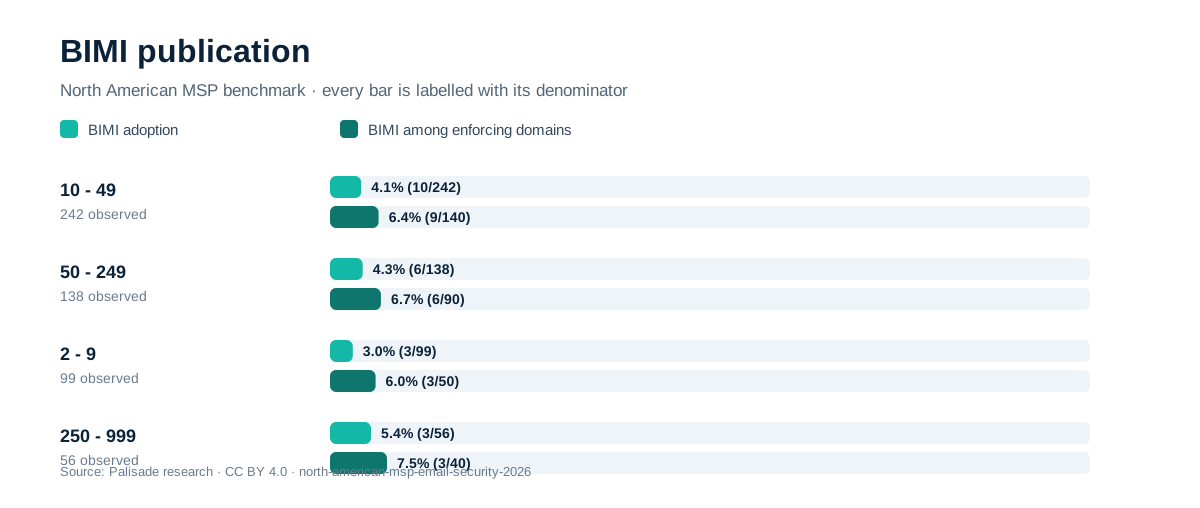
| Group | Observed | DMARC | Enforcement | No reporting | SPF lookup failure | BIMI among enforcing |
|---|---|---|---|---|---|---|
| 10 - 49 | 242 | 88.8% (215/242) | 65.1% (140/215) | 20% (43/215) | 6.9% (16/231) | 6.4% (9/140) |
| 50 - 249 | 138 | 89.1% (123/138) | 73.2% (90/123) | 13% (16/123) | 3% (4/135) | 6.7% (6/90) |
| 2 - 9 | 99 | 82.8% (82/99) | 61% (50/82) | 17.1% (14/82) | 5.3% (5/94) | 6% (3/50) |
| 250 - 999 | 56 | 96.4% (54/56) | 74.1% (40/54) | 13% (7/54) | 9.4% (5/53) | 7.5% (3/40) |
SVG and PNG versions are licensed CC BY 4.0.
The aggregate findings and charts are free to quote, republish and build on under CC BY 4.0. Attribute Palisade and link to this report so readers can inspect the methodology and denominators.
Palisade. “North American MSP email-authentication benchmark 2026.” 2026-08-14. https://www.palisade.email/research/north-american-msp-email-security-2026
Pinned source snapshot
950f20754010ce2d1cb61865a53a96bbcccddaf3bc5e1a196142d8900864a1e4Public discovery source for MSP market listings and official-site destinations.
Public discovery route for current directory market pages; no profile copy is republished.
Publish only aggregate results. Use the phrase “MSP organizational domains not currently enforcing DMARC”; never imply that it measures client security or service quality.