NATIONAL BENCHMARK
81.3% published DMARC; 55.7% of publishers enforced
836 of 1,028 observed domains published valid DMARC. 466 of those 836 publishers used quarantine or rejection.


Across 1,028 observed Canadian organization-domain pairs, 81.3% published valid DMARC and 55.7% of publishers enforced quarantine or rejection. The sourced cohort is a benchmark, not a representative sample of every Canadian business.
Why this matters
Without an enforcing policy, participating receivers have less domain-owner direction for forged messages that use a trusted public, healthcare, campus or company From domain.
81.3%
DMARC adoption
836 of 1,028
55.7%
Enforcement among publishers
466 of 836
13.8%
Publishers without aggregate reporting
115 of 836
3.2%
SPF recursive lookup failures
30 of 926
KEY FINDINGS
The benchmark contains 1,030 organization-domain pairs from current official directories and organization sites. Ontario contributes the complete 2026 municipal-directory slice, so the national aggregate is descriptive and is not weighted to make provinces equally represented.
NATIONAL BENCHMARK
81.3% published DMARC; 55.7% of publishers enforced
836 of 1,028 observed domains published valid DMARC. 466 of those 836 publishers used quarantine or rejection.
SECTOR GAP
Listed-company enforcement reached 86.4%
That was 57/66 among DMARC-publishing TSX issuers, versus 61.6% (188/305) among Ontario municipalities.
QUEBEC + REPORTING
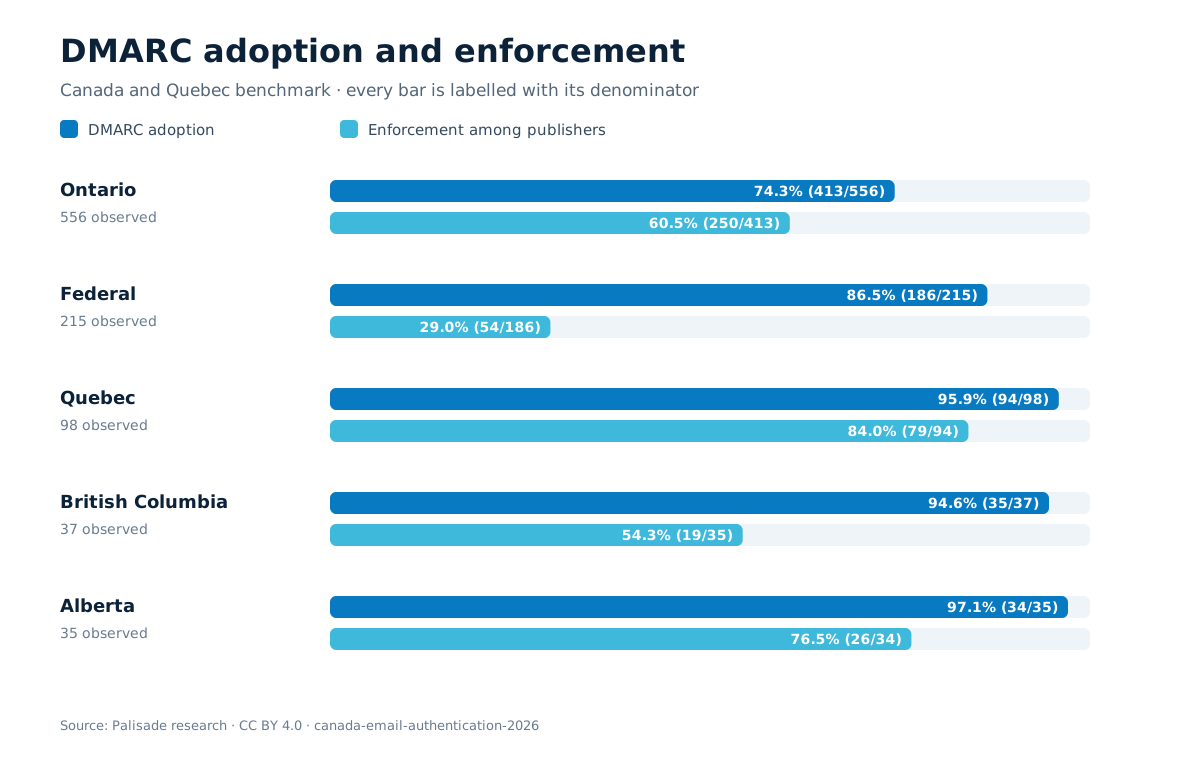
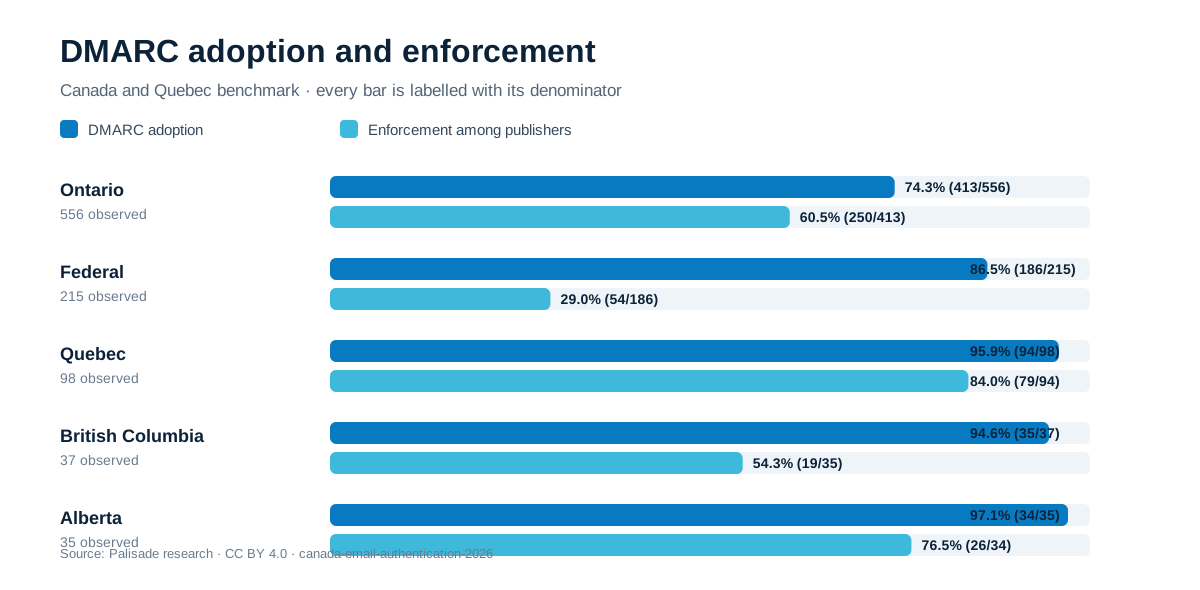
Quebec measured 95.9% adoption and 84.0% enforcement
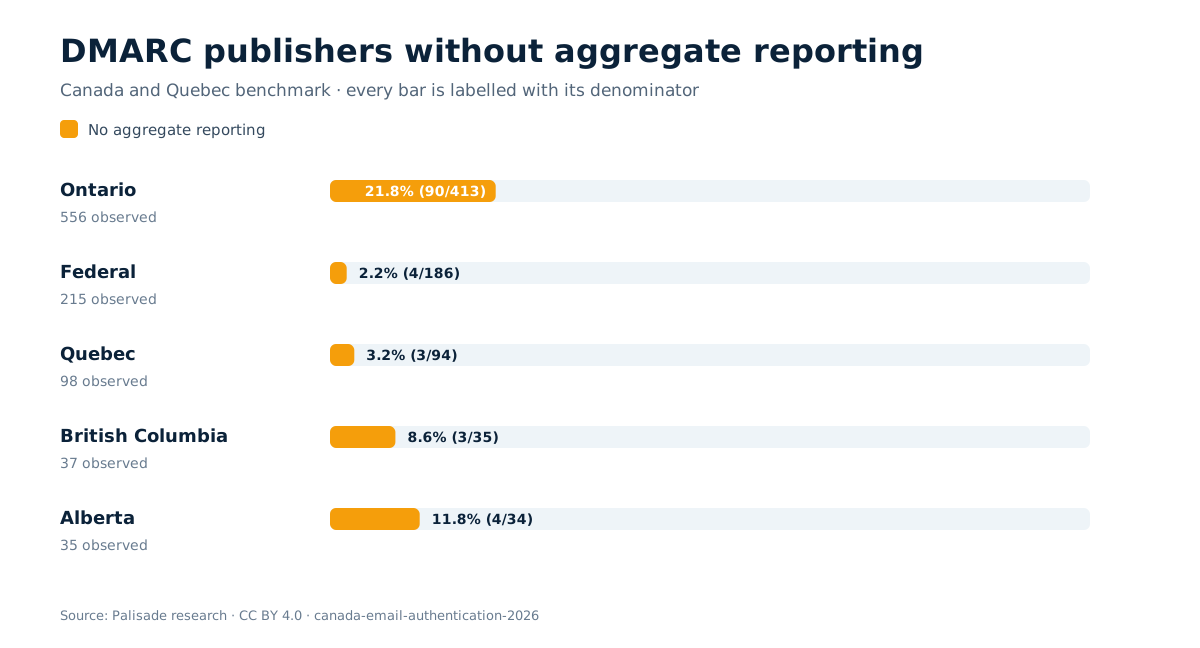
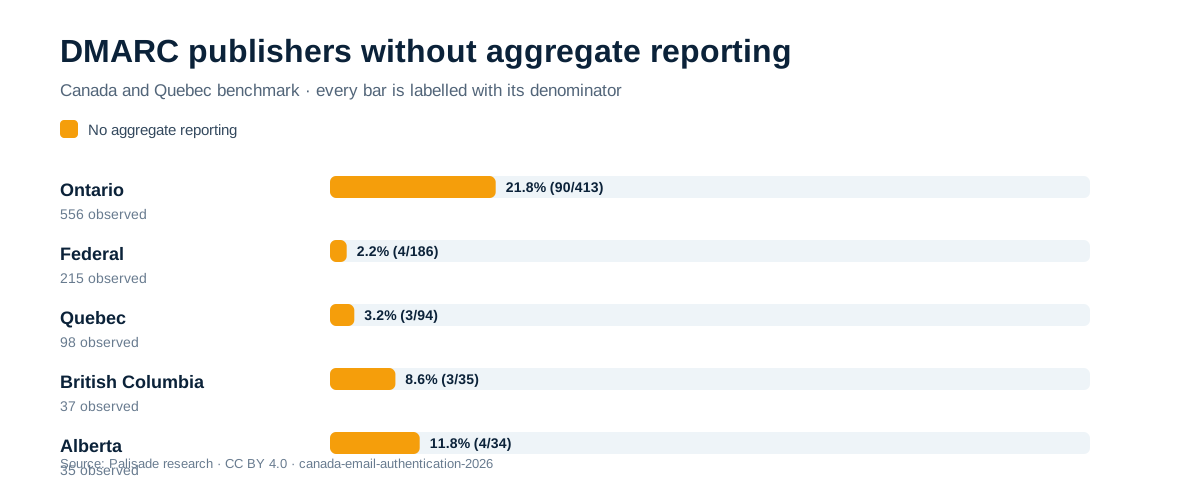
Quebec had 98 observations, two short of the standalone-page gate. Among municipal DMARC publishers, 25.6% (78/305) had no aggregate-reporting address.
Public DNS state does not prove compromise, delivery performance or internal security maturity. Organization website hostnames can also differ from alternate sending domains; the downloadable data defines the measured source cohort and every denominator.
Why this matters
The organizations in this benchmark communicate with citizens, patients, students, employees, investors and customers. A missing or monitoring-only policy leaves less protection at participating receivers when a forged message fails aligned authentication.
Learn how DMARC evaluates a message →01 · DOMAIN IDENTITY
An attacker can send a message that displays the organization's exact domain in the From line. Without a valid DMARC record, participating receivers have no DMARC handling request from that domain owner when aligned SPF and DKIM fail.
02 · PRACTICAL HARM
A forged message could imitate a government notice, hospital or campus message, invoice, benefits update or executive request to steal credentials or redirect money. The observed DNS state does not show that any organization experienced such an incident.
Three different DNS states
Risk, not incident evidence: this DNS state does not prove spoofing, fraud, compromise or weak internal controls. DMARC also does not stop lookalike domains, abuse of a compromised legitimate account or every phishing technique.
August 14, 2026
Source list and licence review completed
August 14, 2026
1,030-domain verification cohort and DNS scan completed
August 14, 2026
Bilingual Quebec assets and 67-route media brief completed
August 14, 2026
Public evidence package released
The release passed the stated evidence and review gates.
Media posture
Offer national and Quebec first looks concurrently, with tailored charts rather than competing exclusives.
Résumé pour les médias québécois
Parmi 1 028 domaines observés sur 1 030 paires organisation-domaine documentées, 81,3 % publiaient un enregistrement DMARC valide et 55,7 % des domaines qui publiaient DMARC appliquaient une politique de quarantaine ou de rejet. Au Québec, 94 domaines sur 98 publiaient DMARC (95,9 %) et 79 de ces 94 domaines l’appliquaient (84,0 %). Cette cohorte documentée ne représente pas toutes les entreprises québécoises ou canadiennes; les comparaisons provinciales sous 30 observations sont supprimées et le Québec demeure sous le seuil de 100 observations exigé pour une page provinciale autonome.
Groups below the 30-domain threshold are suppressed. Every visible percentage includes its numerator and denominator.
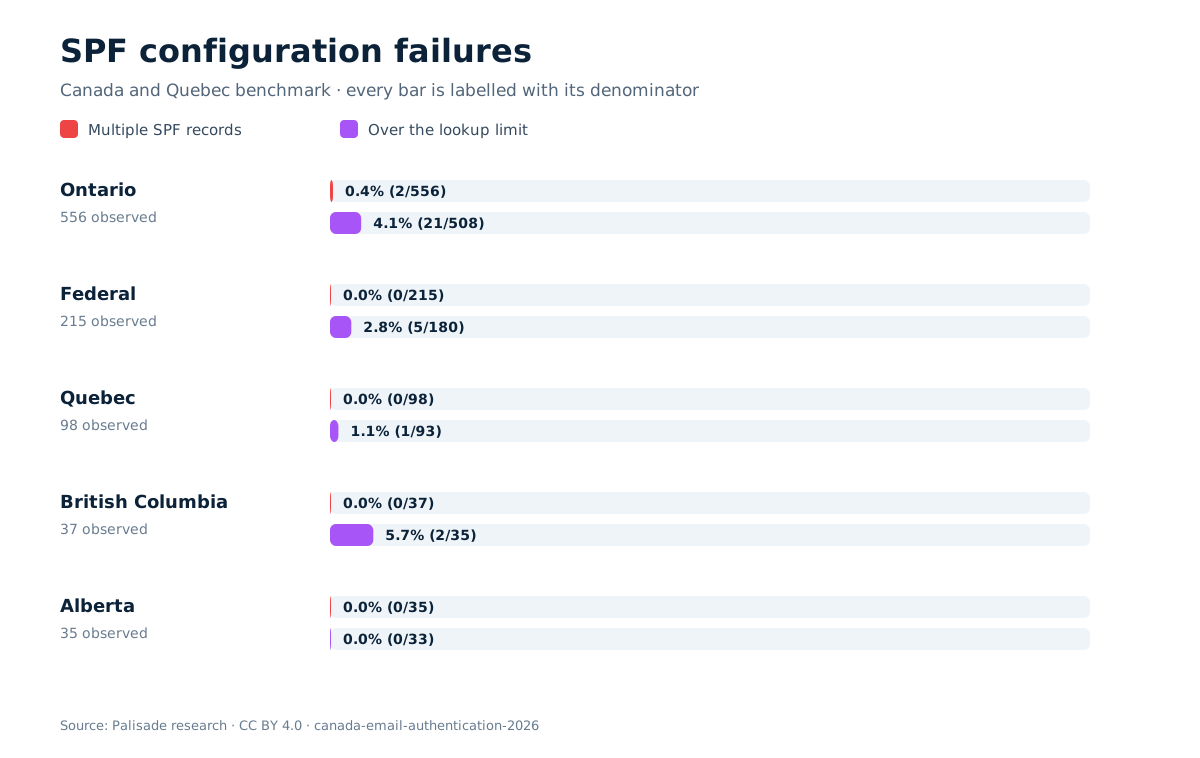
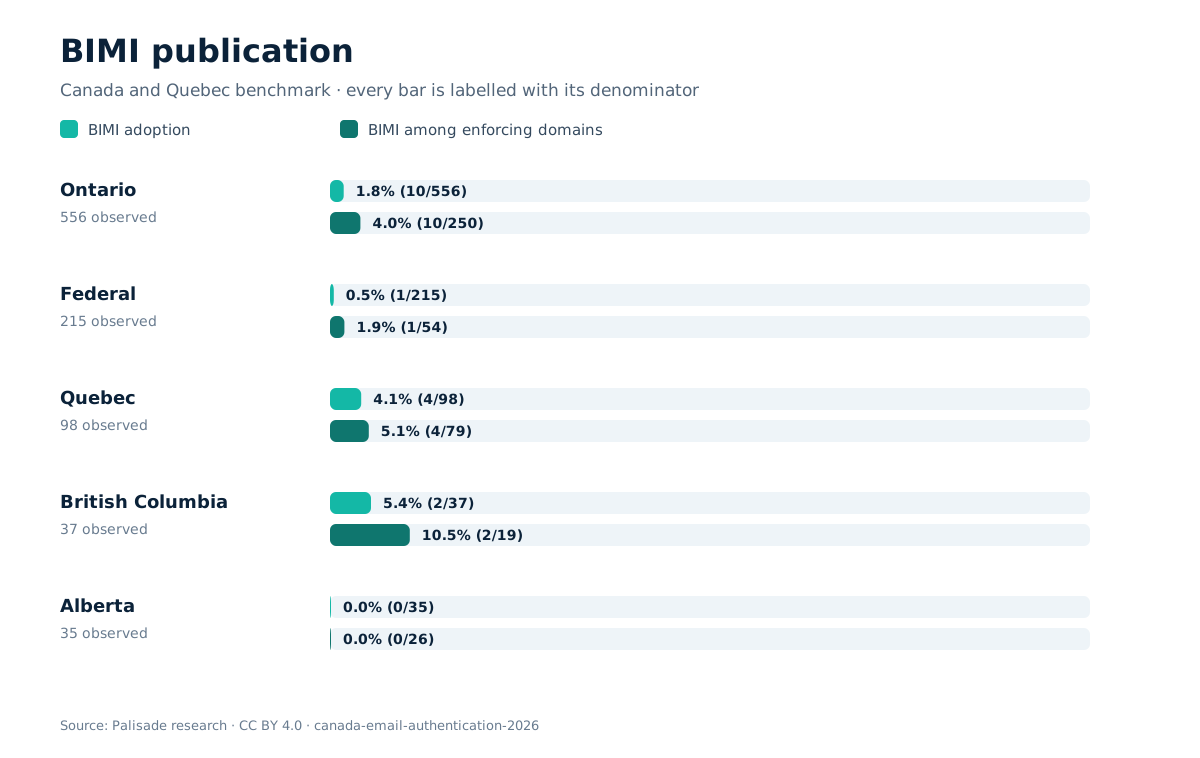
| Group | Observed | DMARC | Enforcement | No reporting | SPF lookup failure | BIMI among enforcing |
|---|---|---|---|---|---|---|
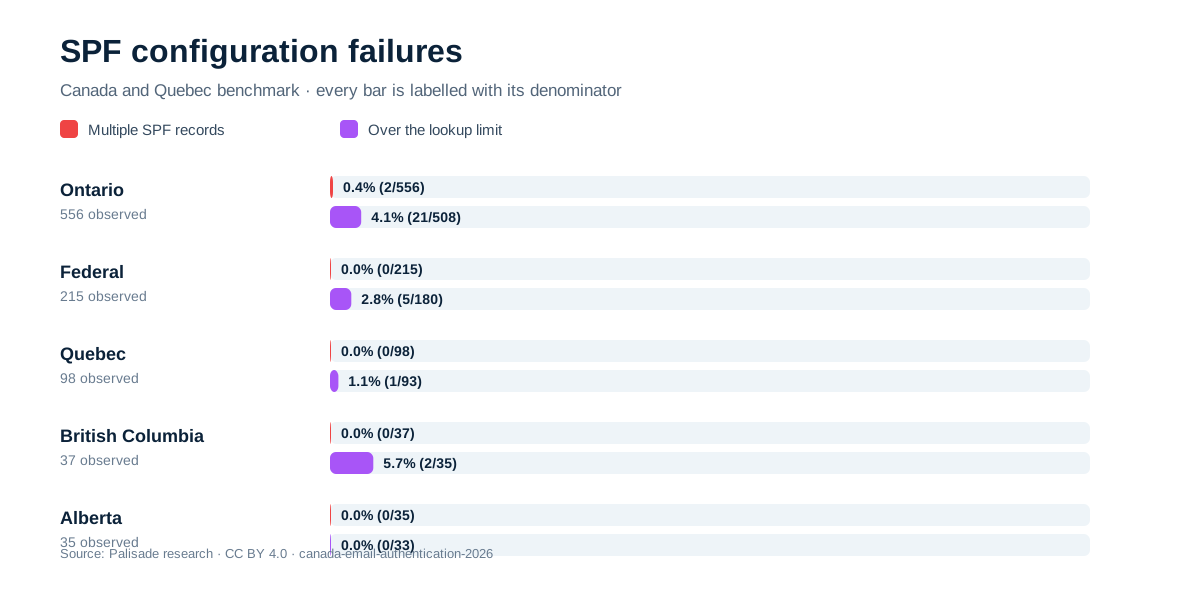
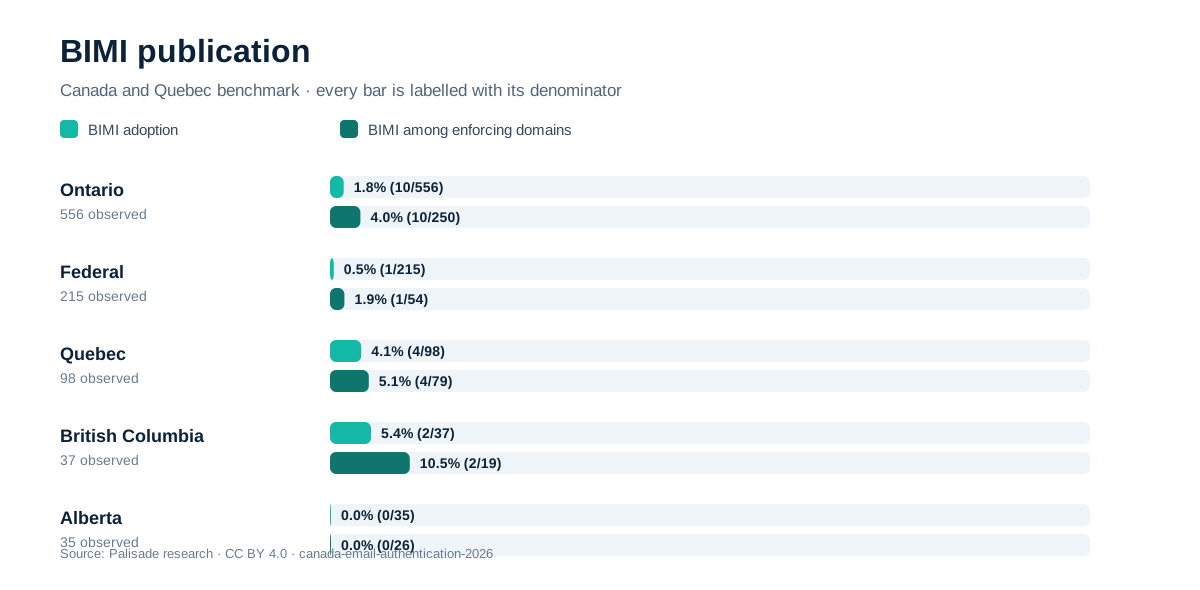
| Ontario | 556 | 74.3% (413/556) | 60.5% (250/413) | 21.8% (90/413) | 4.1% (21/508) | 4% (10/250) |
| Federal | 215 | 86.5% (186/215) | 29% (54/186) | 2.2% (4/186) | 2.8% (5/180) | 1.9% (1/54) |
| Quebec | 98 | 95.9% (94/98) | 84% (79/94) | 3.2% (3/94) | 1.1% (1/93) | 5.1% (4/79) |
| British Columbia | 37 | 94.6% (35/37) | 54.3% (19/35) | 8.6% (3/35) | 5.7% (2/35) | 10.5% (2/19) |
| Alberta | 35 | 97.1% (34/35) | 76.5% (26/34) | 11.8% (4/34) | 0% (0/33) | 0% (0/26) |
SVG and PNG versions are licensed CC BY 4.0.
The aggregate findings and charts are free to quote, republish and build on under CC BY 4.0. Attribute Palisade and link to this report so readers can inspect the methodology and denominators.
Palisade. “Canada and Quebec email-authentication benchmark 2026.” 2026-08-14. https://www.palisade.email/research/canada-email-authentication-2026
Pinned source snapshot
752a2bfa077085a2a10e7fb50ef1b2e8e95538d04bb3c98314c98a32c6626d85Active federal-organization inventory; organization-specific hostnames were supplied by the official departments and agencies directory.
Current official organization links used for federal hostname mappings.
Official 2026 organization names and municipal website links; one incorrect county link was corrected against the county's official homepage and recorded in source QA.
Starting inventory for health systems and facilities.
Current-listing verification for a 70-company slice of major Canadian-headquartered issuers; every domain was checked against the official company site.
Publish aggregate results only. No province receives an indexable page until it independently clears the observation, findings, sourcing and outreach gates.