DMARC
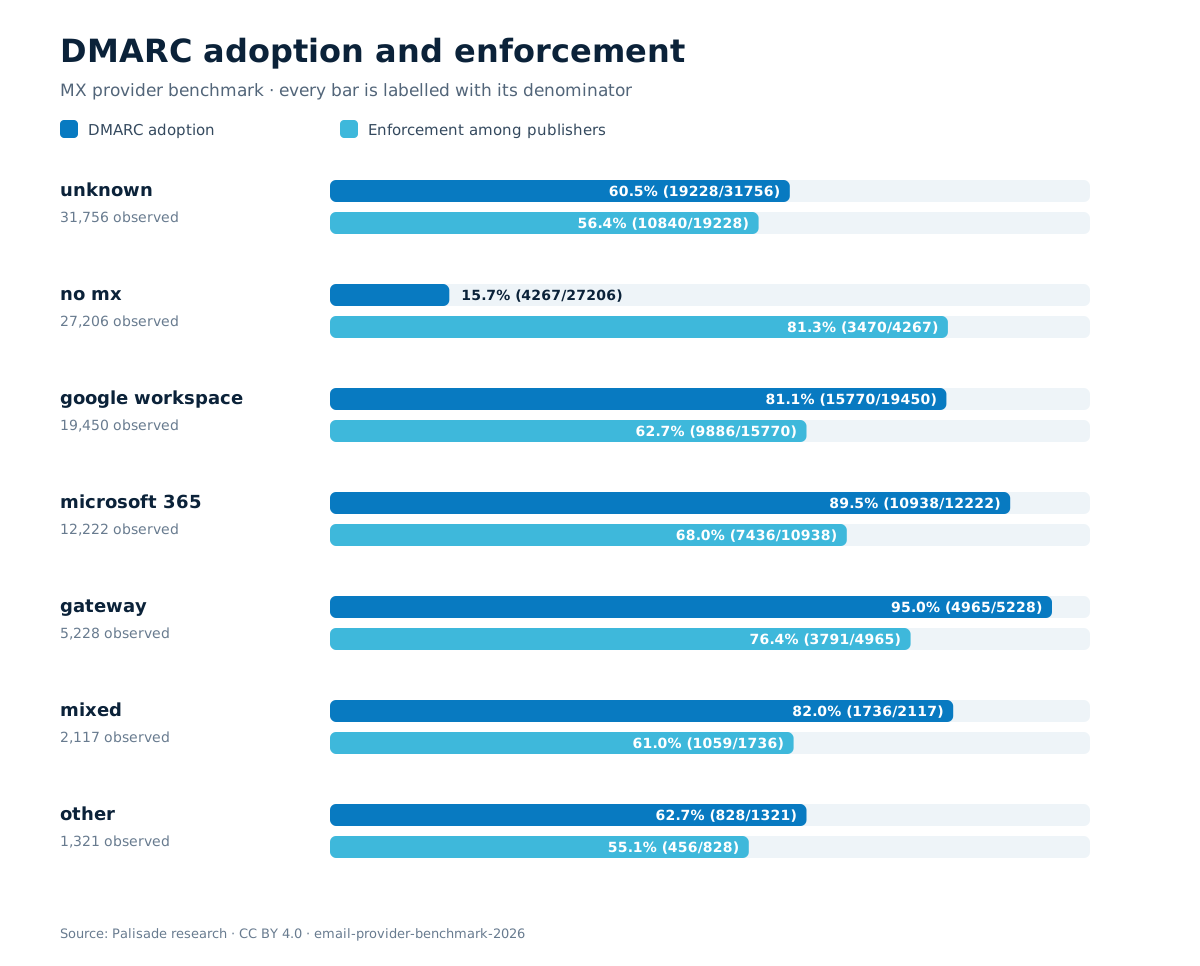
Microsoft 365: 89.4% adoption and 68.3% enforcement
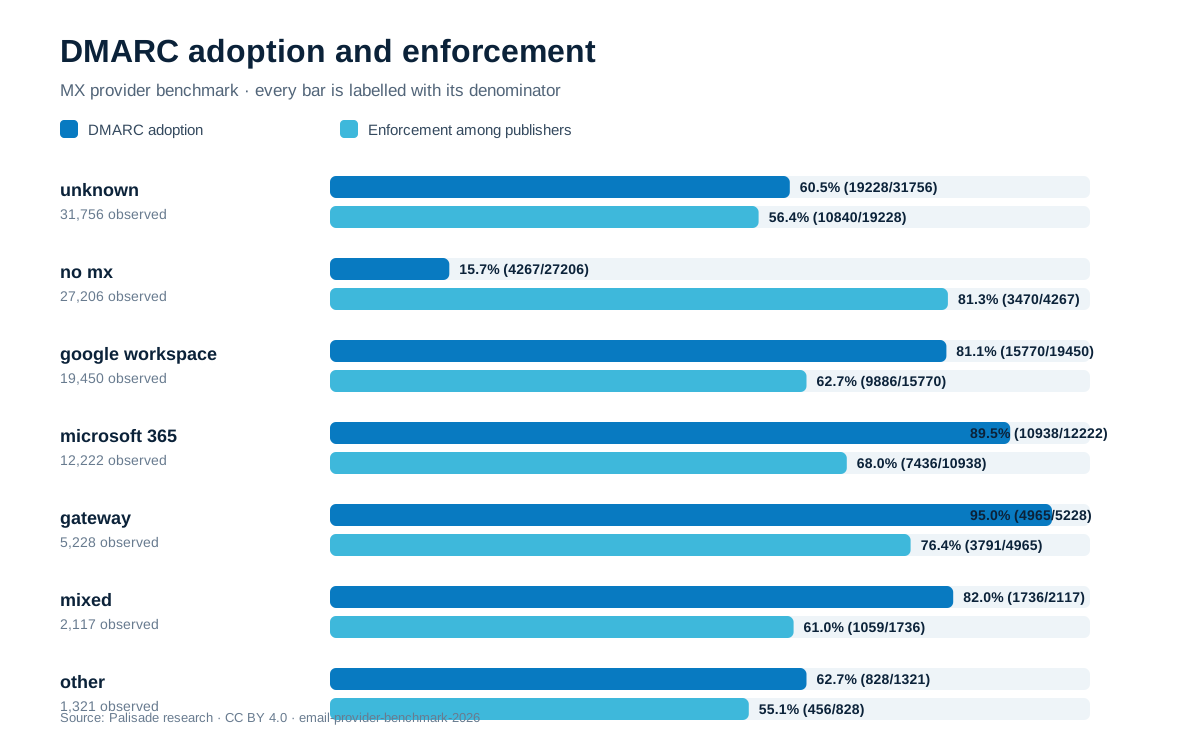
Google Workspace measured 80.6% and 62.1%, respectively. Bases: 12,222 Microsoft 365 and 19,450 Google Workspace domains.


Across 99,300 observed domains, rank-adjusted DMARC adoption was 89.4% for Microsoft 365 and 80.6% for Google Workspace. The comparison is observational and does not show that either provider caused the difference.
Why this matters
MX provider choice does not substitute for a domain-owner DMARC policy: without enforcement, receivers have less direction when a message using the exact From domain fails aligned authentication.
58.1%
DMARC adoption
57,732 of 99,300
64.0%
Enforcement among publishers
36,938 of 57,732
20.7%
Publishers without aggregate reporting
11,959 of 57,732
2.6%
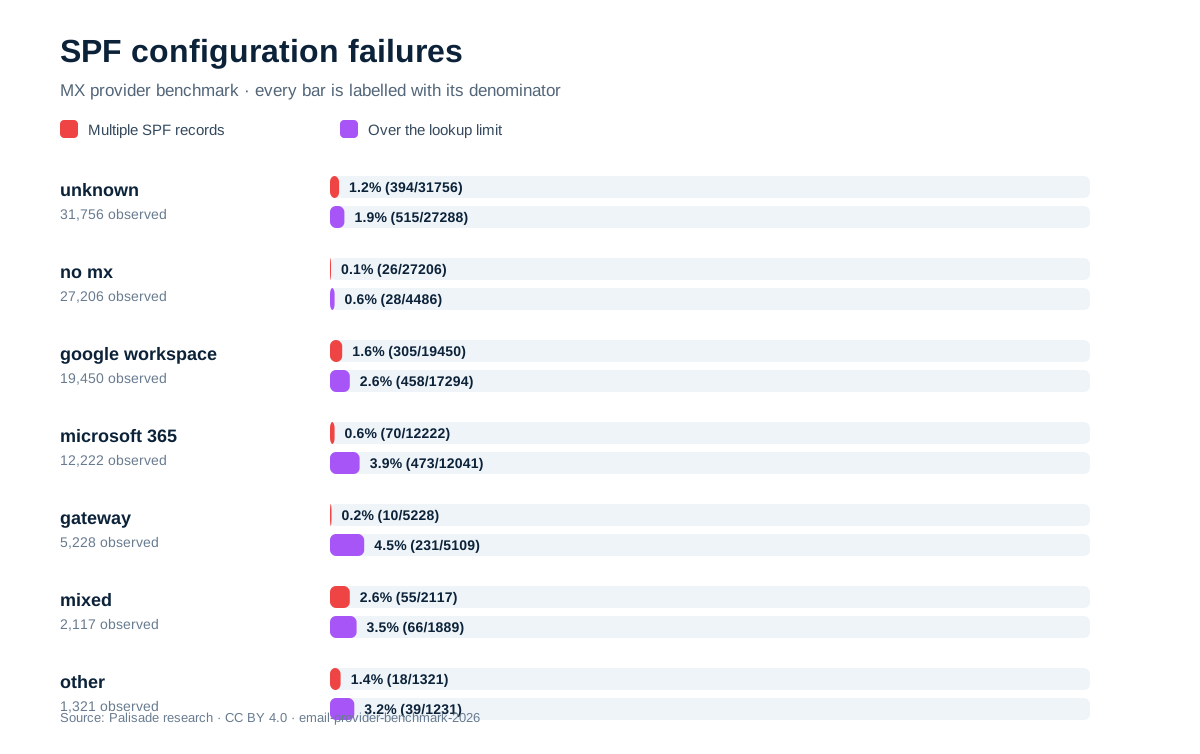
SPF recursive lookup failures
1,810 of 69,338
KEY FINDINGS
These are rank-band-standardized comparisons, which reduce the effect of one operator appearing more often among highly ranked domains. Each estimate uses the complete provider base shown below; the downloadable JSON includes the numerator and denominator for every rank-band component.
DMARC
Microsoft 365: 89.4% adoption and 68.3% enforcement
Google Workspace measured 80.6% and 62.1%, respectively. Bases: 12,222 Microsoft 365 and 19,450 Google Workspace domains.
REPORTING + SPF
The trade-off runs in opposite directions
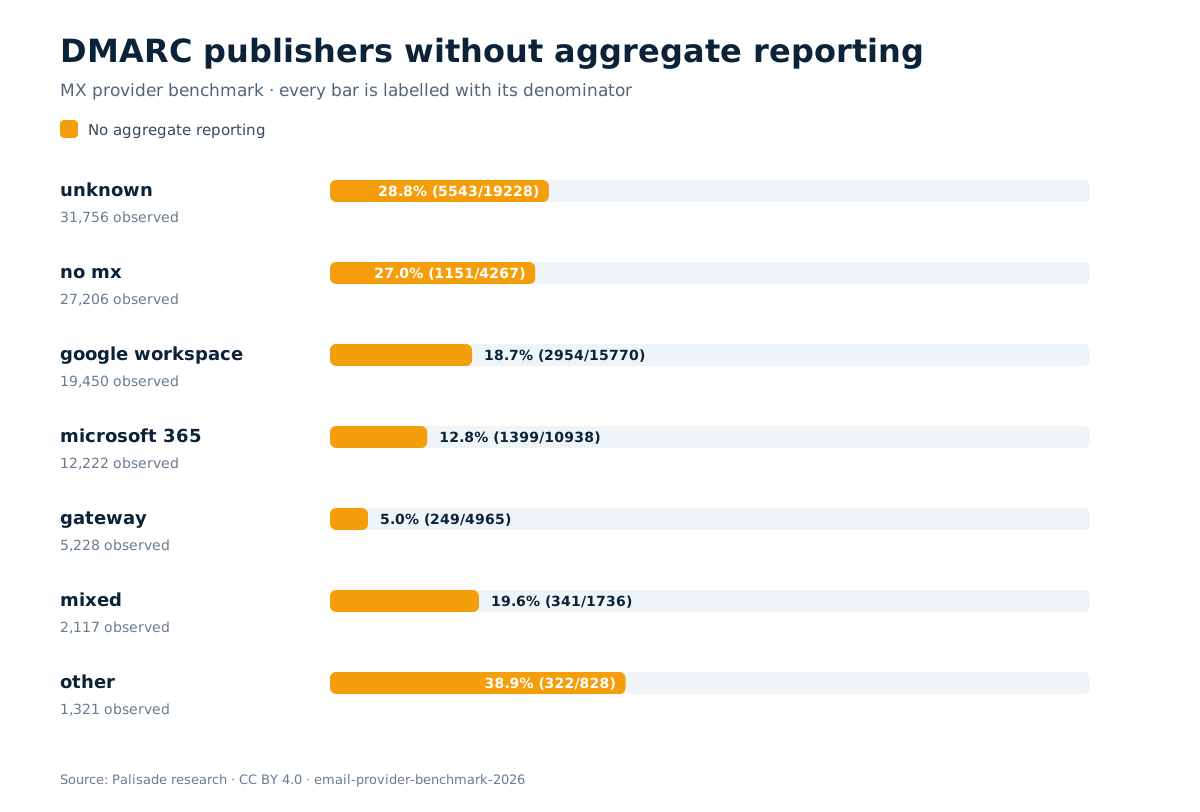
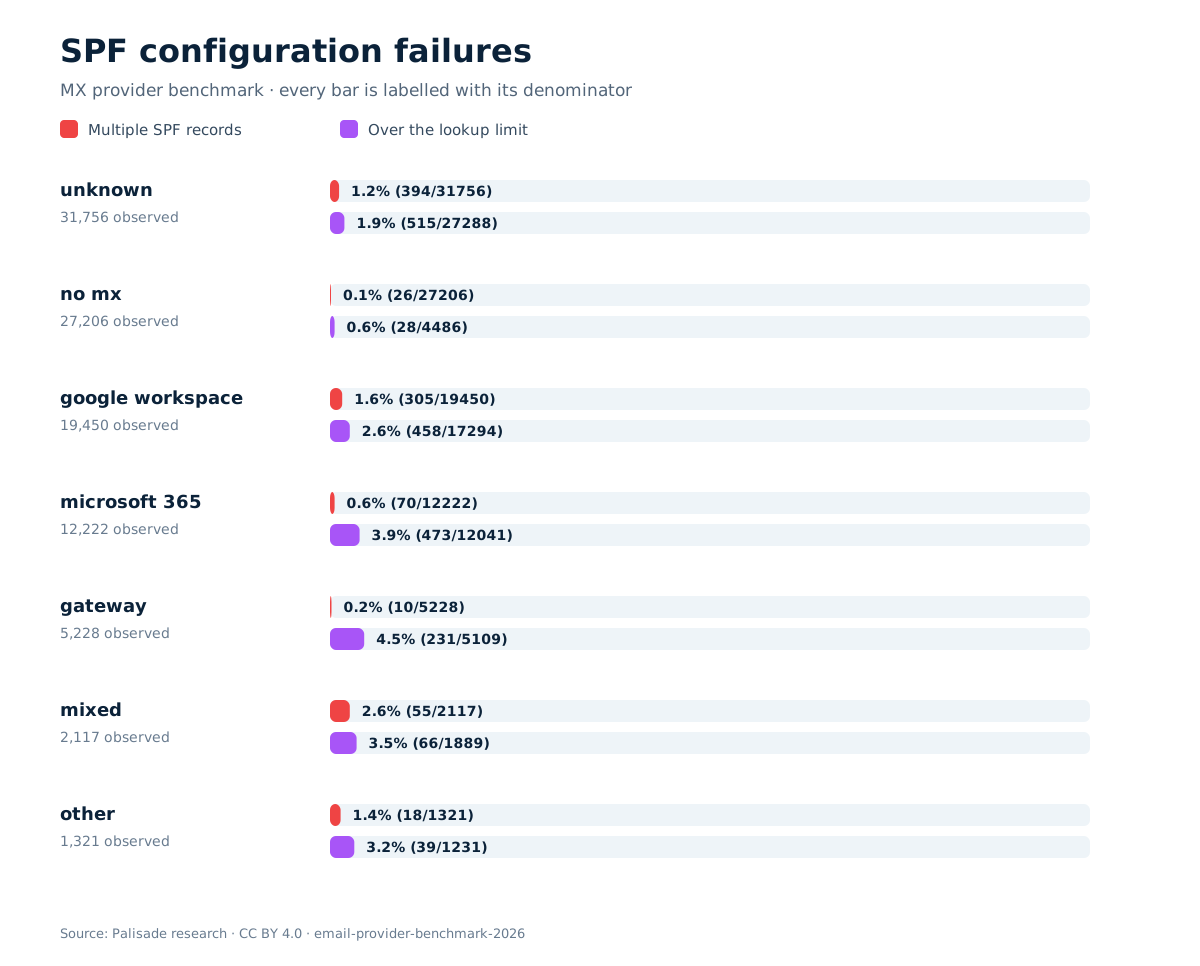
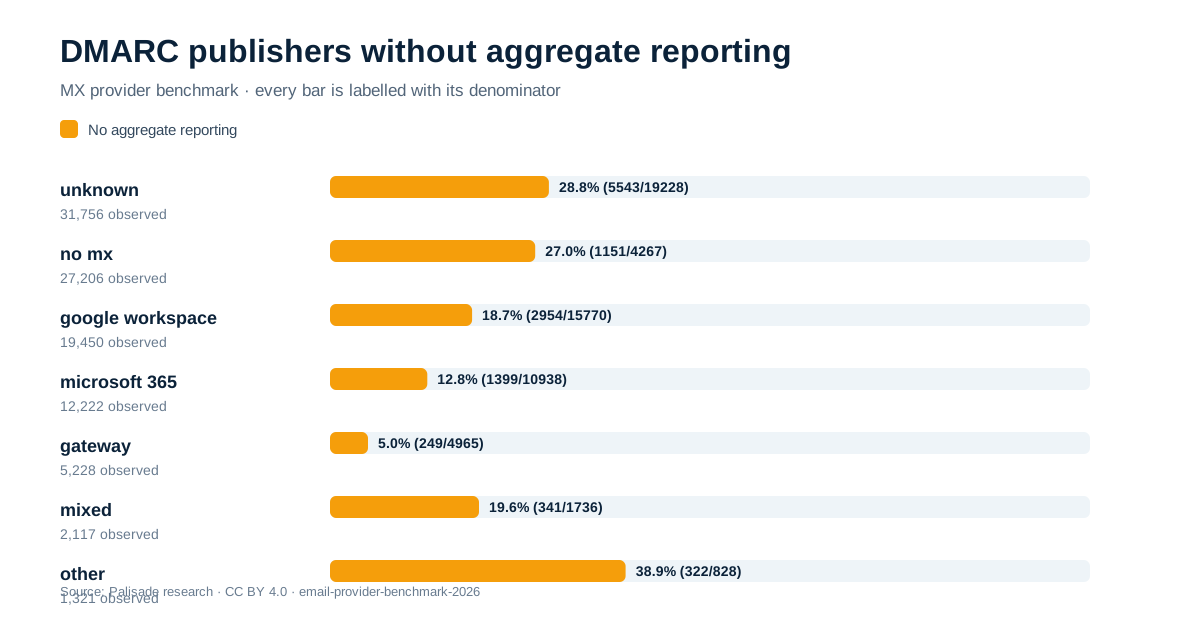
Publishers without aggregate reporting: 12.6% on Microsoft 365 versus 19.1% on Google. SPF lookup failures: 3.9% versus 2.6%.
BIMI + GATEWAYS
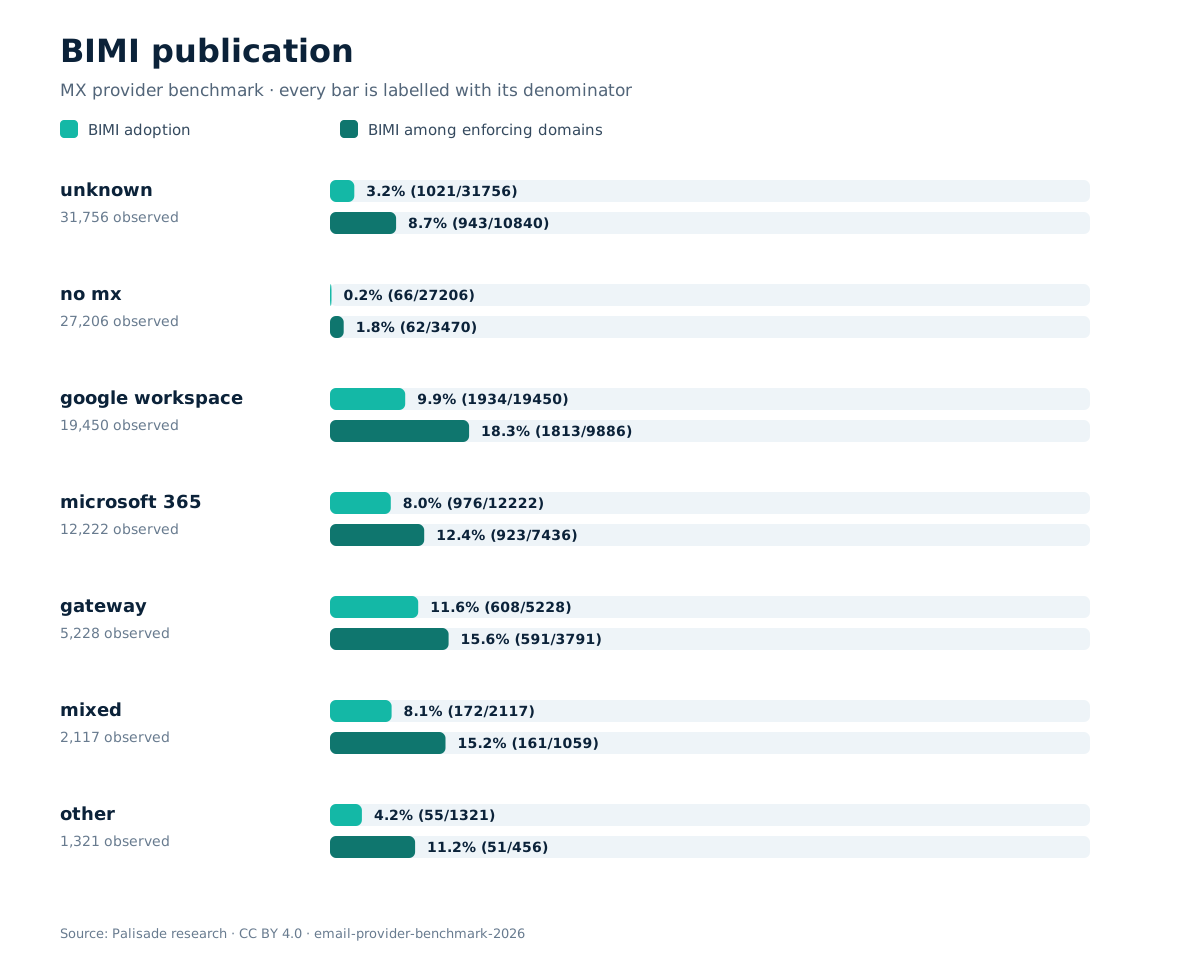
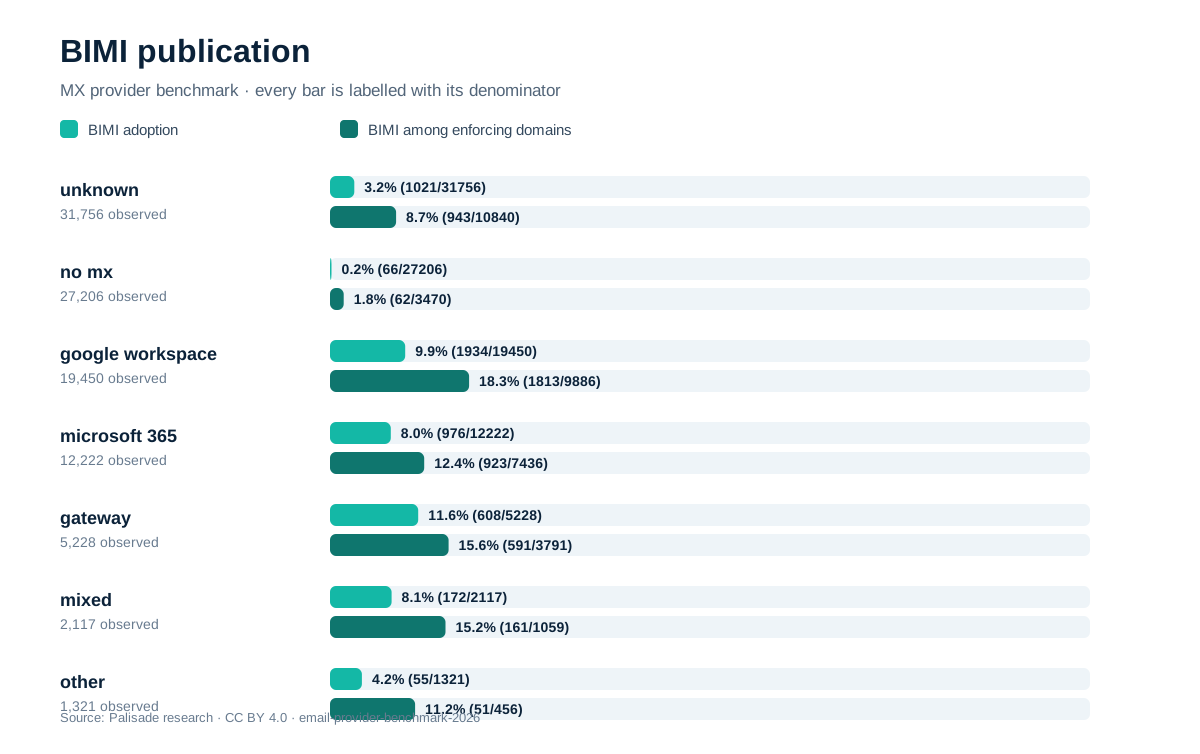
Google’s enforcing domains publish BIMI more often
BIMI among enforcing domains was 18.0% for Google and 12.7% for Microsoft 365. Recognized gateways reached 76.0% enforcement, but gateways may conceal the mailbox platform beneath them.
This study describes public DNS configuration among observed groups. It does not establish that choosing an MX operator improves authentication, and it does not measure compromise, mail delivery or internal security controls.
Why this matters
An observed MX operator describes where inbound mail appears to be handled; it does not automatically protect the organization’s visible sending domain. The domain owner still needs aligned SPF or DKIM and a DMARC policy for participating receivers to apply its requested handling.
Learn how DMARC evaluates a message →01 · DOMAIN IDENTITY
An attacker can send a message that displays the organization's exact domain in the From line. Without a valid DMARC record, participating receivers have no DMARC handling request from that domain owner when aligned SPF and DKIM fail.
02 · PRACTICAL HARM
A forged message can imitate an organization’s billing, support, executive or customer-service address, making payment redirection and credential theft more believable. Provider-group differences in this study do not show that a provider caused or prevented that risk.
Three different DNS states
Risk, not incident evidence: this DNS state does not prove spoofing, fraud, compromise or weak internal controls. DMARC also does not stop lookalike domains, abuse of a compromised legitimate account or every phishing technique.
August 14, 2026
Classifier and 100-domain manual QA completed
August 14, 2026
Pinned 100,000-domain scan and aggregate frozen
August 14, 2026
Evidence package, charts and report released
The release passed the stated evidence and review gates.
Media posture
Offer 3–5 top-matched journalists a 48-hour first look; the dataset remains non-exclusive.
Groups below the 30-domain threshold are suppressed. Every visible percentage includes its numerator and denominator.
| Group | Observed | DMARC | Enforcement | No reporting | SPF lookup failure | BIMI among enforcing |
|---|---|---|---|---|---|---|
| Unknown operator | 31,756 | 60.5% (19228/31756) | 56.4% (10840/19228) | 28.8% (5543/19228) | 1.9% (515/27288) | 8.7% (943/10840) |
| No published MX | 27,206 | 15.7% (4267/27206) | 81.3% (3470/4267) | 27% (1151/4267) | 0.6% (28/4486) | 1.8% (62/3470) |
| Google Workspace | 19,450 | 81.1% (15770/19450) | 62.7% (9886/15770) | 18.7% (2954/15770) | 2.6% (458/17294) | 18.3% (1813/9886) |
| Microsoft 365 | 12,222 | 89.5% (10938/12222) | 68% (7436/10938) | 12.8% (1399/10938) | 3.9% (473/12041) | 12.4% (923/7436) |
| Recognized gateway | 5,228 | 95% (4965/5228) | 76.4% (3791/4965) | 5% (249/4965) | 4.5% (231/5109) | 15.6% (591/3791) |
| Mixed operators | 2,117 | 82% (1736/2117) | 61% (1059/1736) | 19.6% (341/1736) | 3.5% (66/1889) | 15.2% (161/1059) |
| Other operator | 1,321 | 62.7% (828/1321) | 55.1% (456/828) | 38.9% (322/828) | 3.2% (39/1231) | 11.2% (51/456) |
The same Tranco rank-band distribution is applied to every operator. This reduces rank-composition bias; it does not turn the observational comparison into a causal one.
| Observed MX operator | Base | DMARC | Enforcement | No reporting | SPF lookup failure | BIMI among enforcing |
|---|---|---|---|---|---|---|
| Google Workspace | 19,450 | 80.6% | 62.1% | 19.1% | 2.6% | 18.0% |
| Microsoft 365 | 12,222 | 89.4% | 68.3% | 12.6% | 3.9% | 12.7% |
| Recognized gateway | 5,228 | 94.7% | 76.0% | 5.3% | 4.6% | 15.3% |
| Other operator | 1,321 | 63.3% | 56.4% | 38.3% | 3.2% | 11.3% |
| Mixed operators | 2,117 | 82.0% | 61.3% | 19.4% | 3.5% | 15.6% |
| Unknown operator | 31,756 | 60.8% | 56.7% | 28.4% | 1.9% | 9.0% |
Percentages are weighted estimates. “Base” is the total observed provider group; metric-specific bases and every rank-band numerator and denominator are included in the JSON download.
SVG and PNG versions are licensed CC BY 4.0.
The aggregate findings and charts are free to quote, republish and build on under CC BY 4.0. Attribute Palisade and link to this report so readers can inspect the methodology and denominators.
Palisade. “Observed MX provider benchmark 2026.” 2026-08-14. https://www.palisade.email/research/email-provider-benchmark-2026
Pinned source snapshot
dcf2107c17aee2483b65cde6f9c09c6aa6355adefb987a66a36294d15b29fa7bOfficial current and legacy Google MX patterns.
Official Exchange Online MX hostname pattern.
Parent corpus, definitions and global baseline.
Publish aggregate provider groups only. Unknown and mixed MX answers remain visible rather than being forced into a vendor category.