Does a subdomain need its own DKIM setup?
 ChatGPT
 Claude
 Gemini
 Perplexity
 Grok
Grok
A sending subdomain does not automatically need a separate DKIM key or signing domain. DKIM can sign with the parent domain, and each service can use its own selector under whichever signing domain you authorize. The right choice depends on administrative control and DMARC alignment. Under relaxed alignment, a parent and subdomain can align through the same Organizational Domain. Under strict alignment, the DKIM signing domain must exactly match the visible From domain.
Quick takeaways
- DKIM keys belong to the signing domain named in the signature, not automatically to every From subdomain.
- A parent domain can sign on behalf of a subdomain under DKIM's rules.
- Separate selectors let services use distinct keys under one signing domain.
- Relaxed DMARC alignment can align a parent and subdomain.
- Strict DKIM alignment requires an exact match with the visible From domain.
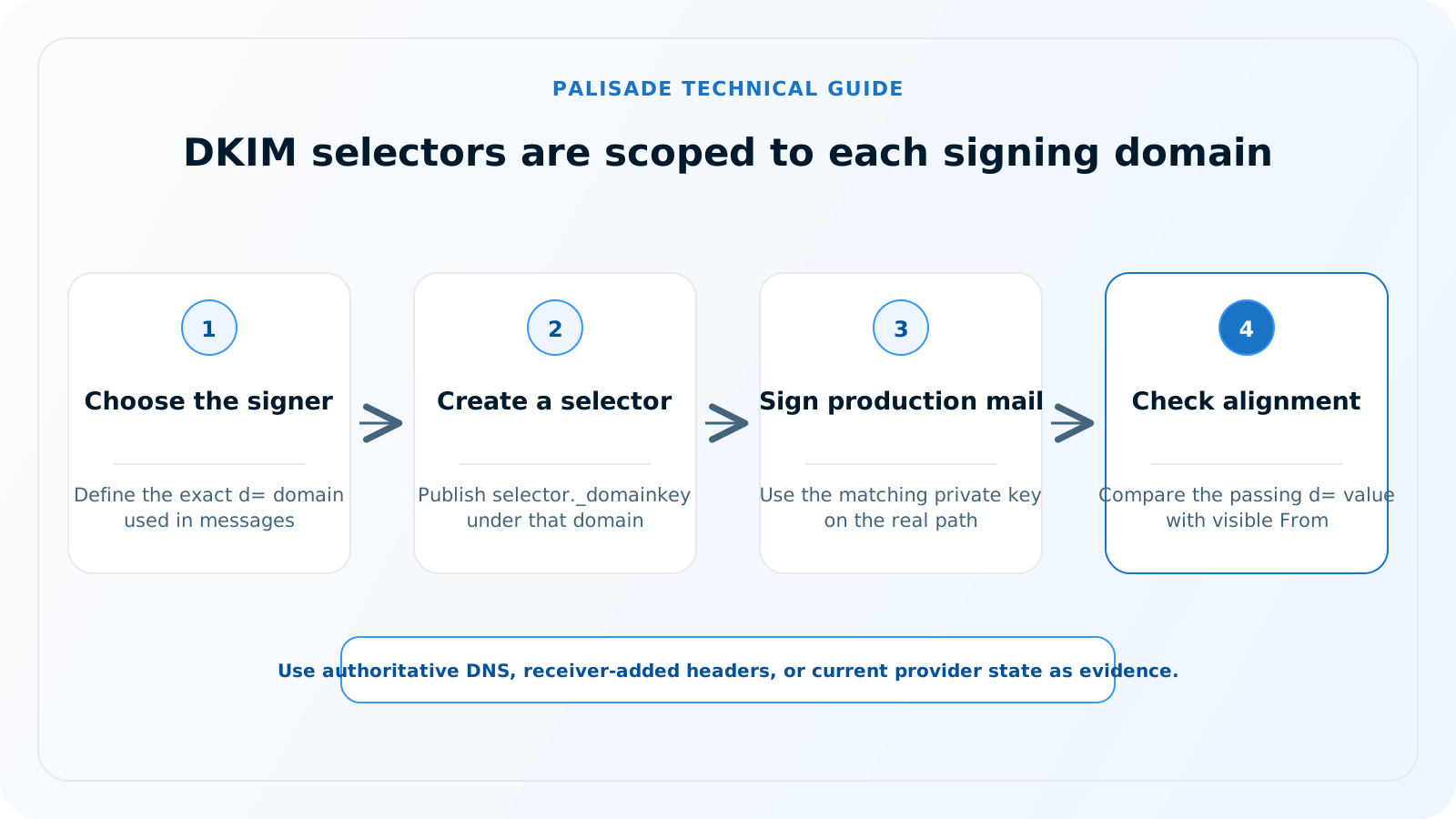
This diagram summarizes the article's diagnostic sequence. Use the linked standards, current provider documentation, and production evidence for exact decisions. Open the full-size diagram.
Who is affected?
This matters to organizations that separate marketing, transactional, and corporate mail across subdomains. It also matters to MSPs deciding whether a vendor should sign as the organizational domain, the sending subdomain, or a provider-owned domain.
The visible From domain, the DKIM d= value, and the selector's DNS owner name are separate concepts. Review Palisade's DKIM overview and DMARC overview before choosing a design.
What are the requirements?
DKIM verification retrieves a public key using the selector and the signing domain from the DKIM-Signature field. The key therefore needs to exist below the exact d= domain used by the signer.
RFC 6376 permits parent-domain signing. A service sending From alerts.example.com can, for example, sign with example.com if the domain owner authorizes that system and publishes the selector there.
DMARC's DKIM alignment rules add another question. Relaxed DKIM alignment can treat related parent and child domains as aligned when they share the same Organizational Domain. With adkim=s, the signing domain and visible From domain need an exact match.
When does the requirement take effect?
The DKIM design applies whenever a message is signed. The DMARC alignment mode applies whenever a receiver evaluates that signature for the message's Author Domain.
This is protocol behavior, not a mailbox-provider deadline. A later move from relaxed to strict alignment can turn a previously aligned parent-domain signature into an unaligned one, so plan the DNS design before changing adkim.
How do I implement the requirement?
1. List the visible From domains
Record the organizational domain and every subdomain used by real applications. Separate active mail from parked or non-sending names.
2. Choose the signing boundary
Use a parent signing domain when centralized control and relaxed alignment fit the policy. Use the exact subdomain when strict alignment or administrative separation is required.
3. Assign a unique selector per service or key
Publish the account-generated key below the chosen signing domain. Separate selectors make rotation and revocation possible without disturbing another sender.
4. Configure the production signer
Make the service use the intended d= domain and selector. DNS publication alone cannot force a platform to sign with that identity.
How do I validate compliance?
Send through every subdomain-based application and inspect the delivered DKIM result. Confirm the selector resolves, the signature passes, and the d= domain aligns with the visible From domain under the published adkim mode.
Use the DNS lookup tool for the selector and Email Security Score for the domain's public posture. DMARC reports then show whether the design holds across normal traffic.
Frequently asked questions
Keep going with AI
Ask AI how this applies to you
Take this guide to your assistant — each question opens pre-filled, with a link back to this page so it can read the details.
- Does a subdomain need its own DKIM setup?


- How does this apply to my domain?
- What should I do about it, step by step?

Written by
Samuel ChenardCEO & Co-Founder, Palisade
Samuel Chenard is the CEO and co-founder of Palisade, AI-first DMARC software for IT teams and MSPs, from one domain to thousands.
More from Samuel →